
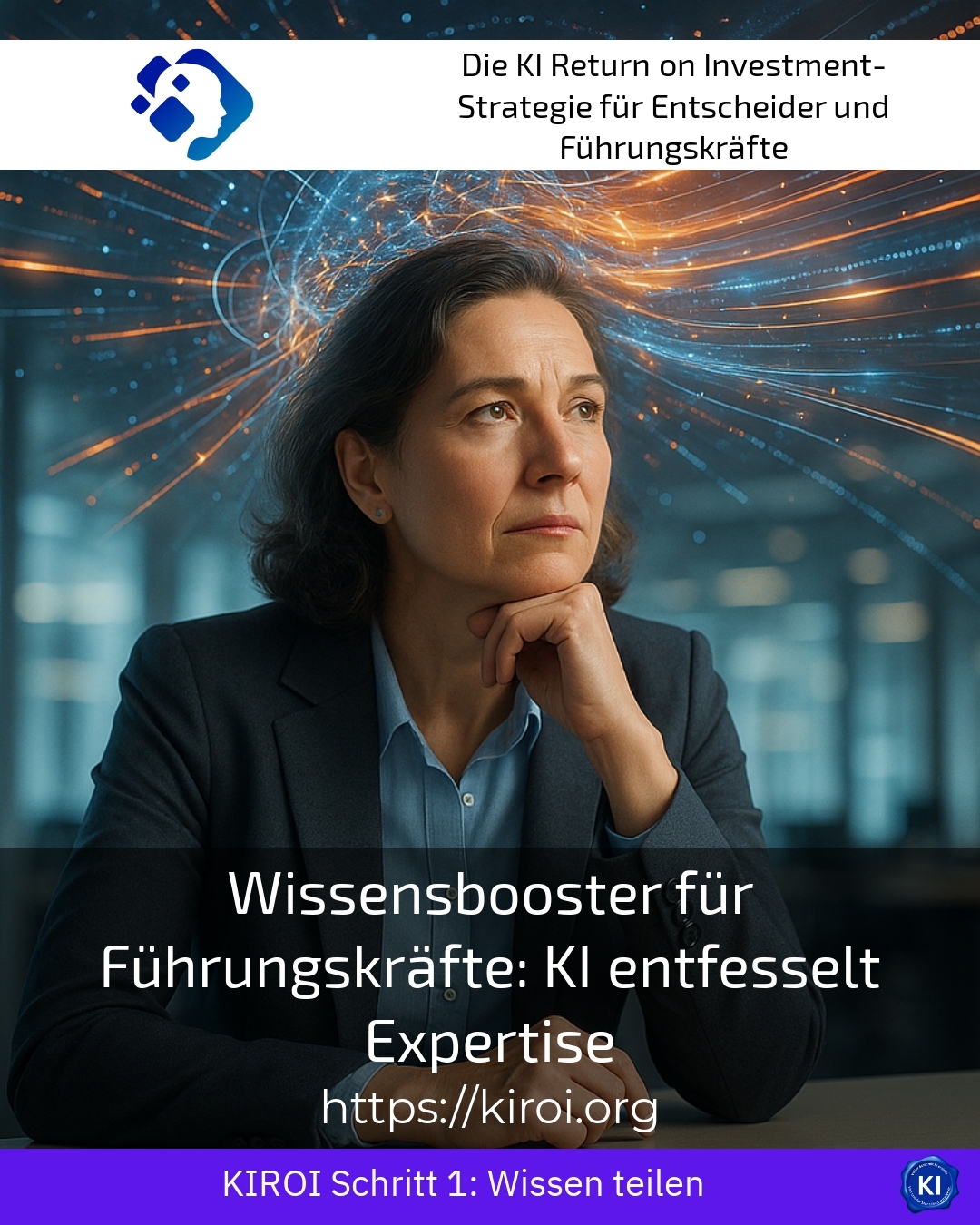
Imagine being able to access all the expertise of your company at the touch of a button and instantly make informed decisions. The Knowledge Booster for Leaders: AI Unleashes Expertise It is currently changing the way decision-makers work, learn, and lead their teams. In a rapidly changing world, traditional training is no longer enough. Today, leadership personalities face the challenge of quickly processing complex information while simultaneously developing strategic insights. Modern technology supports this in impressive ways. It enables access to condensed insights in fractions of a second. This creates a new understanding of leadership competency that combines agility and depth.
Why traditional knowledge formats are reaching their limits
Executives spend an average of several hours per week searching for relevant information. This time is missing for strategic tasks and employee management. While classic training and seminars provide valuable insights, they often reach the participants at the wrong time. Furthermore, the knowledge learned quickly becomes outdated in dynamic markets. This is where a new approach takes effect, making expertise available in a context-specific and demand-driven manner.
In the financial sector, for example, department heads must keep regulatory changes in mind on a daily basis. At the same time, executives expect thorough risk analyses within a few hours. A manager from the mechanical engineering sector recently reported that he had to wait for months for market analyses. Today, he receives condensed insights in minutes because intelligent systems take on the preliminary work. This change is also evident in the healthcare sector, where clinic managers rely on prepared study materials. This allows them to make faster decisions when introducing new treatment methods.
The knowledge booster for executives: AI unleashes expertise in practice
The practical application of intelligent knowledge systems is particularly impressive in various fields. In retail, store managers use automated trend analyses for their assortment decisions. Sales data, social media signals, and competitive information are combined. A sales executive from the automotive supply industry described how his team can now answer customer inquiries more precisely. The systems search technical documentation and deliver suitable specifications in seconds. In insurance, executives analyze damage patterns more quickly and develop new product strategies from them.
Best practice with a AIROI customer
A medium-sized company in the logistics sector faced significant challenges in transferring knowledge between experienced executives and emerging talent. The board turned to transruptions coaching to develop a sustainable solution. Together, we first analyzed the existing knowledge flows within the company. It turned out that critical knowledge was concentrated in the minds of fewer people. Within the AIROI framework, we developed a multi-stage approach to knowledge democratization. Experienced executives documented their decision-making processes in structured formats. These content were prepared and made searchable by intelligent systems. New leadership figures were now able to access case studies and proven practices specifically. The result surprised even the most skeptical participants in the company. The onboarding time for new team leaders was reduced by about forty percent. At the same time, the experienced executives reported a significant relief in that they no longer had to answer standard questions. The company was thus able to strengthen its competitiveness in a fiercely competitive market.
How intelligent systems enhance leadership expertise
The real added value lies not in replacing human expertise, but in enhancing it. Leaders bring experience, intuition, and emotional intelligence. Technological support complements these strengths with speed and breadth of information. This results in better decisions in less time. A human resources executive from the technology industry, for example, uses prepared employee feedback for his cultural development. The analysis of sentiment images is conducted continuously and provides actionable insights.
In the area of corporate strategy, there are further exciting application areas. Executives automatically create and update competitive analyses. They detect market changes earlier and can react proactively. A manager from the energy sector reported improved decision-making quality when making investment decisions. The systems structure project risks and enable informed discussions within the management team. Research managers are also using intelligent literature analyses in the pharmaceutical industry for their development strategies.
The knowledge booster for executives: AI unleashes expertise through personalization
The technology becomes particularly effective through individual customization to personal information needs. Each leader has different priorities and decision-making contexts. Intelligent systems learn these preferences and deliver relevant content prioritized. This creates a personal knowledge assistant that continuously expands one’s expertise. A CFO from the construction industry described this as his most important productivity gain in recent years. He now receives a curated summary of relevant financial developments in his industry on a daily basis.
However, personalization goes even further, as it also takes into account learning preferences. Some executives prefer detailed background analyses with many details. Others require concise summaries for quick orientation. In the consulting business, partners use personalized knowledge systems for their client conversations. They draw on industry-specific insights, thereby enhancing their consulting quality. This trend is also evident in banking, where it is particularly evident in preparing for client appointments.
Best practice with a AIROI customer
A senior executive from the retail sector came to transruptional coaching with a specific request. She felt overwhelmed by the information flood and could no longer distinguish important signals from irrelevant ones. As part of our coaching, we developed an individual knowledge strategy together. First, we identified the truly crucial information categories for this position. Then we implemented a system for automatically filtering and organizing relevant content. The executive learned to ask the system targeted questions and critically assess the answers. After about three months, she reported a significantly improved decision-making ability. She was now able to argue more confidently in board meetings and better justify her positions. At the same time, she gained several hours per week for strategic reflection and employee management. The transruptions coaching accompanied this transformation process with regular reflection discussions and adjustments. Thus, a technological implementation became a real development of leadership competencies.
Challenges and critical success factors
With all the enthusiasm for new possibilities, executives must not overlook the limits. Intelligent systems can reproduce misinformation or misinterpret connections. Therefore, critical thinking remains an indispensable leadership skill. Technology provides impulses and groundwork, but not ready-made decisions [1]. In the legal field, this is particularly evident in complex contract reviews. Legal executives use analytical tools to pre-structure the process, but the final evaluation remains a human task.
Another critical success factor relates to data quality and timeliness. Systems can only be as good as the information they access. Therefore, companies must invest in their knowledge bases and continuously maintain them. In the production environment, for example, the quality of process optimization proposals depends on current machine data. A plant manager from the chemical industry specifically invested in better data collection before implementing intelligent analytics. This preliminary work paid off in significantly more relevant recommendations for action.
Knowledge booster for executives: AI unleashes expertise with the right introduction
The introduction of new knowledge systems requires careful preparation and realistic expectations. Many executives report initial skepticism in their organizations. These reservations are usually resolved by concrete success stories. In the media sector, for example, editors-in-chief use intelligent research tools for their topic planning. The initial concern that journalism could become more superficial has given way to the realization of deeper research possibilities. In the education sector, school principals are also experimenting with new knowledge formats for their development.
Success depends on integrating new tools into existing workflows. New tools must not appear as an additional burden. They must take away work and improve results. An IT board member from the telecommunications industry emphasized the importance of pilot projects. He started with a small team and only expanded after positive experiences. In the tourism sector, hotel chains are using similar approaches when introducing intelligent pricing.
The role of transruptional coaching in knowledge development
When transforming knowledge work, executives often come to us with specific concerns. They seek guidance in a more complex information landscape. Some report feeling overwhelmed by the technological possibilities. Others wish to receive support in the strategic realignment of their learning processes. Transruptive coaching accompanies these change processes at the individual and organizational levels. It is not about technical training, but about competence development and mindset work.
Clients often report initial resistance to new working methods. These resistances usually have understandable causes, such as time pressure or uncertainty. In coaching, we develop strategies together to constructively deal with them. A department manager from the insurance industry rediscovered his enthusiasm for continuous learning. A marketing manager from the consumer goods sector found a better way to handle information overload. In engineering, management uses our guidance to integrate new analytical methods [2].
My AIROI Analysis
Observations from numerous projects provide a clear picture of current developments. Executives who strategically utilize intelligent knowledge systems achieve significant advantages. They make more informed decisions in shorter time and free themselves from routine tasks. At the same time, they continuously develop their own expertise because they have access to broader sources of information. The technology does not replace human leadership qualities such as empathy, intuition, or relational skills. It rather enhances the analytical and information processing aspects of leadership.
From AIROI my perspective, I recommend that managers consciously and critically approach new opportunities. The first step often involves an honest analysis of their own information behavior. Where are gaps emerging and where is valuable time being lost? What decisions could benefit from a better information base? The answers to these questions provide starting points for targeted improvements. Transruptions coaching, as a support in developing individual strategies, assists in this process. Experience shows that lasting changes require time and reflection. Rapid technical solutions without adapting working methods rarely yield the desired results. However, executives who engage in this development process report significant improvements in their job satisfaction and effectiveness [3].
Further links from the text above:
[1] Harvard Business Review – Artificial Intelligence
[2] AIROI Framework – Intelligent Corporate Governance
[3] McKinsey Digital – Leadership Insights
For more information and if you have any questions, please contact Contact us or read more blog posts on the topic Artificial intelligence here.











 Deutsch
 English (UK)