
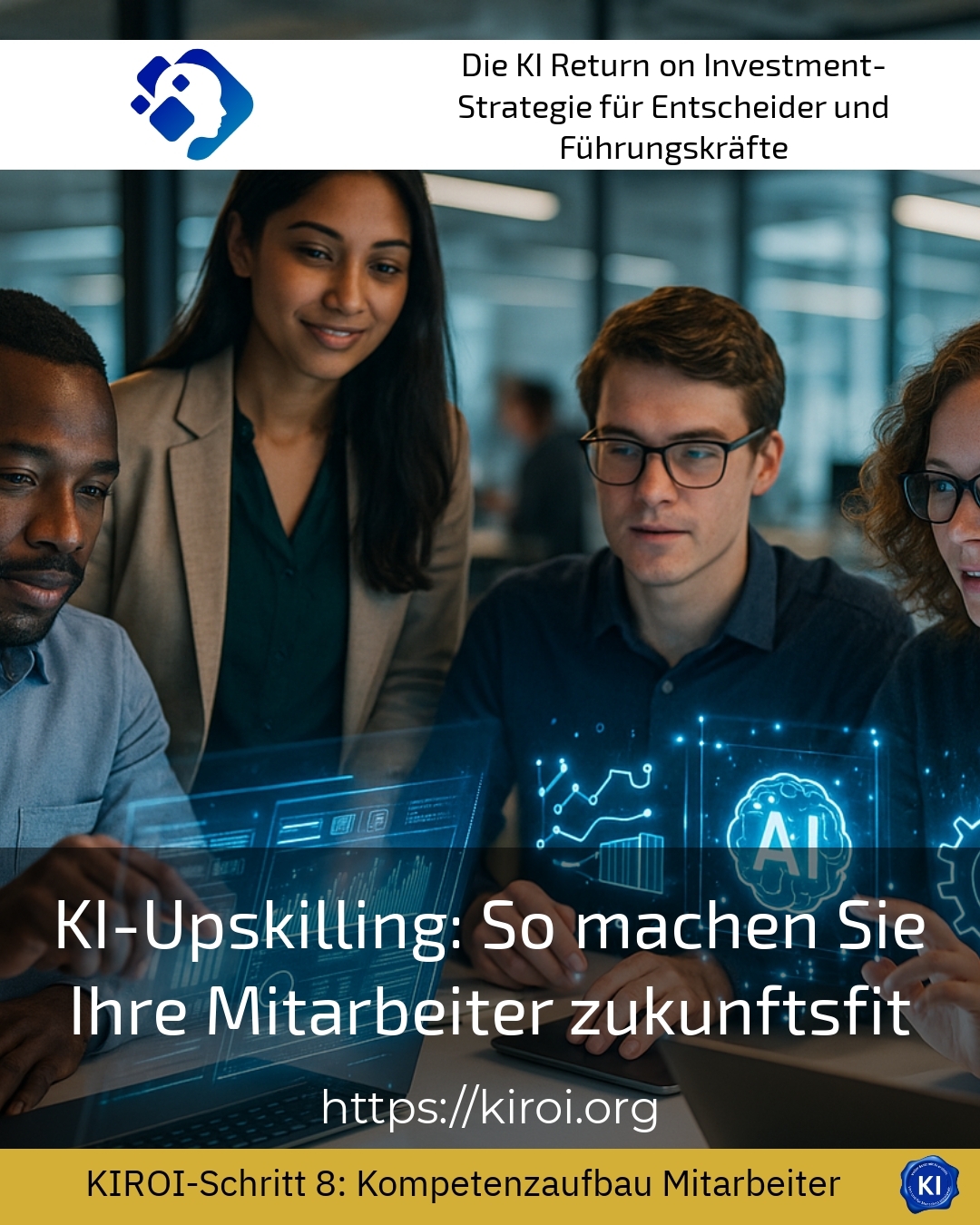
Will your company still be competitive in five years if your workforce does not understand and can apply the capabilities of modern technologies? This question currently concerns executives and human resources managers in almost all industries, because the speed of technological change has reached a level in recent months that even experienced industry experts are surprised by. The targeted AI Upskilling To their employees, this no longer constitutes an optional additional qualification; rather, it has become a strategic necessity that can determine the future success or failure of entire organizations. Companies that invest early in the competence development of their teams gain significant competitive advantages.
Why traditional further education concepts are no longer sufficient today
The traditional training formats that many organizations have been successfully using for decades are increasingly reaching their limits in the face of current challenges. While in the past, point-in-time seminars and workshops were sufficient to prepare employees for new requirements, today’s working world demands continuous and systematic competence development that goes far beyond the mere learning of individual functions. Understanding data-driven decision-making processes, the ability to critically evaluate automatically generated results, and knowledge of the ethical implications of modern technologies are today fundamental building blocks of a future-proof qualification. Many employees often report uncertainties in handling new tools. These uncertainties can hinder productivity and innovation.
A medium-sized company in the professional services sector recognized this problem when it realized that its experienced consultants, while possessing excellent expertise, were increasingly having difficulty keeping up with the technological expectations of younger customers. The introduction of new digital analysis tools repeatedly encountered resistance from the workforce. This resistance was not due to a lack of willingness, but rather to a lack of foundational knowledge. Only a comprehensive training program that focused on the basics and gradually introduced more complex concepts led to a noticeable improvement in acceptance. The organization benefited from a significantly increased willingness to innovate.
The hidden costs of a lack of competence development
Many decision-makers underestimate the actual impact that delayed or inadequate training can have on the overall performance of their organization. In addition to the obvious productivity losses caused by inefficient working practices, indirect costs often emerge that only become apparent on second glance and can, in their aggregate, far exceed the investments in professional training. Skilled young employees are increasingly leaving employers that offer no discernible development prospects. At the same time, the attractiveness as an employer brand in the fiercely competitive labor market is significantly declining. The result: a vicious cycle of personnel turnover and knowledge loss.
For example, an audit firm found that its most talented junior employees switched disproportionately often to competitors that actively invested in modern training programs. This situation led to significant recruitment costs and prolonged onboarding times. The company lost valuable customer knowledge as a result. Another example can be found in a tax advisory firm. There, the lack of familiarity with automated audit processes led to avoidable errors. The subsequent correction incurred costs that were many times larger than the scope of a structured training program. Such cases illustrate the economic importance of preventive competence development.
Successful strategies for effective AI upskilling in practice
The successful implementation of a qualification program requires far more than the mere provision of learning materials or the hiring of external trainers; sustainable competence development requires a well-thought-out concept that takes into account the specific needs of the organization, the individual learning prerequisites of the employees, and the strategic goals of the company. Approaches that directly link theoretical knowledge to practical application scenarios are particularly effective in this regard. These enable participants to apply newly acquired knowledge directly in their work routine and to solidify it through positive experiences. The connection between learning and doing creates lasting change.
In the business consulting industry, for example, a model has proven effective that combines mentoring elements with structured learning paths. In this model, technology-savvy employees mentor their colleagues in the introduction of new tools and methods. One consulting firm established so-called „innovation partnerships.“ Here, an experienced consultant and a younger, technically skilled colleague worked together on client projects. This format enabled a two-way transfer of knowledge. The expertise of the experienced professionals combined with the technological expertise of the younger colleagues. The result was a significantly improved solution capability for complex customer requirements.
Best practice with a AIROI customer
An international consulting firm in the financial sector faced the challenge of training its several hundred employees in the use of intelligent analytics tools in a short period of time. The initial situation was anything but favorable; many of the long-standing consultants were skeptical of the new technologies and feared that their established expertise could be undermined. The transruptive coaching accompanied the company in developing a multi-stage qualification program. It took into account both the technical and emotional aspects of the change process. First, we conducted detailed discussions with employees at all levels of the hierarchy. We wanted to understand their concerns and identify concrete use cases. Based on this, customized learning modules were created that demonstrated the benefits of the new technologies through real-life examples from the workplace. The integration of performance measurements proved particularly effective. These showed the participants how their productivity increased as a result of the newly acquired skills. Upon completion of the program, eighty percent of the participants reported a significantly improved level of job satisfaction. The willingness to continue developing their skills also increased significantly. The company was able to sustainably strengthen its position in the competition and open up new customer groups.
Individual learning paths for different starting levels in AI upskilling
The heterogeneity of prior knowledge within an organization represents one of the greatest challenges in designing effective training programs. While some employees already possess solid basic technological knowledge, others start from scratch and require correspondingly more time and support to reach the desired level of competence. In this situation, a uniform training program would inevitably either require advanced knowledge for those already proficient or overwhelm beginners. Both scenarios lead to frustration and jeopardize learning success. The solution lies in developing differentiated learning paths that take into account individual starting points and learning speeds.
A law firm successfully implemented a three-stage qualification program. This program offered content tailored for beginners, advanced users, and experts. Beginners learned basic concepts and simple use cases. Advanced users deepened their knowledge through more complex project work. The expert group focused on strategic issues of technology integration. A staffing firm adopted a different approach. It relied on self-directed learning modules. These enabled employees to determine their own learning pace. Additional coaching sessions supported questions and difficulties. Both approaches achieved convincing results and improved competency development in a sustainable way.
The role of leaders in the transformation process
The success of any qualification initiative depends largely on the extent to which the organization’s leaders not only formally support the measures but actively live them out and integrate them into their daily work. Leaders closely monitor their superiors. If they themselves do not show a willingness to develop, the employees will also be reluctant to acquire new skills. Conversely, leaders who are open about their own learning experiences and also admit difficulties can establish a culture of continuous development. This culture encourages all organizational members to try new things.
In an audit firm, the partners themselves initiated a pilot project. They tested new analysis tools with selected clients. They openly shared their experiences in internal events. This approach signaled to the entire workforce: Learning is not a weakness. A consulting firm introduced monthly „Learning Lunches.“ During these events, management presented their current learning projects. The response was overwhelmingly positive. Participation in voluntary continuing education programs increased significantly. A third example comes from a tax consulting firm. There, the partners, together with the Kriterien team, developed criteria for evaluating new technologies. This participatory approach significantly strengthened trust.
Identifying and constructively addressing resistance
Any change initiative inevitably encounters resistance. Ignoring these objections or dismissing them as irrational blockages regularly proves counterproductive in practice. Instead, it is worth taking the concerns of employees seriously and analyzing their root causes. Often, clients report fears that prove unfounded upon closer examination. Other concerns, however, do have a real core. They require appropriate adjustments to the qualification measures. Open communication about these topics creates trust and fosters acceptance.
A consulting firm identified three main sources of resistance to its qualification program. First: Time pressure due to ongoing client projects made participation difficult. Second: Uncertainty about the concrete benefits for individual work routines. Third: Fears regarding possible job losses due to automation. For each of these points, the company developed specific measures. The training sessions were divided into shorter modules. The practical benefits were demonstrated through concrete examples. Open discussions about the strategic direction dispelled fears about the future. This differentiated approach enabled a successful implementation.
Best practice with a AIROI customer
A medium-sized consulting firm specializing in financial services sought support in implementing a comprehensive AI upskilling program. The specific challenges here lay in the highly hierarchical corporate culture and the experienced partners’ pronounced skepticism towards new technologies. The transruptive coaching initially involved intensive one-on-one discussions with all executives. We found that many of the concerns expressed were based on misunderstandings. The partners feared that their decades-long expertise could be replaced by algorithms. In reality, the new tools were meant to support and expand their work. Together, we developed a communication strategy that made these connections understandable. Additionally, we designed special leadership workshops. These not only provided technical knowledge, but also methods for guiding their own teams through the change process. The partners thus became active multipliers of the qualification program. The success was remarkable: Within half a year, the corporate culture had changed noticeably. Technological innovation was no longer perceived as a threat, but as an opportunity. Employee satisfaction increased measurably. The company was able to attract new, technology-savvy talent.
Ensuring sustainable integration into daily work routines
The biggest challenge is not in motivating employees to adopt new technologies in the short term. Rather, it lies in integrating the acquired knowledge into everyday work on a lasting basis. Too often, the effects of training measures fade away after just a few weeks. The participants revert to old routines. The key to sustainable implementation lies in creating conducive frameworks. These enable and reward the application of new competencies in day-to-day business operations. Without appropriate structural support, even the best qualification programs remain ineffective.
A human resources department established regular „application circles.“ There, employees share their experiences in using new tools. These formats promote collaborative learning and identify best practices. A consulting firm integrated technological competencies into its career model. Promotions now also require proof of corresponding skills. A business audit firm established an internal network of experts. Qualified employees support colleagues with concrete application questions. These different approaches show that sustainable competence development requires systematic organizational anchoring.
My AIROI Analysis
The systematic analysis of numerous qualification initiatives in various organizations reveals clear patterns that determine the success or failure of corresponding programs. First and foremost, the early involvement of all relevant stakeholders proves to be a crucial success factor. Organizations that dictate their qualification measures top-down without involving the affected parties regularly encounter resistance from the workforce. Successful programs, by contrast, rely on participatory approaches. They take concerns seriously and integrate the perspectives of employees into program design.
A second pattern concerns the connection between qualification and concrete benefits. Abstract training content without a discernible connection to working life generates little motivation. The most successful programs demonstrate the practical added value immediately. They enable participants to put their new skills into immediate use. Third, the importance of a long-term perspective becomes evident. One-time training measures are not enough. Technological development is advancing continuously. Only organizations that establish a culture of continuous learning remain permanently competitive [1].
Fourthly, the analysis highlights the central role of professional guidance. Transruptional coaching can help organizations avoid typical pitfalls and apply proven methods. External impulses complement internal expertise optimally. The combination leads to better results than isolated approaches. Fifthly, it finally confirms the need for an individual approach. There is no one-size-fits-all solution for all organizations. Successful programs take into account the specific culture and the unique needs of each company. These insights form the foundation for effective training strategies [2].
Further links from the text above:
[1] McKinsey Insights: The State of Organizations
[2] World Economic Forum: Future of Jobs Report
For more information and if you have any questions, please contact Contact us or read more blog posts on the topic Artificial intelligence here.







 Deutsch
 English (UK)