
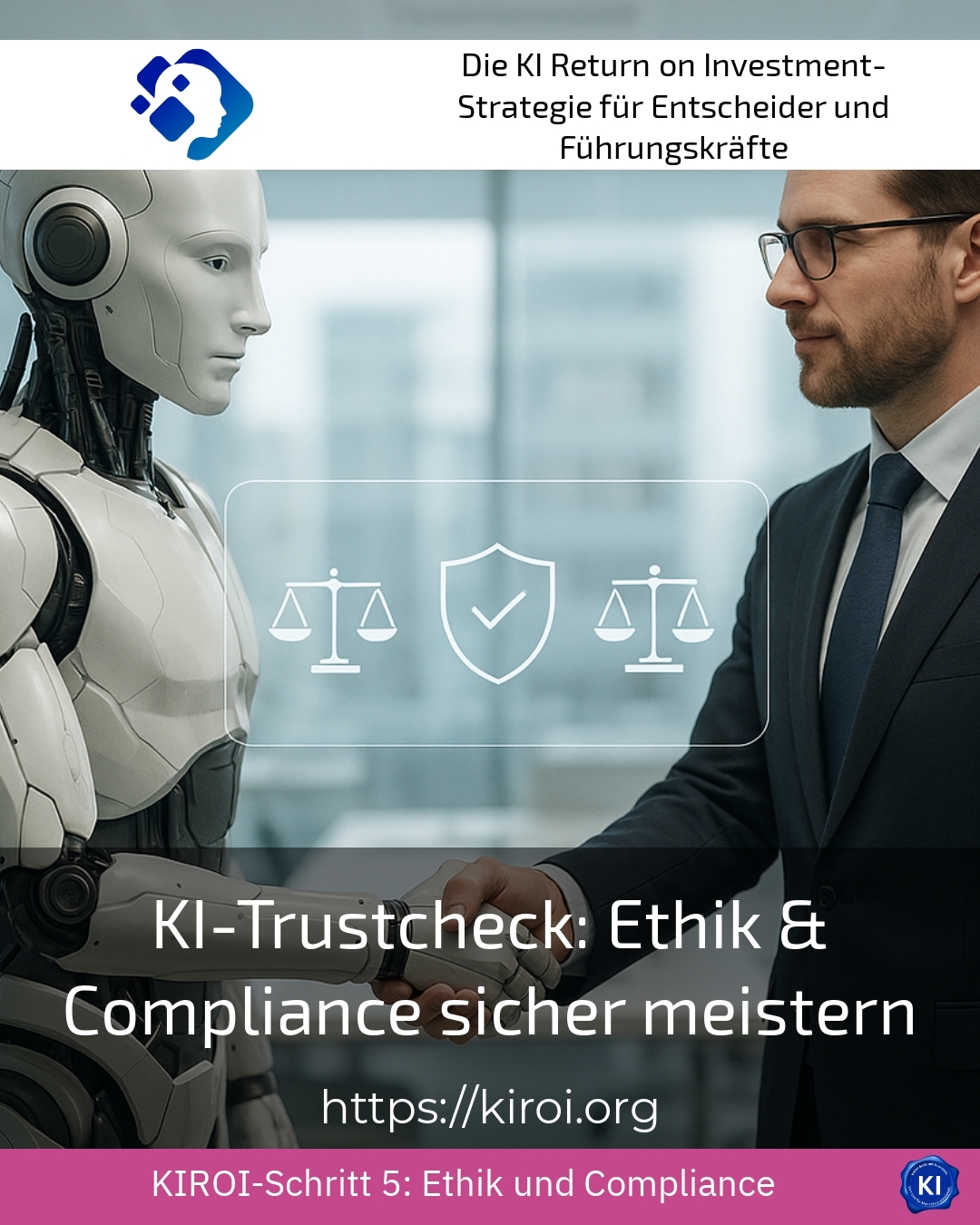
Imagine your company uses intelligent systems that make decisions, optimise processes, and handle customer requests. Suddenly, questions arise: Does the system act fairly? Does it comply with legal requirements? This is precisely where the AI Trustcheck: Mastering Ethics & Compliance Securely gets into the game. More and more organisations are realising that technological innovation without ethical foundations will fail in the long run. This article shows you how to build trust in automated systems. You will learn about the pitfalls that lie in wait and how to elegantly overcome them. The journey takes you through practical examples, concrete recommendations for action and proven strategies.
Why trust in intelligent systems is crucial
Trust forms the foundation of any successful technology adoption. Without trust, employees will not fully utilise new tools. Customers will turn away if they have doubts about fairness. Regulators will impose severe penalties for violations. Therefore, forward-thinking companies invest in systematic review processes. These processes assess both technical and ethical aspects. Such an approach protects against reputational damage and legal consequences. At the same time, it fosters acceptance among all stakeholders.
Let us consider an example from the financial sector: a bank introduces an automated lending system. Initially, everything runs smoothly, but then complaints begin to pile up. Certain customer groups are systematically disadvantaged. The bank had failed to test the system for hidden biases. A structured AI Trust Check would have uncovered this problem early on. Another example comes from the healthcare sector: a hospital uses a diagnostic system that provides treatment recommendations. Patients are increasingly asking how these recommendations are generated. Without transparent explanations, trust in the treatment declines. The third example concerns retail: an online shop uses personalised pricing. Customers discover that they see different prices. The social media shitstorm damages the brand long-term.
Understanding the Pillars of Ethical Technology Use
Ethical technology use rests on several foundational pillars. Transparency comes first: users must be able to understand how decisions are made. Fairness follows immediately, as no system should discriminate. Accountability means that people remain responsible for automated decisions. Data protection safeguards the privacy of all those affected. Security prevents manipulation and misuse. Together, these pillars form the framework for trustworthy systems.
The importance of these pillars is particularly evident in the insurance sector. An insurer uses automated damage assessment for car accidents. The system evaluates photos and estimates repair costs. Customers only accept lower payouts if they can understand the calculation. Transparency creates the necessary acceptance here. An energy provider uses intelligent grids that analyse consumption patterns. Customers worry about their privacy. The provider must actively communicate data protection. A logistics company optimises delivery routes through automated planning. Drivers criticise unrealistic timeframes. The company must ensure fairness towards its employees.
AI Trustcheck as a Quality Assurance Tool
A systematic testing process functions like quality control for intelligent systems. It examines data sources for potential biases. It analyses decision-making logic for traceability. It evaluates impacts on different user groups. It documents all findings for later review. Such tests should take place regularly, not just once. Systems change due to new data and adjustments. Therefore, a continuous monitoring process is recommended.
Best practice with a AIROI customer
A medium-sized engineering company implemented an automated applicant assessment system. The system was intended to speed up and objectify the recruitment process. However, after its introduction, the HR team noticed irregularities. Certain qualification profiles were systematically rated worse. The company turned to transruptions-coaching for comprehensive support. Together, we developed a structured testing process for the existing system. The analysis revealed hidden biases in the training data. Certain university degrees were overvalued, while practical experience was undervalued. We supported the team in reconfiguring the system with cleansed data. Additionally, we established a monitoring dashboard for continuous oversight. Applicant satisfaction demonstrably increased after the optimisation. The HR team reports significantly higher acceptance among managers. The process took a total of three months of intensive collaboration. The company now has a documented testing procedure for all automated systems. Clients frequently report similar experiences after implementing such testing processes.
Meet regulatory requirements with confidence.
The regulatory landscape for intelligent systems is evolving rapidly. The European AI Act defines clear risk classes and requirements [1]. High-risk systems are subject to strict documentation obligations. Companies must create and maintain technical documentation. Conformity assessments will be mandatory for certain applications. Non-compliance can result in fines amounting to millions. Therefore, early preparation for these requirements is worthwhile.
Particular challenges arise in the field of personnel services. A temporary employment agency uses automated assignment of workers to jobs. The system is considered high-risk as it affects employment relationships. The company must maintain extensive documentation. Requirements are also tightening in the banking sector. Automated credit decisions require detailed explainability. Customers have a right to understandable justifications. A telecommunications provider uses chatbots for customer service. These must be clearly recognisable as automated systems. Deception about their machine nature is prohibited.
Leveraging Ethics & Compliance as a Competitive Advantage
Forward-thinking companies don't see compliance as a burden. They recognise it as a genuine competitive advantage. Customers increasingly favour trustworthy providers. Talent chooses employers with clear ethical standards. Investors are paying more attention to ESG criteria. A proven commitment to responsible technology use pays off. It differentiates them from less scrupulous competitors.
A pharmaceutical company is utilising intelligent systems for drug development. It actively communicates its ethical guidelines for this research. Patients trust this company more than competitors without such transparency. A car manufacturer is developing autonomous driving functions with strict ethical guidelines. It regularly publishes reports on safety testing and ethical evaluations. Customers appreciate this openness and trust the brand. A media company is focusing on transparent recommendation algorithms. It explains to users why certain content is suggested. This transparency promotes long-term user retention.
Practical steps for implementation
Introducing a structured audit process requires a systematic approach. First, you will inventory all automated systems within your company. Then, you will assess each system based on its risk potential. High-risk systems will be prioritised for auditing. You will define clear responsibilities for each system. You will establish regular review cycles. You will train employees on how to handle ethical questions. Transruption Coaching will gladly support you with these projects.
A trading company began its journey with an inventory check. It identified over twenty different automated systems in use, ranging from inventory management to personnel planning. Prioritisation focused on customer-related systems. A manufacturing company started with the most quality-critical system. Automated error detection in production received attention first. Following successful testing, other systems were gradually implemented. A service company formed an interdisciplinary team. Technicians, lawyers, and ethics officers worked together. This collaboration proved to be the key to success.
Best practice with a AIROI customer
An internationally operating logistics company was facing a particular challenge. It operated different automated systems for route planning in various countries. Regulatory requirements varied significantly between markets. The company was looking for a uniform approach for all locations. In collaboration with transruptions-coaching, we developed a modular audit framework. This framework takes the strictest requirements as its basis. Local adjustments supplement the basic structure as needed. We supported the pilot phase in three selected countries. The results significantly exceeded management's expectations. Employees understood the ethical implications of their systems for the first time. The documentation already met all regulatory requirements before new laws came into effect. The company is actively using this lead in customer communication. Clients often report similarly positive experiences after structured support. The rollout to all locations is currently proceeding as planned. The framework now serves as a template for further digitalisation projects within the group.
KI-Trustcheck: Continuously developing Ethics & Compliance
A one-off testing process is insufficient for sustained compliance. Systems evolve through usage and new data. Regulatory requirements are continually tightening. Societal expectations are also changing. Therefore, you need an ongoing improvement process. Regular audits identify new risks early on. Feedback loops from users provide valuable insights. Training keeps employees up-to-date.
An insurance company introduced quarterly reviews of all automated systems. Different systems are focused on each quarter, so all systems undergo a complete audit within a year. A technology group established an internal ethics board. This committee evaluates new projects before implementation. It also supports existing systems with critical changes. A trading company set up an anonymous reporting channel where employees can voice ethical concerns. These inputs feed directly into the audit process.
My AIROI Analysis
Addressing the ethical and regulatory aspects of intelligent systems is becoming a crucial success factor. Companies that invest in structured audit processes today create sustainable competitive advantages. They minimise legal risks and strengthen the trust of all stakeholders. The AIROI analysis clearly shows: The AI Trustcheck: Mastering Ethics & Compliance Securely It is not an optional additional task. It is core business for any organisation that uses automated systems. Regulatory requirements will continue to increase in the coming years. Early preparation provides valuable flexibility. The technical challenges are manageable with the right methodical approach. The greater challenge often lies in cultural transformation. Employees must understand ethical issues as part of their responsibilities. Leaders must provide resources for continuous auditing. Transruption coaching supports organisations in this multi-layered transformation. We provide impetus for strategic alignment and assist with practical implementation. Clients often report surprising side effects: in addition to compliance, process quality and employee satisfaction also improve. A well-thought-out auditing process forces reflection on fundamental business practices. This reflection often leads to valuable improvements far beyond the original reason. The investment in ethical technology use pays off many times over.
Further links from the text above:
[1] EU AI Act – Regulatory Framework for Artificial Intelligence
For more information and if you have any questions, please contact Contact us or read more blog posts on the topic Artificial intelligence here.








 Deutsch
  English (UK)