
Have you ever wondered why some companies succeed with intelligent systems while others fail despite significant investment?
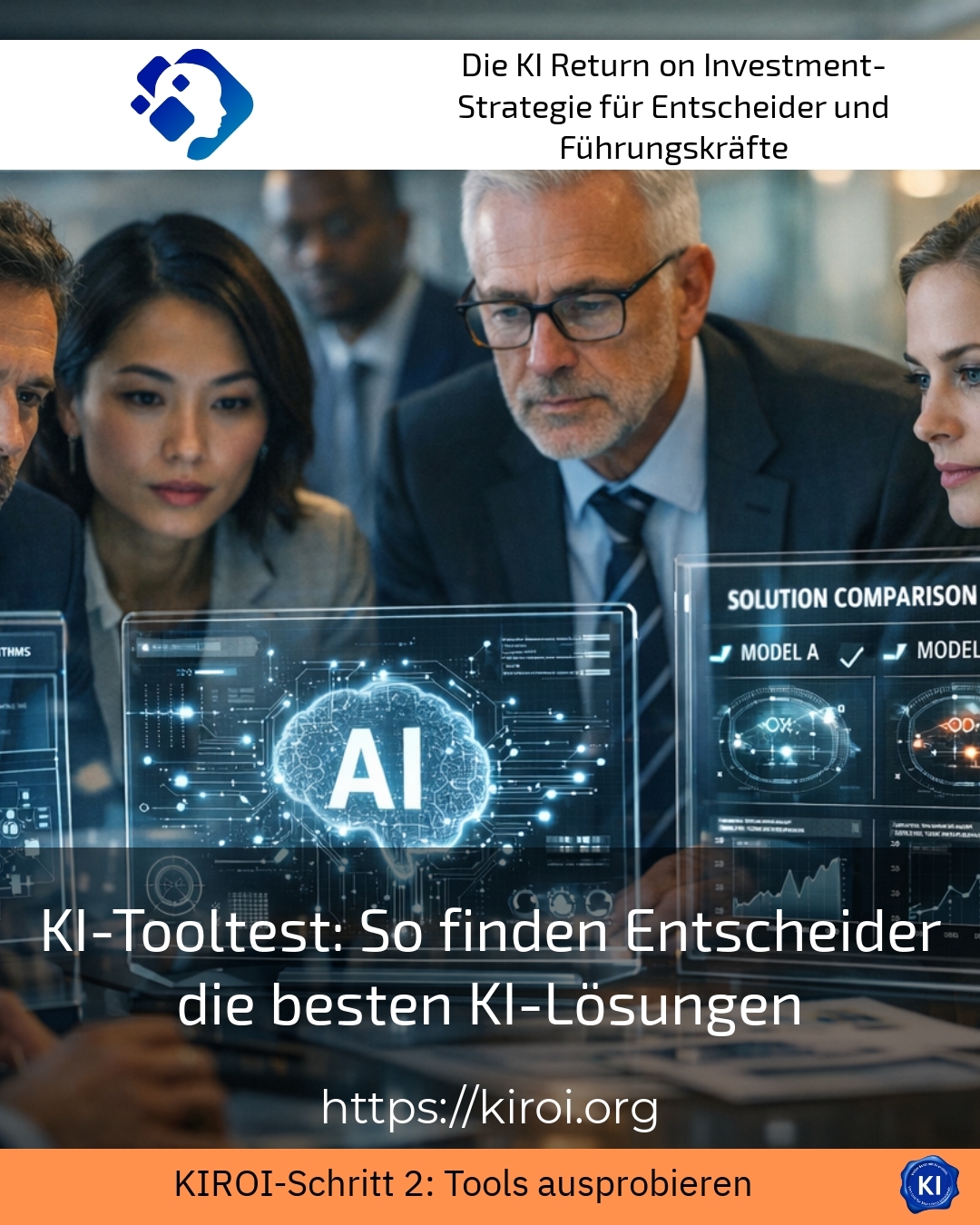
The answer often lies not in the technology itself, but in the way decision-makers make their choices. A structured approach AI Tool Test This forms the foundation for sustainable success. Many executives report feeling overwhelmed by the abundance of offers. At the same time, the pressure to deliver results quickly is growing. In this situation, a systematic approach to orientation is essential. This article shows you practical ways to identify the right solutions for your company.
The challenge: Why many selection processes fail
Decision-makers face a paradoxical situation in the digital age. On the one hand, countless providers promise revolutionary improvements through machine learning. On the other hand, the transparency often lacks regarding which tools actually fit their own business model. Clients often report costly mistakes resulting from superficial evaluations. The reasons for this are manifold and range from unclear requirements profiles to a lack of technical understanding.
For example, a medium-sized manufacturing company invested six-figure sums in a predictive maintenance system. After six months, it turned out that the data base was insufficient. A logistics service provider implemented route optimization without considering its specific delivery windows. The finance department of an insurance company relied on automated claims processing without sufficient training for employees. These examples illustrate the need for a well-thought-out selection process [1].
Criteria for a meaningful AI tool test
The evaluation of intelligent systems requires a multidimensional approach that goes far beyond superficial functional comparisons. First, decision-makers should examine and question the strategic fit of the solution in relation to the company’s vision. Furthermore, technical capabilities for integration and scalability play a crucial role in long-term success. Careful AI Tool Test It also takes into account ethical aspects and issues of data sovereignty.
In healthcare, for example, image recognition systems for radiological imaging must meet the highest precision standards. A hospital tested three different providers over a period of four months. The results differed significantly in terms of detection accuracy for rare pathologies. A pharmaceutical company evaluated systems for accelerating drug research. It was found that some solutions were better aligned with existing laboratory data than others [2].
Systematically design technical evaluation in AI tool testing
Technical testing forms the core of any well-informed selection decision. Decision-makers should not rely solely on glossy presentations by vendors. Instead, conducting pilot projects under realistic conditions is recommended. The quality of the results depends significantly on the representativeness of the test data.
For example, an energy provider tested predictive models for electricity consumption using historical data from three years. A retailer initially evaluated recommendation systems in selected stores before planning a nationwide rollout. A bank tested fraud detection systems using anonymized transaction data from past claims. This structured approach significantly reduces the risk of costly misjudgments.
Best practice with a AIROI customer
An international trading company faced the challenge of optimizing its inventory planning while simultaneously reducing overstocking. The previous forecasting methods yielded unsatisfactory results, leading to high capital commitment costs. As part of the transruptive coaching support, we jointly developed a structured evaluation process for intelligent planning systems. First, the project managers defined clear success metrics and minimum requirements for forecast accuracy. Subsequently, we identified five potential providers that fit the company structure. Each candidate received identical test datasets from different product groups with different demand patterns. The evaluation spanned eight weeks and included both quantitative and qualitative criteria. Particularly important was the involvement of future users from category management in the evaluation process. After completing the tests, a clear favorite emerged that improved the prediction accuracy by fourteen percentage points. The implementation was carried out gradually and was accompanied by regular prompts from the coaching.
Organizational aspects when choosing tools
In addition to technical factors, organizational framework conditions determine the success or failure of an introduction. Employee acceptance represents a frequently underestimated success factor. Change management and training concepts should be considered already during the selection phase. A tool may be technically sophisticated, but fails due to a lack of user acceptance.
An automotive supplier integrated plant managers early on in the evaluation of quality assurance systems. A hotel chain employed front-desk staff in selecting an automated booking assistance system. A media company collaborated with editors to design the testing process for content creation tools. These participatory approaches significantly increase the later adoption rate [3].
Conducting a cost-benefit analysis properly
The economic evaluation of intelligent systems is complex because many benefits are difficult to quantify. Direct savings through automation can be calculated relatively easily. It becomes more difficult with strategic advantages such as improved customer loyalty or faster market introduction. A holistic approach is necessary to assess the economic value of intelligent systems. AI Tool Test Therefore, it also takes qualitative user dimensions into account.
A telecommunications provider not only calculated saved service hours through intelligent assistants. It also assessed improved customer satisfaction through faster problem resolution. A machine builder quantified the value of predictive maintenance through avoided production outages. A law firm quantified the benefits of automated document analysis through freed up capacity for more demanding mandates.
Data protection and compliance are taken into account in the AI tool test
Regulatory requirements are becoming increasingly important in the selection of intelligent systems. European legislation places high demands on the transparency and explainability of algorithmic decisions. Decision-makers must assess whether potential solutions meet these requirements. Documentation of the decision-making process is mandatory.
A staffing service evaluated systems for pre-screening applications under strict fairness criteria. An insurance company tested automated tariff calculations for discriminatory patterns in the training data. A public transport operator tested optimization systems for the accountability of schedule decisions. These compliance aspects are becoming crucial selection criteria [4].
Best practice with a AIROI customer
A mid-sized financial services provider sought a solution for the automated analysis of loan applications and turned to our transruptive coaching to support this sensitive project. The regulatory requirements for the traceability and fairness of decisions posed particular challenges. Together, we developed a criteria catalog that linked technical capabilities with compliance requirements. We identified six providers that were generally suitable and invited them to structured presentations. Each provider had to demonstrate how its system justified and documented decisions. Particular attention was paid to avoiding biases in certain population groups. The evaluation also included discussions with reference clients from the financial sector to gain practical experience. After three months of intensive examination, the decision was made to choose an operator that placed transparency at the heart of its architecture. The collaboration is supported by regular coaching sessions to address emerging issues promptly.
Assess scalability and future-proofing
Smart systems should not only meet current requirements but also be able to grow with the company. Technological development is advancing rapidly and requires flexible architectures. Decision-makers should examine the innovation capabilities of providers as well as their financial stability. A leading system today may already be outdated tomorrow.
A food manufacturer deliberately chose a modular solution for its quality control that could later be expanded to include additional production lines. A logistics company valued open interfaces to connect different systems together. A software company tested compatibility with upcoming technology standards before deciding on a development assistant.
Obtain references and practical experience
The credibility of vendor presentations remains limited without validation by independent sources. Conversations with existing users provide valuable insights into their practical applicability. Decision-makers should specifically ask about challenges and learning curves. The best references come from comparable industries and company sizes.
A chemical company visited two reference customers before deciding on a process optimization system. A home improvement chain organized an exchange of experiences with dealers from other countries who used similar recommendation systems. A health insurance provider initiated a working group with other insurers on the topic of automated claims processing [5].
My AIROI Analysis
The systematic selection of intelligent systems is developing into a core competence of successful companies in the digital age. My observations from numerous accompanying projects reveal clear patterns that determine success and failure. Organizations that have a structured approach to data management and analytics are more likely to achieve their goals. AI Tool Test conducting a thorough selection process achieves significantly better results than those that rely on superficial comparisons. The investment in a careful selection process more than pays off in avoided misjudgments.
Approaches that combine technical evaluation with organizational change management are proving particularly successful. The early involvement of future users increases acceptance and provides valuable perspectives for evaluation. Compliance requirements will increasingly influence choice decisions in the future, making transparency and explainability key criteria. Decision-makers should not be misled by marketing promises but insist on demonstrable results under realistic conditions.
Transruptions coaching support helps identify blind spots in the selection process and compensate for methodological weaknesses. Often, companies lack the neutral authority to critically question vendor claims and bring alternative perspectives. The complexity of the subject requires a structured framework that external influencers can valuable complement. Ultimately, it is about asking the right questions and systematically evaluating the answers.
Further links from the text above:
[1] McKinsey – The State of AI
[2] Gartner – Artificial Intelligence Insights
[3] Harvard Business Review – Artificial Intelligence
[4] EU Commission – Regulatory Framework for AI
[5] Bitkom – Artificial Intelligence
For more information and if you have any questions, please contact Contact us or read more blog posts on the topic Artificial intelligence here.









 Deutsch
 English (UK)