
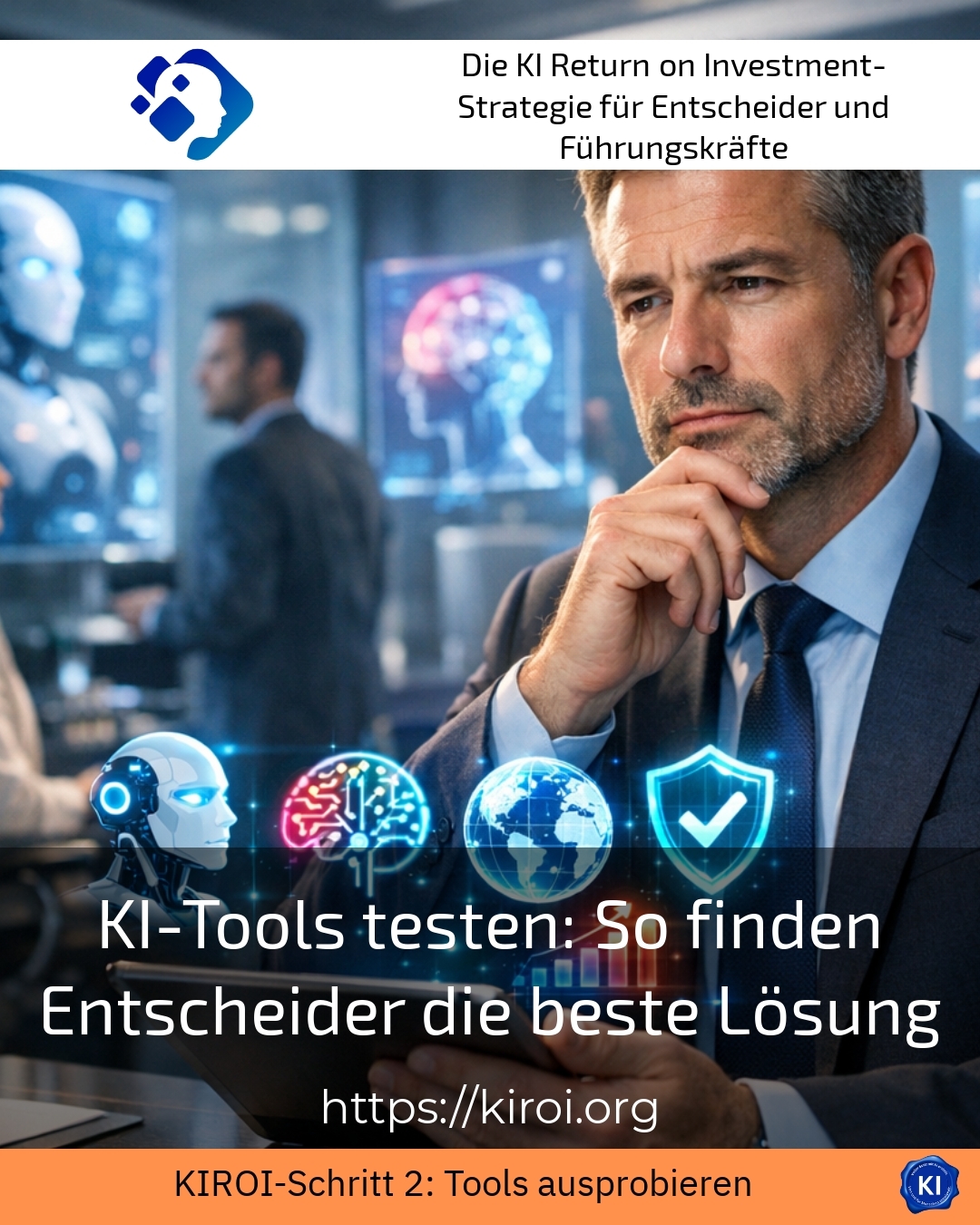
How do you choose the right digital tool when the market is flooded with hundreds of seemingly revolutionary solutions? This question currently concerns numerous executives and decision-makers, because Testing AI tools It has now become one of the most strategically important tasks for companies that want to secure their competitiveness in the long term. While some organizations invest too quickly in technologies that later prove unsuitable, others take a methodical approach and develop systematic evaluation processes that not only promise short-term success but enable sustainable transformations.
The challenge of technology selection in complex corporate structures
The variety of intelligent systems available presents significant challenges for decision-makers. For example, a medium-sized manufacturing company wants to automate its quality control. There are dozens of different image recognition systems available for this purpose. Each system promises efficiency gains and cost savings. However, the actual performance differs significantly. Decision-makers often report being overwhelmed by the complexity. They need structured methods for evaluation.
A logistics service provider faced the challenge of optimizing its route planning. The management team evaluated several providers simultaneously. In doing so, it developed its own evaluation criteria. These were based on real operational processes. The company tested the systems under everyday conditions. This resulted in valid comparison data. A trading company, in turn, sought solutions for personalized customer interaction. It systematically evaluated various recommendation systems. The process took several months. However, the result justified the effort.
AI tools testing: Methodological foundations for informed decisions
Systematic evaluation of digital tools requires a precise definition of the requirements first. These requirements should be measurable and verifiable. Many organizations begin with a comprehensive review of their processes. They identify areas with potential for optimization. Subsequently, they formulate concrete goals. These goals serve as the basis for the evaluation.
For example, a financial services provider defined five core criteria for its evaluation. First, the system had to meet regulatory requirements. Second, integration into existing infrastructures should be possible. Third, the focus was on scalability. Fourth, the company evaluated user friendliness. Fifth, total operating costs played a crucial role. This structured approach enabled objective comparisons. This prevented the company from making emotional decisions.
Best practice with a AIROI customer
An international industrial company approached the transruptions coaching team with a complex set of questions. The organization wanted to fundamentally modernize its maintenance processes and was looking for suitable predictive maintenance solutions. First, the project team, together with internal stakeholders, analyzed the existing processes and identified critical success factors for the planned transformation. It was revealed that technological capabilities alone were not decisive; rather, employee acceptance in maintenance was a key factor. The transruptions coaching process accompanied the company over a period of six months in the systematic evaluation of four different providers. Each provider was given the opportunity to demonstrate its system in a pilot environment. The evaluation was based on a specially developed scorecard with weighted criteria. Employees from various departments were actively involved in the evaluation process. This involvement later significantly increased the acceptance of the chosen solution. At the end of the process, the company not only identified the technically best solution, but also developed a deep understanding of the requirements for successful digitization projects.
Criteria for the successful evaluation of intelligent systems
The development of suitable evaluation criteria requires interdisciplinary collaboration. Technical experts bring their expertise to the table. Professional departments formulate practical requirements. The management defines strategic frameworks. Only through this collaboration do meaningful criteria emerge. For example, an energy provider included end customers in its evaluation [1]. These provided valuable insights into the desired user-friendliness.
Another example comes from a healthcare provider. They evaluated various documentation systems for medical staff. The evaluation included aspects such as speech recognition and automatic recording. Accuracy was particularly important in medical terminology. The company tested the systems under realistic conditions. Nurses and doctors provided direct feedback. This hands-on evaluation yielded reliable results.
Testing strategies with AI tools in different application areas
The approach to evaluation processes varies significantly depending on the field of application. A media company that tested systems for automated content creation placed particular emphasis on creative quality [2]. The evaluation was carried out by experienced editors. They compared machine-generated texts with human work. The results showed interesting differences. Some systems were convincing with standard formats. With more complex content, significant limitations were evident.
A telecommunications provider, in turn, focused its evaluation on customer service solutions. Chatbots and virtual assistants were at the center of the testing. The company simulated thousands of typical customer inquiries. It evaluated response quality and response speed. The ability to escalate to human agents was also tested. This comprehensive evaluation took several weeks. However, the investment in this process paid off.
In the area of personnel recruitment, a service company evaluated various matching algorithms. These were intended to identify suitable candidates for open positions. The evaluation took into account both efficiency and ethical aspects. Non-discriminatory decisions were a central criterion. The company also examined the comprehensibility of the recommendations. Transparency in the decision-making processes was essential.
The role of pilot projects in technology assessment
Pilot projects offer the opportunity to test technologies under real conditions. For example, a retail company started with a limited test run. Only a few stores initially received the new inventory management solution. The employees systematically documented their experiences. Technical problems were quickly identified. Adjustments were made before the company-wide rollout. This approach significantly reduced risks.
An insurance company adopted a similar approach to claims processing. It tested an automated review system in one department. The claims officers compared machine-based assessments with manual ones. Discrepancies were analyzed and documented. The system learned from this feedback. After six months, the accuracy had improved significantly. The pilot enabled informed decision-making about further implementation.
Best practice with a AIROI customer
A medium-sized family business in the manufacturing sector sought support in digitizing its production processes and turned to the transruptions coaching program because the management was unsure which of the numerous solutions available on the market would actually suit the company. The coaching team initially conducted a comprehensive requirements analysis, which took into account both technical and cultural aspects, as clients often report that technological projects fail due to a lack of employee acceptance. Together, the project team developed an evaluation matrix that, in addition to functionality and costs, also considered factors such as training effort, adaptability to existing processes, and the provider’s long-term development prospects. Three potential solutions were shortlisted and tested for four weeks in a pilot department, with workshop managers, quality inspectors, and production planners sharing their experiences in structured feedback discussions. The transruptive coaching provided continuous impetus for reflection and helped the company not only to identify the obvious advantages and disadvantages but also to identify more subtle differences between the systems. At the end of the process, the company chose a solution that was not initially the favorite, but proved to be the best suited in practical testing.
Organizational prerequisites for successful evaluations
Successful evaluation of digital tools requires adequate resources. Time, budget, and qualified personnel must be available. For example, a pharmaceutical company established its own evaluation unit [3]. This unit exclusively focused on testing new technologies. The unit consisted of experts from various disciplines. This structure enabled systematic and in-depth analyses.
One automotive supplier took a different approach. It formed temporary cross-functional teams for specific evaluation projects. These teams consisted of representatives from relevant departments. They worked closely together during the evaluation phase. After the project concluded, the teams disbanded again. This flexible approach suited the company culture well. It nevertheless enabled informed decisions.
An educational institution, in turn, relied on external support for the evaluation. Consultants brought experience from other projects. They helped develop evaluation criteria. The internal expertise was gradually built up as a result. This combination of external expertise and internal knowledge proved valuable.
Avoiding common pitfalls when testing AI tools
Many organizations make avoidable mistakes when evaluating technology. A common problem is focusing on features instead of benefits. For example, a construction company chose the solution with the most features. In practical use, however, many of the features turned out to be irrelevant. The complexity even hindered the use of the truly important features.
Another stumbling block is the insufficient involvement of future users. A hotel chain introduced a booking management system without sufficiently consulting the reservation team. The employees rejected the system. Acceptance remained consistently low. The hoped-for efficiency gains did not materialize.
Unrealistic timeframes also regularly lead to problems. A financial institution tried to evaluate a complex risk assessment solution in just two weeks. The analysis remained superficial. Important weaknesses were only identified after implementation. A subsequent correction caused significant additional costs.
Long-term perspectives and continuous evaluation
The evaluation of digital tools does not end with the purchase decision. Successful organizations establish continuous evaluation processes. For example, a technology company reviews its systems semi-annually. It compares the actual performance with the original expectations. Deviations are analyzed and documented. This practice enables timely adjustments.
A consumer goods manufacturer has developed a similar approach. New technologies are evaluated again after twelve months. The company examines whether the promised benefits have occurred. User satisfaction is also systematically recorded. This follow-up evaluation provides valuable insights for future decisions.
A public administrative body goes even further. It has established a formal process for regular market monitoring [4]. New developments are continuously monitored. When relevant innovations occur, an evaluation project is automatically initiated. This proactive approach supports the organization’s innovation capability.
My AIROI Analysis
The systematic evaluation of intelligent systems is becoming a core competence of future-oriented organizations, and the topic Testing AI tools It will continue to gain in importance in the coming years, because the number of available solutions is continuously increasing. From my consulting practice, I can report that companies that establish structured evaluation processes achieve significantly better results in their digitalization projects than those that make spontaneous or purely intuitive decisions.
The key to success lies in the combination of several factors. First, requirements must be defined precisely. Then suitable evaluation criteria should be developed. Pilot projects enable realistic testing. The involvement of all relevant stakeholders increases subsequent acceptance.
It seems particularly important to me to recognize that technology assessment should not be a one-time event. Successful organizations understand this as a continuous process. They remain vigilant towards new developments. They regularly question existing solutions. This attitude supports long-term competitiveness.
Transruptive coaching provides valuable support in this regard. It helps organizations consider not only the technical aspects, but also cultural and organizational factors. This holistic perspective significantly increases the likelihood of success. Decision-makers who take this approach often report more sustainable transformation results.
Further links from the text above:
[1] McKinsey – The State of AI
[2] Harvard Business Review – Artificial Intelligence
[3] Gartner – Artificial Intelligence Insights
[4] Bitkom – Artificial Intelligence
For more information and if you have any questions, please contact Contact us or read more blog posts on the topic Artificial intelligence here.








 Deutsch
 English (UK)