
Have you ever wondered why some leaders seemingly effortlessly find the perfect digital tools for their organization, while others, despite significant investments, repeatedly fail and waste valuable resources?
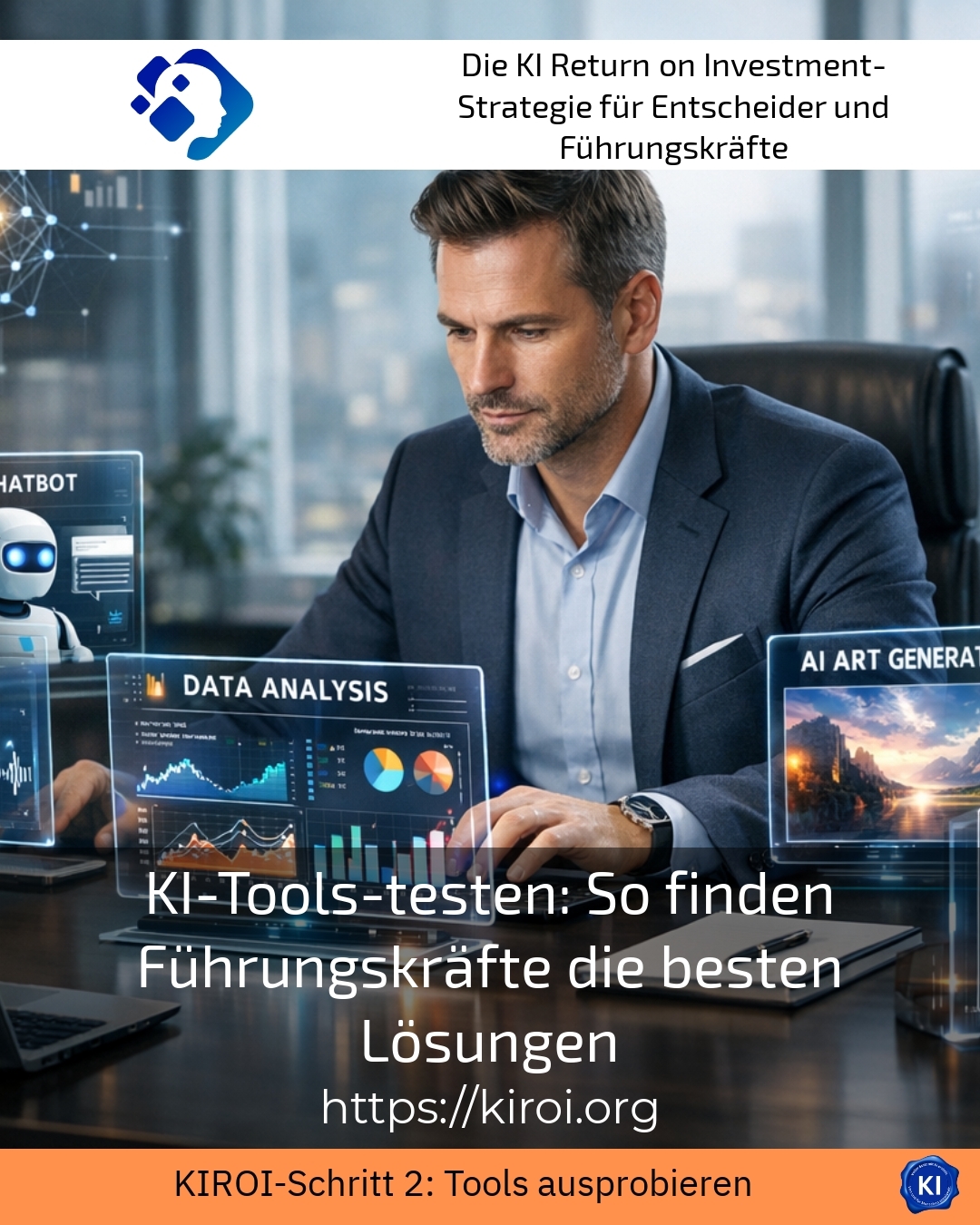
The answer often lies in a structured approach. AI tools testing, This goes far beyond superficial demos and marketing promises. In a time when artificial intelligence permeates almost every business sector, decision-makers face a formidable challenge. The market is flooded with solutions that all promise the same thing: increased efficiency, cost savings, and competitive advantages. But how do you separate the wheat from the chaff? How do you identify those tools that truly fit your own company? These questions concern executives on a daily basis, and the answers are by no means trivial. In the following, you will learn which methods have proven themselves in practice and how you can proceed systematically.
Why structured AI tool testing has become indispensable
The digital transformation has produced a flood of intelligent applications. Many executives report feeling overwhelmed by the sheer number of available options. At the same time, the pressure to make quick decisions is increasing. This combination often leads to costly misjudgments. For example, a medium-sized company invests in a seemingly revolutionary automation solution only to find months later that it does not harmonize with the existing systems. Such scenarios can be avoided through systematic testing.
Let us first consider the typical challenges faced by decision-makers. First, they often lack the technical expertise to critically question vendor promises. Second, they lack the time for detailed evaluations. Third, the criteria for successful implementation are rarely clearly defined. These three factors together form a barrier that prevents many organizations from realizing the full potential of intelligent technologies. The good news is that with the right methodology, these hurdles can be overcome.
Best practice with a AIROI customer
An internationally operating company faced the task of modernizing its customer service processes. The management had already contacted several providers of chatbot solutions and had initially been enthusiastic about the presentations. As part of our transruptive support, we developed a structured testing framework that went far beyond the usual product demos. We first defined clear success criteria that were aligned with the company’s actual needs. Subsequently, we conducted pilot projects with three different providers, with each solution being tested under realistic conditions. The results were surprising: The provider with the most impressive presentation performed the worst in practice. Instead, a less well-known solution proved to be optimally suited. Through this systematic approach, the company saved significant costs and avoided a misjudgment that could have had negative consequences over the years. The employees also reported a significantly higher level of acceptance, as they were involved early in the testing process.
The five pillars in successful AI tool testing
A well-thought-out evaluation process is based on several fundamental elements. These pillars form the foundation for informed decisions. They help avoid hasty emotional decisions and instead act based on facts. The following sections detail these core elements in more detail.
Needs analysis as a starting point
Before any solutions are even considered, there must be absolute clarity about one’s own requirements. Many executives skip this step and immediately start market research. This is a mistake that will backfire later. A thorough needs analysis includes documenting existing processes, identifying weak points, and defining concrete goals. Only someone who knows exactly what problem needs to be solved can find the appropriate solution. For example, a retail company wants to optimize its inventory planning. The superficial requirement is: better forecasts. However, the deeper analysis reveals that the real problem lies in the poor data quality of the suppliers. Even the most sophisticated forecasting solution would not help here.
Furthermore, you should consider the perspectives of various stakeholders. The IT department has different priorities than the sales team. Management views investments from a strategic perspective. Only when all these perspectives are taken into account does a complete picture of the actual requirements emerge. Clients often report surprises resulting from this multiperspective analysis.
Develop a criteria catalog
After the needs analysis, a structured criteria catalog is developed. This serves as the objective basis for all further evaluation steps. It prevents decisions from being influenced by subjective impressions or clever marketing. Such a catalog should take into account both hard and soft factors. Hard factors include technical requirements such as interfaces, scalability, and data security. Soft factors include aspects such as user friendliness, provider reputation, and support quality.
The weighting of the individual criteria is particularly important. Not all requirements are equally important. For a financial services company, regulatory compliance is of paramount importance. A creative agency environment, on the other hand, prioritizes flexibility and design possibilities. This weighting should be determined before the evaluation begins to avoid subsequent discussions. For example, a logistics service provider must ensure that each solution communicates seamlessly with its tracking systems. A healthcare service provider, on the other hand, focuses primarily on data protection compliance.
Practical testing methods for everyday business operations
Theory is important, but ultimately practical testing determines success or failure. Different testing methods have proven their worth in different contexts. The choice of the right method depends on factors such as budget, timeframe, and risk tolerance.
Proof of Concept as a basis for decision-making
A proof of concept allows a solution to be tested under controlled conditions. A defined application case is used and tested with real data. This method provides valuable insights into the actual performance of a solution. It identifies weaknesses that remain hidden in product demonstrations. For example, a manufacturing company tests a quality control solution using its own production images. An insurance company tests document processing using its real claims data. This quickly reveals whether the solution meets the specific requirements.
Conducting a proof of concept requires careful planning. First, clear success criteria must be defined. Then, representative test data must be selected. Finally, a realistic timeframe is set. Many providers actively support this process because they know that a successful proof of concept positively influences the purchasing decision. However, be cautious: Some providers optimize their solutions specifically for such tests. Therefore, the test conditions should be as close as possible to the later reality.
Best practice with a AIROI customer
A service company with several thousand employees was looking for a solution to automate HR processes. The HR department was overloaded and spent too much time on administrative tasks such as leave applications, sick notes, and certificates. As part of our transruptive support, we developed a multi-stage testing process that involved all relevant stakeholders. First, together with the HR employees, we identified the time-consuming processes and prioritized them based on their potential for automation. Subsequently, we invited five providers to present structured solutions, where they had to demonstrate their solutions based on our specific requirements. The three most promising candidates then had the opportunity to conduct a proof of concept. It turned out that while the solution was technically superior, the employees considered it too complex. The alternative ultimately selected offered fewer features, but was convincing due to its intuitive operation and quick implementation. Although this decision process took several weeks, the result fully justified the effort.
Pilot projects on a limited scale
While a proof of concept tests the basic suitability, a pilot project goes a step further. Here, the solution is actually deployed in a delimited area of the company. This method provides realistic insights into the day-to-day use of the new technology. It shows how employees interact with the solution and what adjustments are necessary. For example, a retail company initially rolls out a recommendation engine only in one branch. A media company tests content generation only in one editorial department.
When selecting the pilot area, you should proceed strategically. Choose an area that is representative of the entire company. Avoid environments that are particularly simple or particularly difficult. The results should be meaningful and transferable. At the same time, you need support from the involved employees. These should be open to new ideas and able to provide constructive feedback. A successful pilot also generates positive word-of-mouth publicity, which facilitates the later rollout.
Typical pitfalls and how to avoid them
Even with careful planning, numerous dangers lurk in the evaluation process. Knowledge of these typical errors helps to avoid them. The following points are based on experiences from numerous consulting projects.
The most common mistake is overvaluing the functionality. Executives tend to choose the solution with the most features. However, they overlook that additional features also mean additional complexity. A leaner solution that does exactly what is needed is often the better choice. A consulting firm does not need comprehensive ERP integration if it merely wants to capture project times. A restaurant needs no complex business intelligence solution for its reservation management.
Another common mistake is neglecting the implementation costs. The purchase price of a solution often only accounts for a fraction of the total costs. Training, customization, integration, and ongoing support quickly add up to significant amounts. Therefore, always request a complete cost breakdown over the entire planned usage period. Also take into account internal costs such as the time spent by your employees. For example, a construction company massively underestimated the training costs for its construction managers. The implementation was delayed for months.
The role of guidance and expertise in testing AI tools
Given the complexity of the topic, the question arises as to how much external support is sensible. The answer depends on the internal resources and competencies. In many cases, professional guidance can make the difference between success and failure.
Transruptions Coaching positions itself clearly as a support for projects related to digital transformation. The focus is not on recommending specific products, but on empowering the organization. Leaders receive guidance for their decision-making and are supported in independently drawing the right conclusions. This type of coaching is particularly valuable when internal expertise is lacking for thorough technology evaluations. For example, a higher education institution benefits from external expertise when selecting a learning platform. A nursing home needs support in evaluating documentation solutions.
Best practice with a AIROI customer
A medium-sized family business in the manufacturing sector faced a strategic decision point. The management wanted to focus more on intelligent automation, but was unsure where to start. The existing IT department was overloaded with day-to-day operations and lacked the necessary expertise to conduct a thorough market analysis. As part of our transruptive support, we first developed a roadmap that prioritized different use cases. Subsequently, we accompanied the evaluation of solutions for the first application: the automatic detection of production errors. We conducted structured vendor discussions, defined test scenarios, and assisted in the implementation of proof of concepts. Particularly valuable was the independent perspective we brought. We were able to align marketing promises and identify technical limitations that the internal team would have missed. The result was a well-informed decision that was supported by all involved parties. The implementation proceeded smoothly because potential problems were already identified during the testing process.
My AIROI Analysis
The systematic evaluation of intelligent tools is not an optional additional task, but a strategic necessity for modern executives. The market continues to grow and the selection becomes even more complex. Those who invest in structured testing processes today are building valuable competencies that will be indispensable tomorrow. The methods and principles presented form a solid framework that can be adapted to the specific needs of each organization.
What seems particularly significant to me is the realization that technical excellence alone is not enough. The best solution is of no use if it is not accepted by the employees or does not fit into the existing processes. Therefore, the human factor should always be at the center of all evaluation efforts. Involve your teams early, listen to their concerns, and utilize their practical experience. This perspective is invaluable and cannot be replaced by any sophisticated analysis.
In conclusion, I would like to emphasize that patience is an underrated virtue in this field. The pressure to act quickly is understandable. However, a premature decision can lead to years of problems. Take the time to conduct thorough tests, even if that means starting later than your competitors. A well-informed decision beats a quick decision in most cases. Investing in a structured evaluation process pays off in the long run – both financially and in terms of employee satisfaction and competitiveness.
Further links from the text above:
[1] Gartner – Information Technology Research
[2] McKinsey Digital Insights
[3] Bitkom – Digital Transformation
For more information and if you have any questions, please contact Contact us or read more blog posts on the topic Artificial intelligence here.








 Deutsch
 English (UK)