
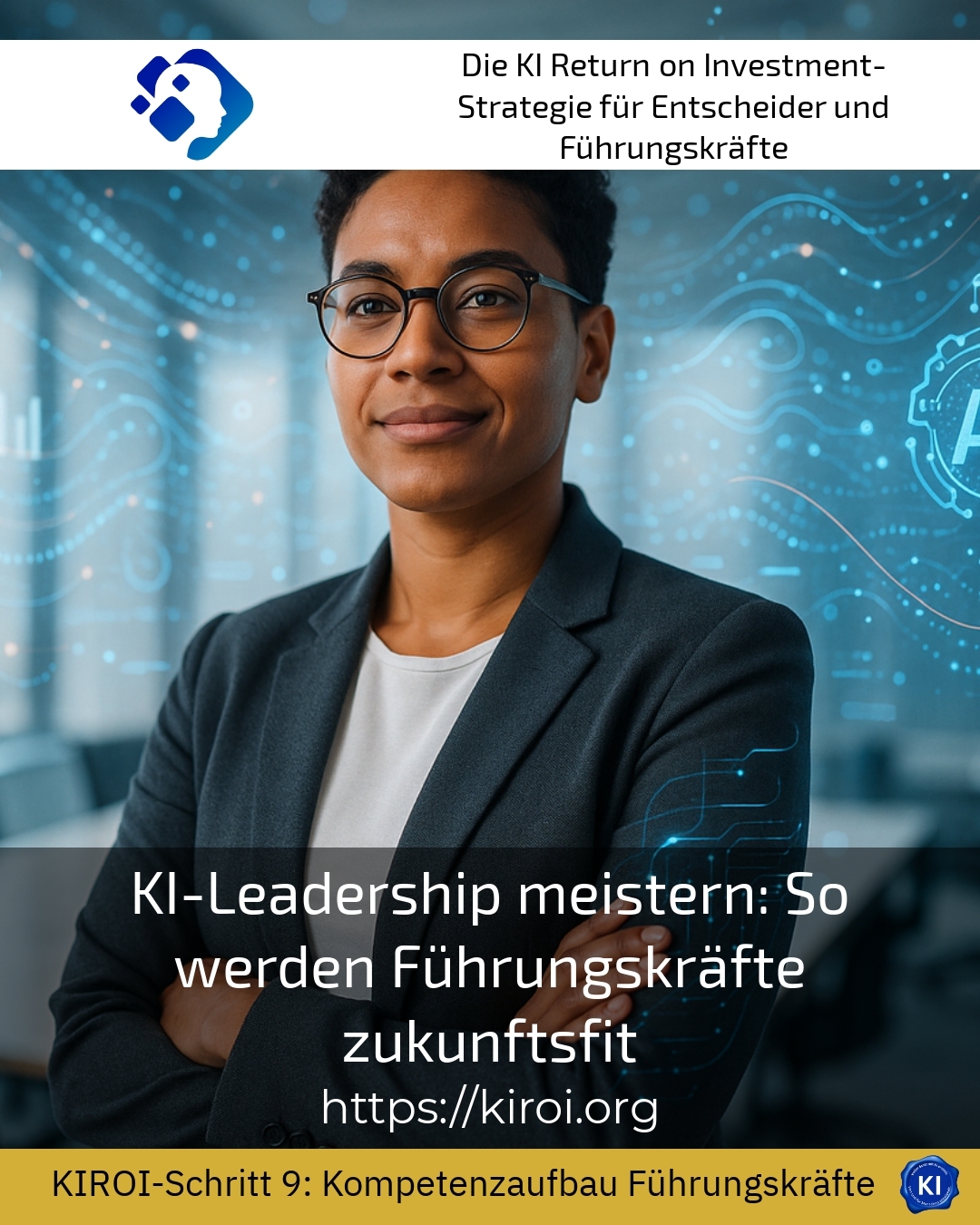
Will you still be relevant in five years if intelligent systems are already transforming entire departments and revolutionizing decision-making processes today? This question currently concerns numerous executives in a wide variety of industries, as the rapid development of machine learning algorithms and automated processes is fundamentally changing the requirements for modern management. The topic Mastering AI Leadership It is increasingly becoming a focus of strategic personnel development. Anyone who still hesitates to address these developments today risks falling behind in a working world that is already undergoing fundamental change. The good news, however, is that there are proven methods and strategies to not only survive this transformation but also actively shape it and benefit from it.
Understanding and accepting the new reality
Integrating intelligent technologies into operational processes is no longer a distant vision of the future; it is already shaping the daily work of many companies today. Managers often report on the challenge of finding a balance between technological progress and human leadership. In the financial sector, for example, automated systems are now analyzing loan applications in seconds, while executives must learn to critically evaluate these recommendations and take ethical aspects into account. Insurance companies are increasingly relying on predictive analyses for risk assessment, which requires a completely new understanding of data-driven decision-making from the responsible executives. In the healthcare sector, intelligent diagnostic systems also support doctors in diagnosing patients, without, however, taking on the final responsibility.
These developments do not mean that human leadership qualities are obsolete. On the contrary: The ability to empathic communication, ethical reflection, and creative problem solving is even gaining in importance. Leaders who turn to transruptive coaching on these issues often report initial overwhelm. They feel torn between traditional management approaches and new technological requirements. Supporting projects related to these transformation processes helps them find direction and create an individual development path.
Mastering AI Leadership through Strategic Competency Development
The development of future-proof leadership competencies requires a systematic approach that encompasses both technical background knowledge and advanced soft skills. In retail, this is exemplified by the fact that store managers now need to understand how automated inventory management systems work and where their limits lie. Production managers in the automotive industry increasingly coordinate human-machine teams and require entirely new leadership tools. In logistics, intelligent route planning systems optimize supply chains, with management serving as the interface between algorithm and employees.
A central aspect of the topic Mastering AI Leadership It concerns the ability to combine data-based insights with intuition and experience. A purely numerical approach is equally unlikely to be successful as ignoring technological possibilities. For example, banks are increasingly relying on automated customer advisory systems, but the final quality of advice depends crucially on how management coaches their teams in using these systems. Telecommunications companies use intelligent analysis tools for network optimization, with experienced engineers interpreting the results and making strategic decisions.
Best practice with a AIROI customer
A medium-sized manufacturing company faced the challenge of preparing its management level for the integration of automated quality control systems. The production managers initially showed skepticism towards the new technologies and feared a loss of their decades of experience. Within the framework of a structured follow-up process, we jointly developed a competency model that linked technical knowledge with proven leadership qualities. The management team learned to interpret the analysis results of the automated systems and to place them in a broader context. At the same time, they developed strategies to involve their teams in this transformation and to alleviate fears. After six months of intensive support, the participants reported a completely changed understanding of their leadership role. They now saw themselves as bridges between technology and people, which significantly increased the acceptance of the new systems. The error rate in production decreased measurably, while employee satisfaction even increased. This result underscores the importance of professional guidance during such profound change processes.
Mastering Emotional Intelligence as a Key Competency for AI Leadership
The importance of emotional intelligence is paradoxically growing significantly in an increasingly technological work environment. While machines process data and recognize patterns, the ability to empathically lead remains an exclusively human domain. In call centers, chatbots are now handling a large portion of standard requests, but complex customer situations still require human empathy. Team leaders in these departments often report the challenge of qualifying their employees for these more demanding tasks. In human resources, intelligent systems are already supporting the pre-selection of applications, with HR managers making the final decision based on cultural fit.
Clients in transruptive coaching often report uncertainties in dealing with these changes. They are looking for ways to lead their teams through phases of transformation, while leaving no one behind [1]. The accompaniment of projects around change management and leadership development provides valuable insights. In the legal sector, for example, intelligent systems search through contract archives and identify relevant precedents, but the legal reasoning and client support remain reserved for human lawyers. Architects use automated design tools for initial concepts, while creative design and client consultation remain their core competencies.
Practical Steps for Transformation
Implementing a future-proof leadership strategy requires concrete actions that are tailored to the specific requirements of the respective organization. Marketing managers, for example, rely on automated campaign optimization and must learn to critically question the results. In controlling, intelligent systems create predictive models, while finance executives assess their validity and communicate them. Journalists use automated research tools, but remain responsible for organizing and contextualizing the information [2].
The first step is to conduct an honest assessment of one’s own competencies. Which skills will remain in demand in the long term? Where are there development needs? In the energy industry, executives are increasingly coordinating intelligent grid control systems and require an expanded technical understanding for this. Hotel managers are working with automated booking and price optimization systems, while guest service and employee management remain core human competencies. In education, adaptive learning systems support individualized teaching, but pedagogical relationship building remains the responsibility of teachers.
Best practice with a AIROI customer
A senior executive from the service sector approached us with the request to prepare her team for the implementation of an intelligent customer management system. The initial situation was characterized by resistance and fears on the part of the employees, who were anxious about their jobs. As part of our support, we initially developed a communication strategy that focused on transparency and participation. The executive learned to convey the benefits of the new technology without making unrealistic promises. At the same time, we developed training measures that opened up new perspectives for the employees. Particular emphasis was placed on identifying tasks that would gain importance after the system was implemented. The executive developed a new understanding of her role as a change agent and facilitator. After the introductory phase was completed, both the manager and the team reported a significantly improved collaboration. Customer satisfaction levels increased measurably, as employees had gained more time to handle complex consulting situations. This example illustrates how professional guidance in transformation projects can make the crucial difference.
Networking and continuous learning
The speed of technological developments requires a constant willingness to learn and to exchange ideas with other leaders. In the pharmaceutical industry, intelligent systems accelerate drug development, and research managers must stay informed about current developments [3]. Farmers are increasingly using automated harvesting machines and drones for field monitoring, which requires a basic understanding of technology. In the cultural sector, intelligent curation systems support exhibition planning, but artistic vision remains a human domain.
Building a relevant network of like-minded individuals, technology experts, and industry experts forms an important component for sustainable success. Executives in the transportation industry, for example, exchange experiences and learn from one another regarding autonomous vehicle systems. In the trade sector, new business models are emerging through the integration of intelligent planning and billing systems. Tax advisors are utilizing automated accounting systems and are increasingly positioning themselves as strategic advisors.
My AIROI Analysis
The examination of the topic Mastering AI Leadership It clearly shows that we are at a crucial turning point in the history of management. The integration of intelligent technologies into operational processes not only transforms individual activities, but the entire understanding of leadership. It becomes clear that technological competence alone is not sufficient to succeed in this new working world. Rather, classic human qualities such as empathy, creativity, and ethical reflection even gain in importance.
The numerous industry examples illustrate that this transformation affects all sectors of the economy and has no exceptions. From the financial sector to production and creative professions, new requirements and opportunities are emerging. Leaders who proactively address these developments can strengthen their position and successfully lead their organizations into the future. Transruptional coaching supports this journey through individual guidance, practical insights, and the sharing of proven strategies. The experiences from numerous client projects show that a systematic approach and professional guidance can make the difference between overwork and the confident management of change. The key lies in the combination of openness to new ideas with an awareness of enduring human strengths.
Further links from the text above:
[1] McKinsey – Leading with AI Requires Human-Centered Leadership
[2] Harvard Business Review – Insights on AI and Machine Learning
[3] World Economic Forum – AI and Robotics
For more information and if you have any questions, please contact Contact us or read more blog posts on the topic Artificial intelligence here.






 Deutsch
 English (UK)