
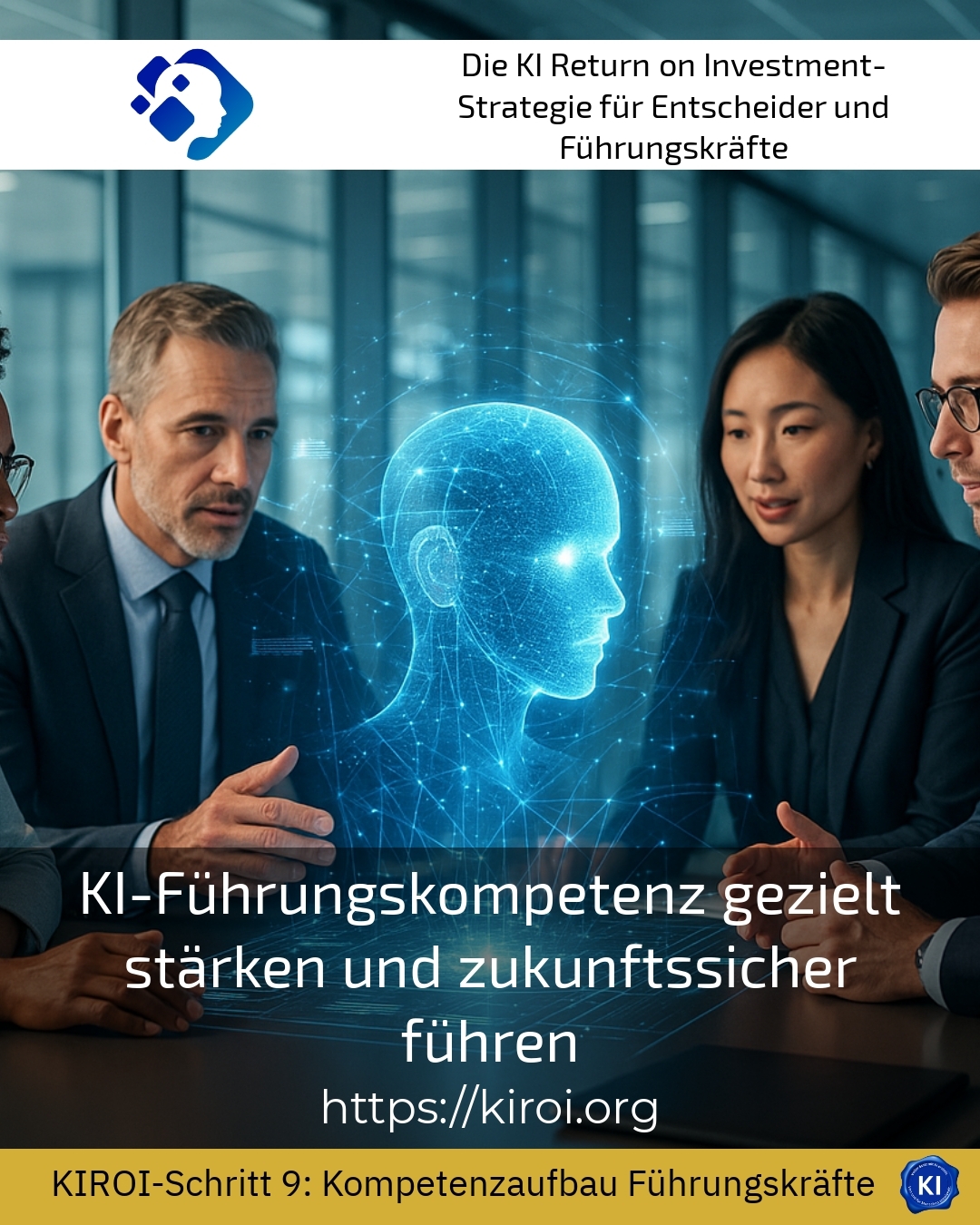
The digital transformation is fundamentally changing the way we lead and make decisions right now. Many leaders face the challenge of strategically strengthening their AI leadership skills and leading for the future. This isn't just about technical understanding; it's about a completely new mindset. Those who hesitate today will be left behind tomorrow. The good news is: everyone can develop these skills. This post outlines concrete paths and examples for doing so.
Why modern leadership requires new competencies
The world of work is undergoing fundamental change. Algorithms are taking over routine tasks. At the same time, completely new demands are emerging for leaders. In the automotive industry, for example, production managers need to understand how autonomous systems optimise production lines. In healthcare, clinic managers use intelligent diagnostic tools to support their teams. Financial service providers rely on automated risk analyses for better decisions.
These developments necessitate a rethink at all levels. Leaders don't need to be able to code themselves, but they must be able to assess the possibilities and limitations of intelligent systems. This enables them to make informed strategic decisions. An example from retail illustrates this: there, algorithms analyse purchasing behaviour in real-time. Branch management must interpret these findings and translate them into concrete measures. To do this, they need both a basic technical understanding and strong people skills.
Clients often report feeling torn between technology and humanity. This tension resolves when both aspects are understood as complementary. The logistics industry demonstrates how this can be achieved: intelligent systems support route planning, but dispatchers retain final decision-making authority. This creates productive collaboration between humans and machines [1].
Stengthening AI leadership skills through practical experience
Theoretical knowledge alone is not enough for true competency development. Leaders must try out and experience intelligent tools themselves. In the banking sector, department heads are experimenting with automated customer analyses. In doing so, they learn how algorithms recognise patterns and make recommendations. This practical experience sharpens judgment considerably.
Another example comes from the insurance industry: there, team leaders are testing various automation solutions for claims processing. They systematically document the strengths and weaknesses of the different approaches. This knowledge then feeds into strategic decisions. In this way, a deep understanding of the technology develops.
The pharmaceutical industry offers a third vivid example of practical competence development. Research leaders there use intelligent systems to analyse clinical trial data. They must critically question the results and place them within their scientific context. This ability only develops through continuous practice and reflected application.
Best practice with a KIROI customer A medium-sized engineering company faced the challenge of preparing its management team for the digital future. The executive board recognised that technical knowledge alone would not be sufficient. As part of transruption coaching, we supported the company over several months. Initially, we jointly analysed existing leadership competencies and identified specific areas for development. We then developed a customised programme for the twelve department heads. Each participant worked on their own pilot project involving intelligent systems. For instance, a production manager implemented a predictive maintenance solution for his machinery. In doing so, he had to learn to critically evaluate the system's recommendations. Simultaneously, he developed new communication strategies for his team. Initially, the employees had reservations about the new technology. Through transparent communication and active engagement, these concerns transformed into curiosity. After six months, measurable success was evident: unplanned machine downtime decreased by forty percent. Even more significant, however, was the change in leadership culture. The department heads were now making more informed decisions based on data-driven insights, while still retaining their human intuition and experience as important foundations for decision-making. This balance between technology and humanity has since positively shaped the entire corporate culture.
Strategic thinking in a data-driven world
Today's leaders have to incorporate larger volumes of data into their decision-making. This requires new analytical skills. In the energy sector, managers are using intelligent forecasting models for grid control. They need to understand how these models arrive at their predictions. Only then can they assess the quality of the recommendations.
The media industry shows another area of application: editors-in-chief are relying on algorithmic analyses for topic planning. These systems automatically identify relevant trends and reader interests. However, the editorial decision still remains with people. They have to weigh up journalistic quality and ethical aspects.
A third example comes from the hotel industry: Revenue managers there use dynamic pricing systems. These automatically adjust room prices to demand and market conditions. However, the executive must set strategic guardrails. Because not every mathematically optimal solution fits the brand positioning [2].
Future-proofing leadership through continuous development
Technological development is moving forward at an ever-increasing pace. What is modern today can be obsolete tomorrow. Therefore, leaders need a mindset of lifelong learning. In the telecommunications sector, leaders must constantly learn about new technologies. They regularly undertake further training and exchange ideas with experts.
The construction industry is also undergoing profound change. Project managers are increasingly working with intelligent planning tools and digital twins. They must not only accept these new methods but also actively drive them forward. For this, they need both technical understanding and change management skills.
A further example can be found in the food industry: there, intelligent systems optimise supply chains and production processes. Plant managers must understand the interrelationships between algorithms and physical production. They must also be able to guide their teams through the change process.
Ethical Competence as the Foundation for AI Leadership Competence
As technology becomes more advanced, ethical questions are gaining importance. Leaders must be able to take responsibility for algorithmic decisions. In human resources, for example, intelligent systems support candidate selection. HR managers must ensure that no discrimination arises from algorithms. This requires a deep understanding of fairness and transparency.
The insurance industry faces similar challenges: risk assessments made by algorithms must be comprehensible and fair. Leaders must establish and monitor appropriate audit mechanisms. They bear responsibility for ethically sound business practices.
A third example can be seen in the public sector: heads of authorities use intelligent systems for administrative decisions. They must ensure transparency towards the citizens. Every automated decision must remain explainable and contestable [3].
Best practice with a KIROI customer A large trading company wanted to systematically prepare its executives for working with intelligent systems. The challenge was to bring together very different prior experiences. Some executives were tech-savvy, while others were more sceptical of new technologies. In transruption coaching, we first developed a shared fundamental understanding for all participants. We began with concrete use cases from the participants' day-to-day business. Purchasing managers dealt with automated demand forecasting and its impact on their work. Store managers analysed intelligent systems for staffing and customer analysis. Each participant developed an individual development plan for the coming months. A particular focus was placed on the ethical dimension of automated decisions. The executives engaged in intensive discussions about fairness, transparency, and responsibility. They jointly developed guidelines for the use of intelligent systems in their areas. These guidelines were subsequently integrated into the company's policies. After one year, a clear cultural shift was evident: executives approached new technologies with greater confidence. They were able to recognise their potential while also critically questioning them. This enabled the company to position itself as an attractive employer for digitally-minded talent.
Communication as a Key Competence for Future-Proof Leadership
Technological change often creates uncertainty among employees. Leaders must address this uncertainty through clear communication. In the automotive supply industry, plant managers communicate openly about planned automation projects. They explain the benefits and also honestly address the challenges. This transparency builds trust and promotes acceptance.
In healthcare, leaders must bridge the gap between technical possibilities and human needs. Nursing management is introducing new digital documentation systems. They must take the concerns of the nursing staff seriously and address them constructively.
The financial sector provides another example: branch managers must explain to their teams how their roles are changing. Routine tasks are increasingly being automated. In turn, employees are taking on more demanding advisory roles. This transformation requires empathetic and motivating communication [4].
My KIROI Analysis
Developing AI leadership capability is not a one-off task, but a continuous process. My experience from numerous coaching sessions shows clear patterns of successful transformation. Leaders who approach new technologies with an open mind develop significantly faster. At the same time, they do not lose sight of their human focus.
Transruption coaching offers a structured framework for this development. It combines basic technical understanding with strategic thinking and ethical reflection. Participants learn to understand and use intelligent systems as tools meaningfully. However, they always retain final decision-making power and responsibility.
The aspect of self-reflection during competence development seems particularly important to me. Leaders must recognise and accept their own strengths and areas for development. Only then can they lead authentically and guide their teams through change.
The future belongs to those leaders who can combine technology and humanity. They use intelligent systems to support their decisions. At the same time, they remain empathetic, communicative, and ethically responsible. Finding and maintaining this balance is the real leadership task of our time.
Those who invest in their leadership skills today lay the foundation for sustainable success. Technological development will continue. Leaders must be prepared for this and continuously develop their abilities. "Transruption" coaching can provide valuable impetus and support the development process in a structured way.
Further links from the text above:
[1] McKinsey: The economic potential of generative AI
[2] Harvard Business Review: Artificial Intelligence
[3] World Economic Forum: Artificial Intelligence Insights
[4] MIT Sloan: Artificial Intelligence Research
For more information and if you have any questions, please contact Contact us or read more blog posts on the topic Artificial intelligence here.











 Deutsch
  English (UK)