
Why do so many companies fail in their digital transformation even though they invest in cutting-edge technologies?
The answer rarely lies in the technology itself. It is rather hidden in the minds of the people. AI cultural change This presents organizations with challenges that go far beyond installing new software. Leaders often report resistance in teams. Employees feel overwhelmed or overlooked. At the same time, enormous opportunities arise for those who consciously shape the change. This article shows you practical ways. You will learn how coaching and systemic impulses can sustainably transform your company.
Understanding the human dimension of technological change
Technology alone does not transform an organization. People do. This simple truth is often overlooked in transformation projects. Leaders focus on implementation plans and training concepts. In doing so, they forget the emotional journey of their teams. Fears of job loss play a central role. Uncertainty about new requirements burdens many employees. Some feel their expertise is undervalued. Others suddenly see their long-standing experience as obsolete.
A medium-sized manufacturing company implemented automated quality control. The technology worked flawlessly. However, productivity initially declined significantly. Employees distrusted the systems. They continued to check manually. Only intensive follow-up discussions broke the deadlock. The people needed time to understand. They had to experience that their expertise was still in demand.
A logistics company implemented intelligent route planning. Experienced drivers felt patronized. Their local knowledge suddenly seemed useless. Coaches accompanied the process over several months. They helped define new roles. The drivers became system optimizers. Their knowledge flowed into improving the algorithms.
In healthcare, similar patterns are evident. Care workers often have a skeptical attitude towards documentation systems. They fear having less time with the patient. Therefore, successful implementations rely on participatory processes. The employees actively participate in the implementation process.
Best practice with a AIROI customer
A traditional family business in mechanical engineering faced a fundamental realignment of its production processes. The management had made significant investments in intelligent manufacturing systems. However, after six months, a sobering picture emerged. Employee acceptance was below thirty percent. Experienced professionals internally resisted the new systems. They subtly but effectively refused to use the new systems. The transruptions coaching initially intensively accompanied the management level. Individual discussions with key personnel were conducted. Deep-seated fears emerged. Many feared that their decades of experience were now worthless. In moderated workshops, teams collaborated to develop new role models. They defined which human skills remain indispensable. The experts became knowledge-bearers for system optimization. After twelve months of mentoring, the acceptance rate was over eighty percent. Productivity increased by fifteen percent. Clients often report similar turning points in their projects.
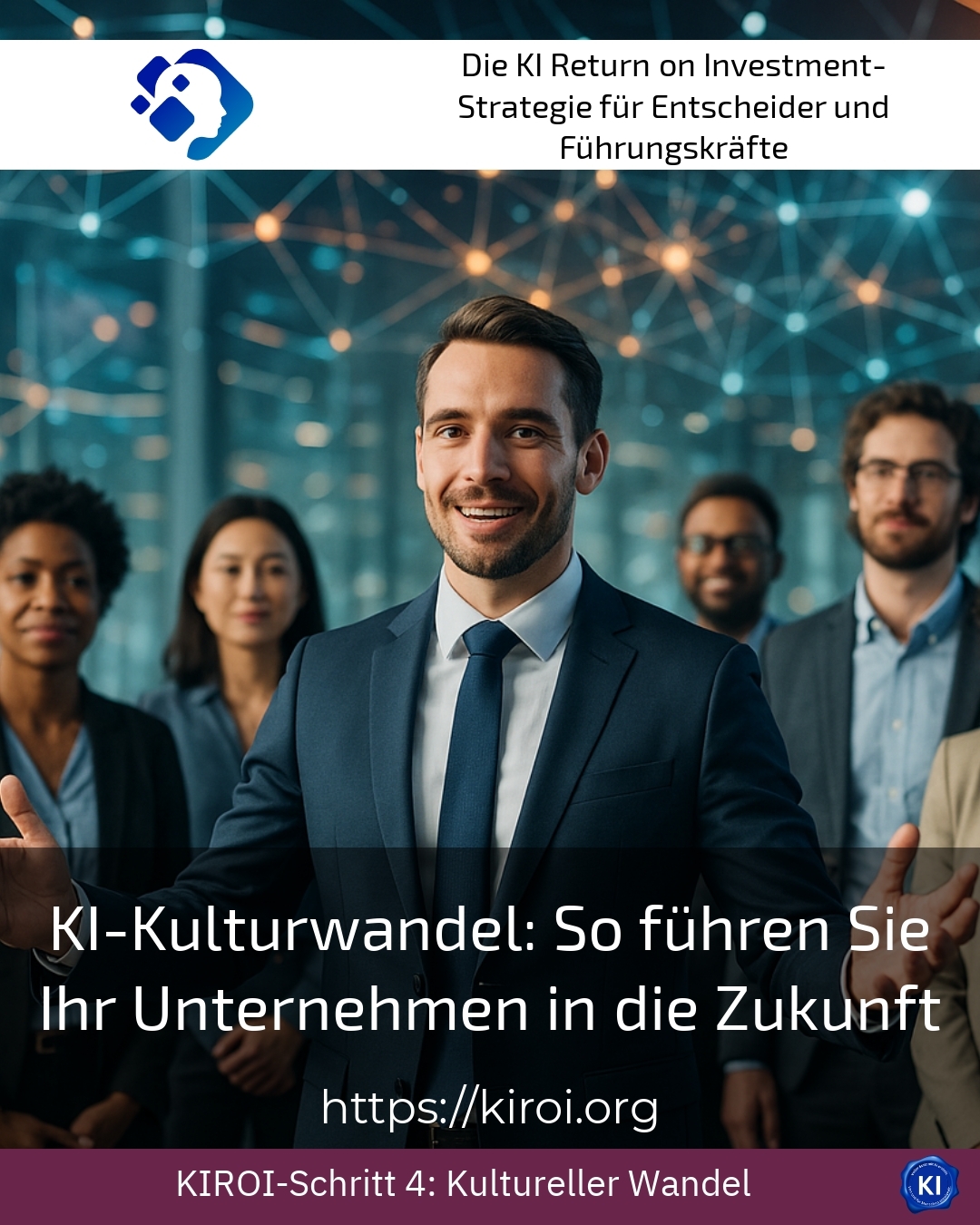
AI cultural change begins with leadership
Cultural change cannot be delegated. Leaders must lead by example. They themselves face enormous challenges. They are meant to provide security in uncertain times. They are meant to inspire people to embrace something they themselves do not yet fully understand. Many leaders experience internal conflicts in the process. They doubt their own competence. At the same time, they must not openly show this uncertainty.
A board member of a trading company aptly described this situation. He felt like a navigator without a map. The direction was clear, but the path remained foggy. Coaching helped him cope with this ambiguity. He learned to communicate authentically. He could admit that he did not know everything. This honesty created trust within the team.
In a media company, a young leader took over the digital strategy. Older colleagues approached her with skepticism. She used systemic methods from coaching. She built bridges between generations. Experienced editors became mentors for journalistic quality. Younger employees brought technical expertise. This combination created a new learning culture.
A financial services provider fundamentally reorganized its client advisory services. Algorithms took over standard analyses. Advisors were supposed to focus on complex cases. Team leaders felt left alone. External support helped them find their new role. They became coaches for their own teams.
Develop new leadership competencies
The AI cultural change It requires advanced leadership skills. Traditional management methods are no longer sufficient. Leaders need high-level emotional intelligence. They must be able to moderate ambivalences. They should integrate different perspectives. A systemic view of the organization helps with this.
A construction company relied on digital project management. The construction managers were initially skeptical. They saw their autonomy threatened. Executives learned in workshops to take these concerns seriously. They developed new working methods together with the teams. The construction managers retained their decision-making authority. The digital tools supported them in this.
Similar dynamics are evident in the education sector. Schools are introducing learning platforms. Teachers fear a devaluation of their pedagogical expertise. School administrations that rely on mentoring experience less resistance. They create spaces for the exchange of experiences. The teachers become creators of digital learning.
Understanding resistance as a resource
Resistance to change is not a weakness. It is a valuable signal. It shows that people are committed. They care about their work and their company. Clients often report surprising insights. Especially the biggest critics often become the best ambassadors of change. They have worked through their concerns. They understand both sides.
A pharmaceutical company introduced automated laboratory analyses. An experienced laboratory manager vehemently resisted them. He had thirty years of experience in his field. In the coaching session, it became clear what really moved him. He was not afraid for his job. He cared about the quality of the research. His expertise eventually contributed to the validation of the systems. He became the internal quality officer.
In a law firm, partners refused to introduce research tools. They saw their legal expertise threatened. One-on-one meetings revealed deeper layers. The partners feared declining hourly rates. They doubted their future contribution to value. The mentoring helped develop new business models. The time saved flowed into strategic advice.
A craft business digitalized its order processing. Older apprentices expressed clear reservations. They preferred their proven methods. Younger colleagues pushed for change. The conflict threatened to tear the team apart. Moderated discussions brought both sides together. The experienced learned from the young. The young benefited from the older men’s practical knowledge.
Best practice with a AIROI customer
An internationally operating automotive supplier experienced massive resistance to the implementation of connected production systems. The works councils initially completely blocked the project. They feared extensive monitoring of employees. The human resources department found itself in a dead end. External support through transruptive coaching opened up new perspectives. In a series of workshops, all parties were brought together. The fears were openly discussed and documented. Together, management and the works council developed binding regulations. Clear boundaries were established for data use. The employees were informed about all the collected information. A jointly appointed committee monitors compliance. The resistance has transformed into constructive co-creation. The project became a model for other locations. The works council evolved into an active partner in digitalization. The employees brought forward their own suggestions for improvement. This development shows how coaching can transform blockages into engagement.
Learning organizations shape the cultural changes in AI
Technological developments are accelerating rapidly. What is considered innovative today is standard tomorrow. Organizations must therefore continuously learn. This requires fundamental changes in corporate culture. Mistakes must not be punished; they become learning opportunities. Experimenting is rewarded. Perfectionism gives way to iterative improvement.
An insurance company implemented agile working methods. The traditionally hierarchical culture made this considerably more difficult. Employees waited for instructions from above. Initiative was unusual and was viewed with suspicion. Coaching accompanied the cultural change over two years. Leaders learned to relinquish control. Teams gradually assumed more responsibility.
A city administration digitized its citizen services. The officials initially perceived this as a threat. They feared job cuts due to automation. Workshops made the benefits tangible. Routine tasks were automated. The employees had more time for complex citizen requests. Their work was perceived as more meaningful.
In retail, things are similar. Cashiers often view self-checkout systems as a waste of time. Successful retailers are redefining their role. The employees become hosts and advisors. They help with technical problems. They offer personal service that the machines cannot provide.
Psychological safety as a foundation
People learn only in safe environments. Fear blocks creativity and openness. The AI cultural change This can only be achieved with psychological safety. Teams must be allowed to ask questions. They need space to be uncertain. Leaders play a key role in this. They set the tone for the entire organization [1].
A technology company established regular retrospectives. Teams openly reflected on mistakes and successes. Executives began to report on their own misjudgments. This role model function changed the culture in a lasting way. Employees dared to address problems early. The quality of the projects improved significantly.
In a hospital, digitalization led to significant tensions. Doctors and nurses argued over responsibilities. Moderation helped to understand the different perspectives. Common goals were defined. Patient care once again took center stage. The technical tools were seen as a support.
Communication as the key to success
Change requires communication. But traditional information chains are not enough. People want to be heard. They need space for dialogue and questions. One-way communication breeds distrust. True participation creates trust and commitment.
An energy provider planned the introduction of intelligent networks. The first information event was disastrous. Employees felt overwhelmed. They had no opportunity to ask questions. The communication strategy was fundamentally revised. Small discussion groups were formed with management. Every question was taken seriously and answered. Acceptance increased significantly [2].
A food manufacturer opted for transparency. All information about the transformation project was shared internally. Setbacks and delays were also communicated. This openness positively surprised many employees. They developed an understanding of the complexity of the change. They brought their own ideas and solutions.
In an advertising agency, working methods changed radically. Creatives feared being replaced by algorithms. In open forums, these concerns were discussed. The management explained its vision. Creativity remained at the core of the business. Technology took over routine tasks. The creatives were able to focus on their strengths.
My AIROI Analysis
After many years of supporting transformation projects, a clear pattern emerges. AI cultural change It is primarily a human challenge. Technical implementations rarely fail due to technology. They fail due to a lack of preparation by the organization. They fail due to a lack of support for the people involved. They fail due to insufficient leadership for the change.
Successful companies share a common characteristic. They invest as much in their people as in their systems. They take fears seriously and create safe spaces. They actively involve employees in shaping their culture. They accept that cultural change takes time. There are no quick solutions in this area.
External guidance can provide valuable insights. Coaching supports leaders in their new role. Moderation helps teams resolve conflicts constructively. Systemic methods uncover hidden dynamics. This investment often pays off. It prevents costly missteps. It accelerates the adoption of new work practices. It lays the foundation for sustainable success.
The future belongs to learning organizations. It belongs to companies that include their people. It belongs to those who understand technology as a tool, not as a substitute for human capabilities. The path to that future is challenging but achievable. With the right guidance, any organization can master this change.
Further links from the text above:
[1] Harvard Business Review: Psychological Safety at Work
[2] McKinsey: Insights on Organizational Transformation
For more information and if you have any questions, please contact Contact us or read more blog posts on the topic Artificial intelligence here.










 Deutsch
 English (UK)