
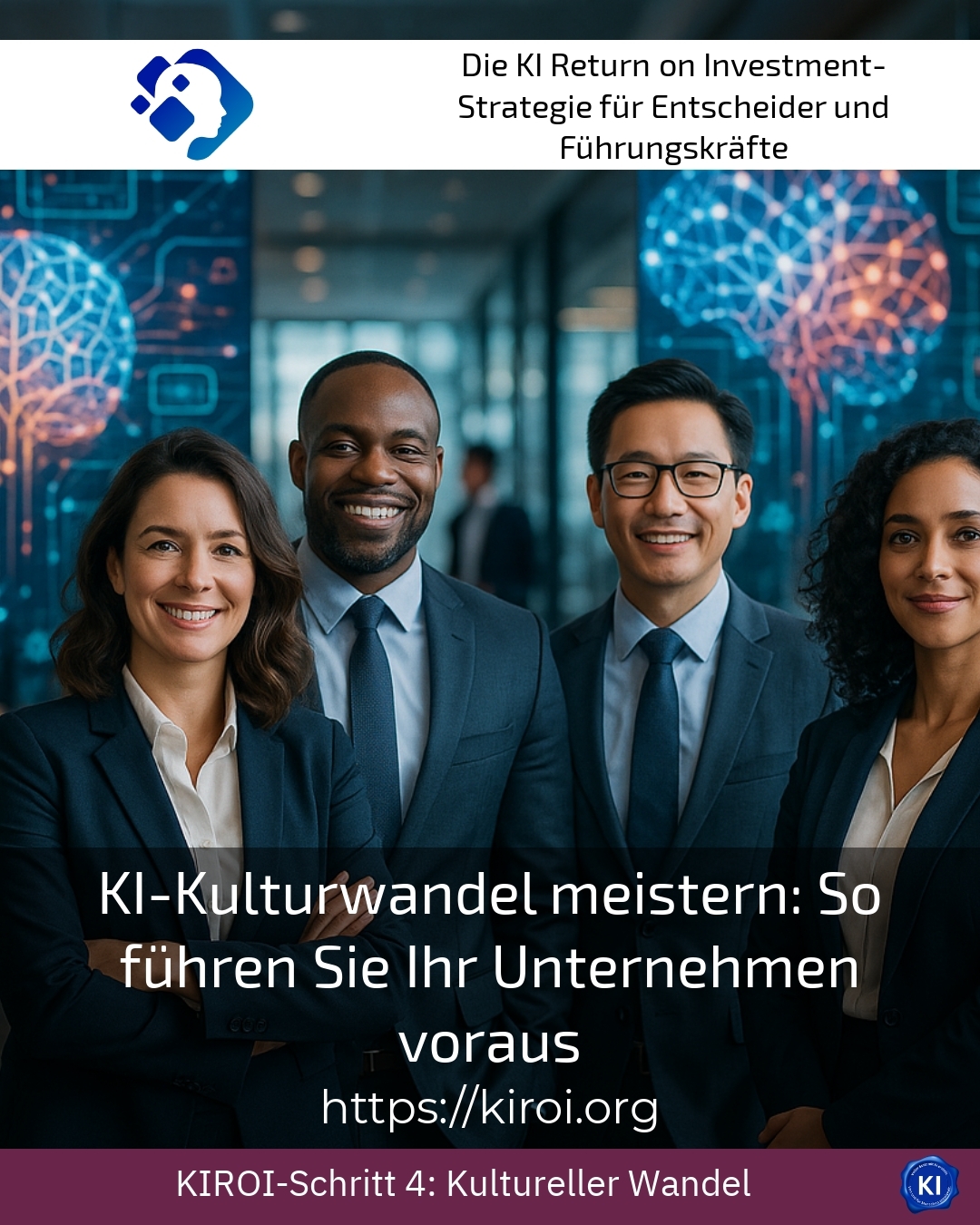
Digital transformation is fundamentally changing our working world. Companies face a crucial turning point. Those who Mastering AI cultural change wants, must implement more than just technology. People, processes and mindsets must evolve together. Many leaders dramatically underestimate this challenge. They invest millions in software and forget their most important resource. Their employees are left behind and lose touch. This leads to frustration, resistance and ultimately the failure of ambitious projects. But there is a better way. This article shows you concrete strategies for sustainable change. You will learn how successful organisations bring their teams along and overcome resistance.
Understanding the human dimension of technological progress
Technological changes trigger deep-seated anxieties in many people. This reaction is entirely natural and humanly understandable. Our brains are programmed to favour the familiar and avoid the unknown. This is why employees often react with scepticism to new digital tools. They fear for their jobs and their professional relevance. Some worry that algorithms could devalue the expertise they've built up over years. Others are concerned that they won't be able to keep pace with technological progress. Leaders must take these concerns seriously and actively address them. Ignoring or downplaying them will only make the situation worse. Instead, open conversations and transparent communication about changes are needed [1].
A medium-sized engineering company from Baden-Württemberg faced exactly this challenge. Management wanted to introduce intelligent systems in quality control. Experienced inspectors felt threatened and offered passive resistance. It was only when management offered intensive training that the tide turned. The employees realised that the technology would support them rather than replace them. Today, humans and machines work together productively there. A logistics company from Hamburg had similar experiences when introducing predictive route planning. Initially, the dispatchers feared being demoted to mere order-takers. Through consistent involvement in the development process, they became enthusiastic advocates. A financial services provider from Frankfurt experienced something similar when automating credit decisions. The consultants learned to combine their expertise with algorithmic recommendations.
Best practice with a AIROI customer
An international pharmaceutical company faced the challenge of introducing intelligent documentation assistants. Initially, clinical researchers had significant reservations about this technology, fearing that automated systems could compromise the quality of their scientific work. As part of the transruption coaching, we first developed a comprehensive understanding of these concerns. We held intensive one-on-one discussions with key individuals from various departments. This revealed that the fears were less technical and more cultural in nature. The researchers worried about a loss of their scientific autonomy and creativity. Together, we developed a pilot project that involved the employees from the outset. They were able to test the systems themselves and provide feedback for improvement. This participative approach transformed potential critics into committed ambassadors of change. After six months, the teams reported significantly reduced administrative workloads. They had gained more time for their actual research work. The initial scepticism gave way to enthusiasm for the new possibilities.
Mastering AI culture change strategies in different organisational types
Every organisation brings unique prerequisites for change. Startups often have a greater willingness to change than established corporations. Traditional family businesses, in turn, have different cultural strengths and weaknesses. Therefore, there is no universal blueprint for successful transformation. Instead, tailored approaches are needed for different types of companies. A craft business requires different strategies than a management consultancy. A public authority functions differently from a young technology company. These differences must be taken into account when planning for change [2].
This difference is particularly evident in the automotive industry. Large suppliers like Bosch or Continental have complex hierarchies and long decision-making processes. They must plan and implement their transformation carefully over years. Smaller suppliers, on the other hand, can act more quickly and flexibly. A tool manufacturer from the Sauerland region introduced intelligent production optimization within a few months. Short communication channels and the direct involvement of all employees made this possible. A medium-sized automotive supplier from Thuringia used its family-oriented corporate culture as an advantage. The managing director personally went through all departments and explained the changes. This proximity created trust and significantly reduced resistance. In contrast, a large insurance group struggled with its bureaucratic structure. The introduction of automated claims processing dragged on for years.
Mastering communication as the key to successful AI cultural change
Without convincing communication, every transformation project will fail due to resistance. People don't just need information, but genuine understanding of changes. They want to know why something is happening and how it personally affects them. Abstract strategy papers and management presentations rarely achieve this goal. Instead, personal conversations and tangible examples from everyday work are needed. Leaders must live the change as authentic role models. Their own enthusiasm and conviction will transfer to their teams. At the same time, they must also admit uncertainties and deal openly with mistakes [3].
A Cologne-based retail company demonstrated exemplary communication when introducing intelligent inventory management. The management team organised regular town hall meetings with all branch managers. Successes were celebrated there, but problems were also openly addressed and solved together. The employees felt valued and as part of the change. A Munich hospital took a similar approach when implementing diagnostic support systems. Doctors were involved in the development and adaptation from the outset. Their clinical expertise was directly incorporated into the optimisation of the algorithms. A Berlin media company relied on internal influencers for its transformation. Tech-savvy employees from various departments were trained as change ambassadors. They conveyed the benefits of new technologies to their colleagues on an equal footing.
Promoting skills development and lifelong learning
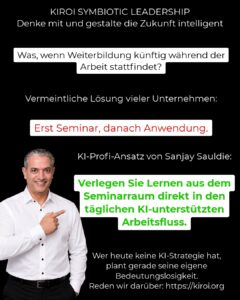
The half-life of professional competencies is dramatically shortening in our time. What is still relevant expertise today can be outdated tomorrow. Therefore, companies must establish and promote a continuous learning culture. One-off training courses are no longer sufficient for sustainable success. Employees need regular opportunities to develop their skills. This not only concerns technical skills, but also methodological competencies. Critical thinking, creativity, and emotional intelligence are gaining importance. These skills cannot simply be delegated to machines [4].
The chemical industry is showing interesting approaches to continuous learning. BASF has established its own academies for digital skills. There, employees of all hierarchical levels learn new skills together. A medium-sized chemical distributor from Duisburg took a different approach. They set up pairings between young and experienced employees. The younger employees brought technical know-how, while the older employees contributed their industry experience. This cross-pollination proved to be extremely fruitful for both sides. A textile company from Saxony has firmly integrated learning time into the daily work routine. Every Friday afternoon, employees can participate in further training. The increase in productivity due to improved skills significantly exceeds the time invested.
Best practice with a AIROI customer
A long-established energy supply company wanted to support its customer service processes with intelligent chatbots. The call centre employees reacted with great uncertainty to these plans. Many feared that their jobs would be lost in the medium term. In transruption coaching, we developed a comprehensive qualification programme for the entire team. First, we analysed the actual impact of the new technology together. It became apparent that complex customer concerns would still require human intervention. The employees realised that they would be needed for more demanding tasks. Simple routine enquiries would be answered automatically in the future. This freed up more time for in-depth consultations with customers. We trained the team members in advanced communication techniques and conflict resolution. Additionally, they learned to monitor and optimise the automated systems. After the introduction, customer satisfaction ratings increased by more than twenty percent. Employees reported increased job satisfaction due to more demanding activities. Not a single job was lost; instead, new roles and career opportunities emerged.
Learning to use resistance as valuable feedback
Resistance to change is often seen as a problem and tackled. However, this perspective overlooks the valuable potential of critical voices. Skeptical employees often identify real weaknesses in transformation plans. Their objections can help to avoid costly mistakes. Therefore, leaders should not suppress resistance, but use it constructively. The best transformations arise from genuine dialogue and open exchange. All parties involved must be willing to question their positions. Management must also critically re-examine its own assumptions [5].
A construction company from Munich experienced this dynamic when introducing digital site documentation. The experienced site managers initially rejected the new tablets outright. They argued that paper worked more reliably on dusty construction sites. The management listened and invested in more robust hardware with better displays. Furthermore, the input masks were simplified and adapted to practical use. The critical site managers became the most satisfied users of the system. A food manufacturer from Lower Saxony had similar experiences with process automation. The production workers pointed out special cases that the algorithm did not consider. Their feedback led to important improvements in the software. A tax consultancy firm in Stuttgart deliberately integrated criticism teams into pilot projects. These teams were tasked with identifying and documenting weaknesses.
Considering the ethical dimensions of technological transformation
Technological progress raises fundamental ethical questions that businesses must answer. What decisions may algorithms make, and which remain reserved for humans? How transparent must automated processes be to those affected? Who bears responsibility when intelligent systems make mistakes? These questions require not purely technical, but fundamentally societal answers. Companies that are leading the way Mastering AI cultural change We need to develop ethical guidelines. These should be drawn up jointly with employees and stakeholders. Only in this way can viable and accepted rules for dealing with new technology be created.
The HR sector faces particularly sensitive ethical challenges in this area. Automated pre-selection of applications can reinforce or reduce existing patterns of discrimination. An HR service provider from Düsseldorf therefore developed strict fairness criteria for its algorithms. Regular audits check whether certain groups are systematically disadvantaged. A hospital in Heidelberg established clear rules for diagnostic support systems. The final diagnosis always remains the responsibility of the doctor. At the same time, deviations from algorithmic recommendations must be documented and justified. A debt collection company from Bremen introduced ethical guidelines for automated customer communication. Certain life situations automatically lead to human review of individual cases there.
My AIROI Analysis
After years of accompanying companies on their digital transformation journeys, clear patterns of success have emerged. Organisations that place the human factor at the centre achieve their goals more sustainably. Technology alone does not create competitive advantages in a world where everyone can buy the same tools. The difference lies in how people use and develop these tools. That is why I advocate for a holistic approach to Mastering AI cultural change, which treats technical and human aspects as equally important.
The most successful transformations begin with honest self-reflection on one's own company culture. Leaders must understand which values and beliefs shape their teams' behaviour. Only on this basis can effective change strategies be developed. At the same time, patience and perseverance are needed for the long road of transformation. Quick successes are important for motivation, but sustainable change takes time. Setbacks are part of the process and should be used as learning opportunities. The companies I support are increasingly developing a positive attitude towards mistakes. They recognise that a willingness to experiment and take risks is indispensable for innovation.
I consider the involvement of all hierarchical levels in the transformation process to be particularly important. The best ideas often come from employees on the front lines, not from boardrooms. This expertise must be systematically tapped into and valued. At the same time, clear leadership and direction from above are needed. The balance between bottom-up innovation and top-down control determines success or failure. Transruption coaching can provide valuable impetus here for designing such processes. As external support, we help to identify blind spots and adopt new perspectives.
Further links from the text above:
[1] McKinsey: Change Management in the Age of AI
[2] Harvard Business Review: Change Management Topics
[3] Gartner: Change Management Resources
[4] World Economic Forum: Future of Work
[5] MIT Sloan Review: Organisational Transformation
For more information and if you have any questions, please contact Contact us or read more blog posts on the topic Artificial intelligence here.







 Deutsch
  English (UK)