
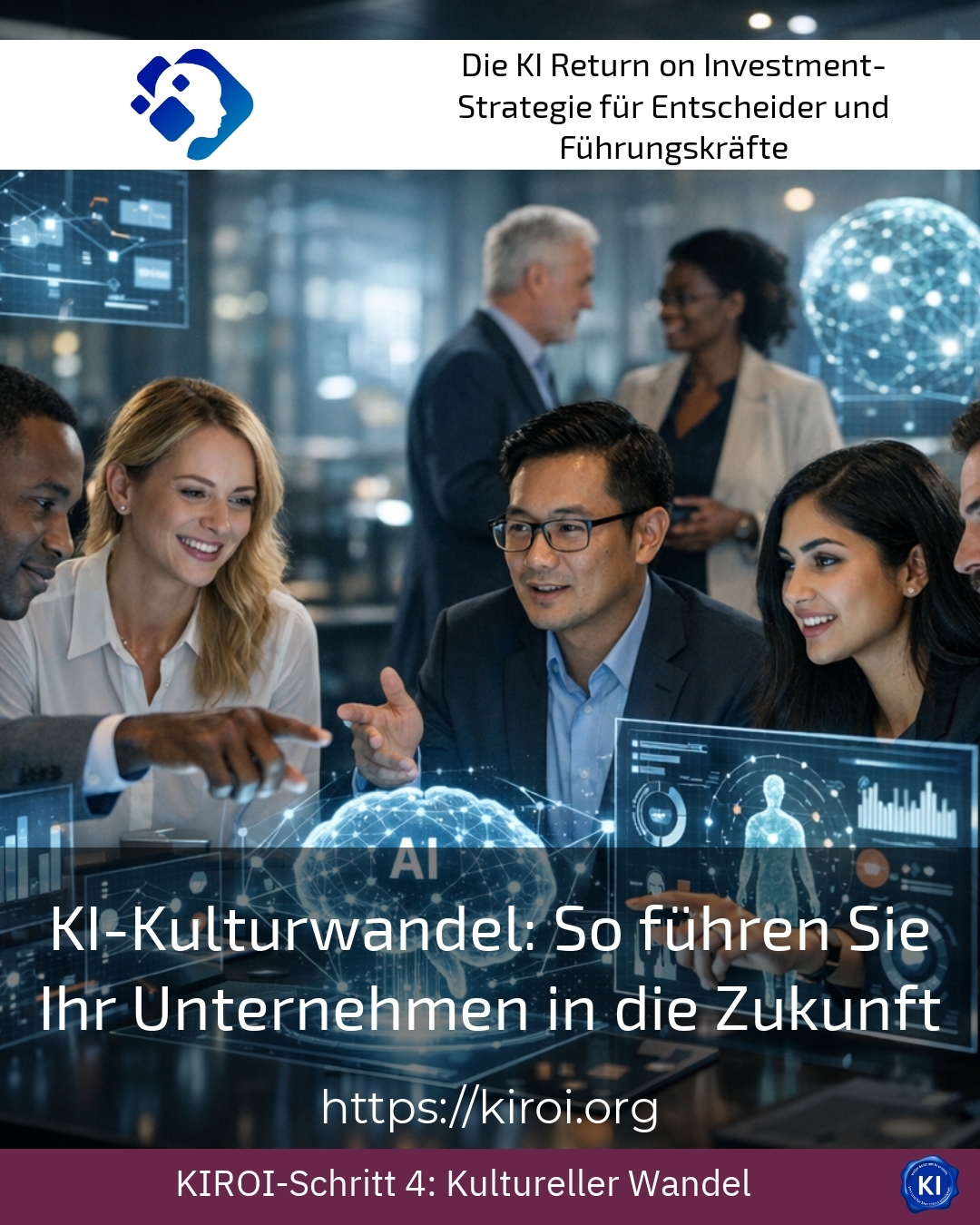
Have you ever wondered why some organizations seem to glide effortlessly into the digital era while others, despite enormous investments, fail and lose their employees? The answer rarely lies in the technology itself, but rather in a profound change in organizational culture. AI cultural change, This change affects not only IT departments or executives. It fundamentally changes the way people work together, make decisions, and live their values. Many leaders come to us with exactly this issue. They feel the pressure of change and are looking for guidance.
Why the AI culture shift is more than a technical update
The introduction of intelligent systems fundamentally changes work processes. Employees must develop new skills and abandon old habits. This process often generates resistance, fears, and uncertainties within the team. Leaders often report a divided workforce. Some enthusiastically welcome the changes. Others fear for their jobs or feel overwhelmed. We are very familiar with this dynamic from numerous mentoring projects.
A medium-sized manufacturing company, for example, implemented automated quality controls. The technology worked flawlessly and provided precise results. Nevertheless, some employees unintentionally sabotaged the system through incorrect data entry. A logistics service provider implemented predictive maintenance systems and experienced similar challenges. The experienced technicians trusted their gut feeling more than the algorithms. Only after intensive guidance did this attitude gradually change. A trading company automated its inventory management and observed initial skepticism. The buyers feared being replaced by machines. However, after a few months they recognized the added value of the support.
Best practice with a AIROI customer A traditional family business in the manufacturing sector faced the challenge of modernizing its production control and introducing intelligent systems. The management had already invested substantial sums in technology, but the hoped-for efficiency gains remained elusive because the workforce did not adopt the new system. As part of our support, we first analyzed the existing corporate culture and identified the main resistance points. It became apparent that the long-standing employees did not feel sufficiently included and saw their expertise being overlooked. We jointly developed a participation concept that made experienced professionals internal ambassadors. These employees received additional training and were actively involved in optimizing the algorithms. Within six months, the initial rejection turned into genuine enthusiasm. Productivity increased measurably, and turnover dropped significantly. This example impressively demonstrates how important human factors are in technological transformations.
The role of leaders in the cultural transformation of AI
Leaders significantly shape the corporate culture through their daily actions. They must not only announce the change but also lead by example. This often requires a change in their own working style. Many leaders come to us with uncertainties. They wonder how they can remain authentic. At the same time, they should promote technologies that they themselves still need to learn to understand.
A manager from the automotive supply industry integrated intelligent analysis tools into his decision-making processes. He openly shared his learning curve with the team, thereby creating trust. A department manager in mechanical engineering used automated reports for his meetings. He always emphasized the supportive nature of the systems. A department manager in the chemical industry introduced regular feedback rounds on new technologies. This open communication reduced fears and significantly promoted constructive criticism.
Transruptions coaching supports leaders in overcoming these challenges along their journey. We provide insights on how authentic leadership can be achieved in times of change. We take into account individual personalities and corporate contexts alike.
Communication as the Key to Successful Cultural Change
Changes often fail due to inadequate or unclear communication. Employees need understandable information about the goals and effects of the transformation. Rumors and speculation quickly fill the resulting information gap. A transparent communication strategy prevents misunderstandings and builds trust. It should use various channels and target different target groups.
An energy supply company created an internal portal for all questions regarding digitalization [1]. Employees could anonymously express their concerns there and receive answers promptly. A pharmaceutical company organized monthly town hall meetings on digital transformation. These open formats enabled direct exchange between management and employees. A medium-sized toolmaker implemented a mentoring program for digital skills. Experienced employees supported colleagues in the onboarding process of new systems.
Understanding and constructively using resistance
Resistance to change is human and to some extent even healthy. It shows that employees identify with their work. This energy can be constructively channeled and used for change. Clients often report intense discussions within their teams. These disagreements can be valuable and provide important insights. We help organizations understand and make productive use of these dynamics.
One steel producer observed initial skepticism about the introduction of automated process control. Experienced shift supervisors raised important objections that led to improvements in the system. One food manufacturer actively integrated quality inspectors into the development of intelligent control systems [2]. Their expertise significantly improved the detection rate of defects. A textile company used the concerns of production workers for process optimizations. The critical feedback helped adapt unrealistic automation plans to reality.
Best practice with a AIROI customer An international packaging company implemented a comprehensive production optimization system based on machine learning that connected all production lines. Plant managers from different locations showed varying reactions to this change, leading to significant tensions within the management team. Some sites quickly achieved positive results, while others fell significantly short of expectations. Our analysis revealed that the successful sites were led by managers who actively involved their teams in the change process. The less successful sites had introduced the technology without sufficient cultural preparation. We developed a cross-site exchange program where successful teams shared their experiences. Additionally, we trained the management team in change management methods and facilitated critical conversations. After eight months, all sites had reached a comparable level. The initial resistance had transformed into constructive engagement. This process highlighted the central importance of cultural factors for technological transformations.
Competency development as the foundation of AI cultural transformation
New technologies require new skills from all involved parties. Continuing education should therefore be an integral part of any transformation strategy. This involves more than just technical training in the narrower sense. Employees must also learn to deal with the social implications of change. Emotional intelligence and adaptability are key competencies in the modern workplace.
An electronics company established an internal academy for digital skills with a wide range of offerings. The courses ranged from basic knowledge to specialized applications for different professional groups. A construction company offered its employees individual learning paths based on their roles. Thus, construction managers received different training than administrative staff or tradespeople. A chemical company promoted cross-departmental learning groups on data analysis [3]. These informal networks accelerated knowledge transfer and strengthened collaboration.
The ethical dimension of transformation
The deployment of intelligent systems raises fundamental ethical questions. Companies must develop clear guidelines for responsible handling. These principles should be communicated transparently and applied consistently. Employees pay close attention to how organizations handle sensitive issues. Trustworthiness is demonstrated in daily actions and in difficult decisions.
An insurance company developed guidelines for algorithmic decision-making in claims management. These guidelines were discussed with the workforce and refined together. A telecommunications provider established an ethics committee for data usage issues. This committee consists of employees from various hierarchical levels and specialist departments. A financial services provider published a transparency report on its automated processes. Customers can see how decisions are made.
My AIROI Analysis
The accompaniment of numerous transformation projects clearly shows that the AI cultural change It goes far beyond technical implementations and touches the very heart of every organization. Successful companies understand that people must be at the center of any change. They invest in communication, training, and emotional support for their employees. The analysis of our projects reveals a clear pattern for successful transformations. Organizations that actively involve and train their leaders achieve better results. They create spaces for open exchange and constructive criticism. Resistance is not suppressed but used as valuable feedback. Particularly important appears the development of a long-term perspective for all involved parties. Short-term efficiency gains should not come at the expense of team cohesion. Sustainable transformation requires patience, empathy, and consistent action from the leadership level. Transruptions coaching can accompany and support organizations on this challenging journey. We provide guidance for designing a human-centered transformation. Our experience shows that this approach often leads to better results than purely technology-driven change projects. AI cultural change It offers enormous opportunities for companies and employees alike. It can lead to more fulfilling work and greater value creation when it is managed carefully.
Further links from the text above:
[1] Bitkom – Artificial Intelligence in Companies
[2] McKinsey – Artificial Intelligence Insights
[3] Fraunhofer – Research Field Artificial Intelligence
For more information and if you have any questions, please contact Contact us or read more blog posts on the topic Artificial intelligence here.







 Deutsch
 English (UK)