
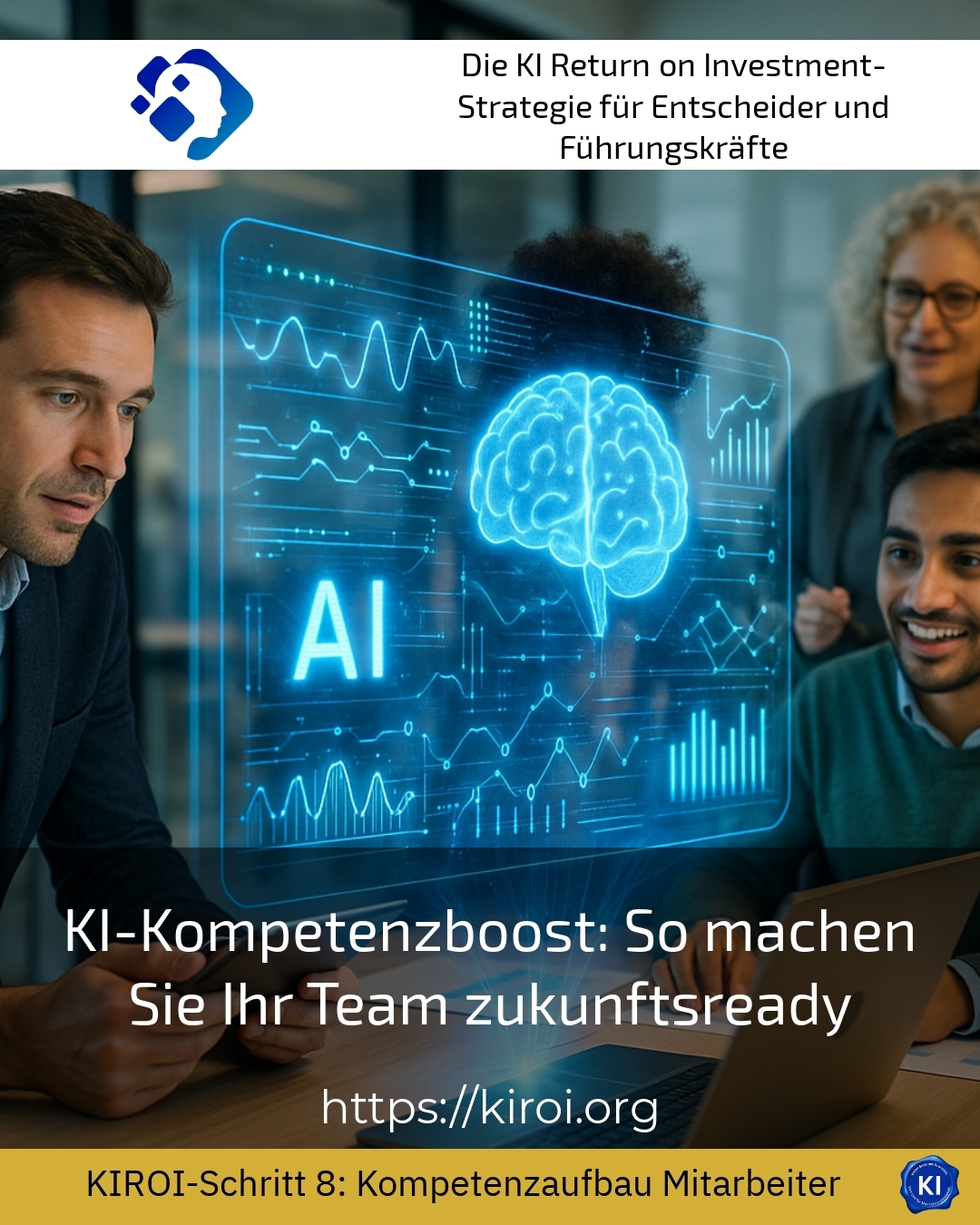
Imagine your entire workforce navigating the digital transformation with confidence, using intelligent systems as a matter of course in their daily work. AI Skills Boost is no longer an abstract future scenario, but an urgent necessity for companies wishing to remain competitive. While many organisations are still hesitating and playing for time, others are already laying the foundations for sustainable success. The crucial question is no longer whether you should act, but how quickly you can make your team future-ready.
Why the AI skills boost is becoming indispensable now
The world of work is changing at a pace that surprises many leaders. Intelligent systems are taking over routine tasks and significantly enhancing human capabilities. Employees must understand and be able to use these tools effectively. In healthcare, for example, learning algorithms are already supporting image diagnostics in X-rays. Doctors interpret the results significantly faster and more precisely. In manufacturing, smart systems optimise production processes in real-time. Machine operators require completely new competencies for this collaboration. At the same time, chatbots and virtual assistants are fundamentally revolutionising customer service. Service employees can therefore concentrate on more complex issues and emotional communication. This development clearly shows that technical innovations alone are not enough. Only the combination of advanced technology and competent people creates real added value. Companies that do not prepare their teams risk falling behind.
The underestimated role of the human element
Many organisations invest large sums in technology while forgetting about the people involved. Software can only perform as well as the users are able to operate it. A state-of-the-art data analysis system is of little use if no one interprets the results. In the financial sector, analysts use intelligent forecasting models for market valuations and risk assessments. However, these tools do not replace the sound expertise of experienced specialists. In human resources, automated systems pre-screen application documents and identify promising candidates. Nevertheless, HR professionals make the final decision with their understanding of people and experience. This pattern is also very evident in the logistics industry. Algorithms calculate optimal routes and loading capacities with impressive precision. However, dispatchers must contextualise these suggestions and react flexibly to unforeseen events.
Best practice with a AIROI customer
A medium-sized manufacturing company faced significant challenges with quality control. The previous manual inspection methods proved to be time-consuming and prone to errors. Transruption coaching supported the organisation over several months in implementing image-based inspection systems. Initially, we jointly analysed the existing processes and identified suitable areas for application. Employees initially expressed concerns regarding their future roles within the company. Through targeted workshops, these concerns were addressed and transformed into constructive collaboration. The team learned to interpret the automated inspection results and intervene in cases of deviations. The error rate significantly decreased by more than forty percent within six months. Simultaneously, employee satisfaction increased as monotonous inspection tasks were eliminated. The freed-up time was invested by the skilled workers in value-adding activities and process optimisation.
Strategies for a Sustainable AI Skills Boost in the Organisation
Developing digital skills requires a structured and long-term approach. While short-term training provides basic knowledge, it rarely leads to sustainable changes in behaviour. Successful organisations rely on continuous learning programmes with practical applications in daily work. In retail, for example, sales assistants learn how to use intelligent recommendation systems. They understand how algorithms can analyse purchasing histories and generate personalised suggestions. This knowledge empowers them to advise customers competently and use technology effectively. In the insurance sector, claims handlers use automated systems for damage assessment and fraud detection. Professionals must understand the logic of these systems to identify incorrect decisions. In the energy sector, smart grids optimise electricity distribution and accurately forecast consumption. Technicians monitor these systems and intervene to correct anomalies.
Learning culture as a foundation for boosting AI competence
An open learning culture forms the indispensable foundation for successful competence development within a company. Employees must be allowed to make mistakes without having to fear negative consequences. A willingness to experiment and curiosity should be explicitly encouraged and rewarded. In the pharmaceutical industry, learning systems significantly support research in drug discovery. Scientists test new approaches and continuously learn from them. In agriculture, smart sensors optimise the irrigation and fertilisation of fields. Farmers interpret the data and adapt their strategies accordingly with flexibility. In education, intelligent learning platforms personalise teaching for individual students. Teachers understand the underlying mechanisms and competently guide the learning process. These examples illustrate that technical understanding alone is not sufficient. Critical thinking and the ability to reflect are gaining enormous importance.
Transruption coaching supports companies in systematically building such a learning culture. Clients often report initial resistance within their organisations. This resistance often signals fears and uncertainties that should be taken seriously. Through targeted guidance, these barriers can be gradually overcome and transformed into motivation. Leaders play a crucial role model function for their entire teams.
Best practice with a AIROI customer
A service company with several hundred employees sought support in introducing automated processes. Management had already invested in expensive software solutions without achieving the desired results. As part of the transruption coaching, we jointly identified the causes of this discrepancy. It became apparent that the workforce was hardly using the new systems and was instead maintaining old ways of working. The reasons for this lay in a lack of involvement during the project's implementation phase. We developed a multi-stage qualification programme with different formats for various target groups. Managers first received intensive training to act as multipliers within the company. Subsequently, we actively supported the introduction of learning groups and regular exchange formats. Employees could ask questions and openly discuss challenges without fear. After nine months, over eighty percent of the workforce was using the new systems regularly and as a matter of course. The increase in productivity significantly exceeded management's original expectations.
Practical steps for skills development
The path to a future-proof team begins with an honest assessment of the current situation. Which skills are already present and which are still missing within the company? This analysis forms the basis for all further measures and should be carried out carefully. In the banking sector, for example, consultants use intelligent systems for portfolio analysis and risk assessment. The required competencies range from basic technical understanding to ethical reflection. In the media industry, automated systems already generate texts and personalise content for users. Journalists need to understand this development and be able to redefine their role. In construction, smart planning systems significantly optimise material consumption and construction times. Architects and engineers work with these tools and make informed decisions.
Combining individual learning paths and team formats
Successful skills development takes individual starting points and learning styles of employees into account. Not everyone needs the same knowledge at the same depth and in the same format. Individual learning paths enable tailored qualification without unnecessary duplication or being overwhelmed. At the same time, joint learning formats promote exchange and mutual understanding within the team. In the automotive industry, designers are increasingly collaborating with generative systems for shaping. Engineers use simulation software to optimise components and entire vehicles. The collaboration between these specialist areas absolutely requires a shared basic understanding of the technology. In tourism, intelligent systems automatically analyze booking data and create personalised travel recommendations. Travel consultants supplement these suggestions with their experience and personal expertise. In healthcare, diagnostic assistants comprehensively support doctors in interpreting laboratory values.
Transruption coaching provides impetus for the design of such training programmes within companies. We guide teams in defining and pursuing their own development goals. Clients often report that only external support creates the necessary focus. Internal resources are frequently tied up with daily business and cannot concentrate sufficiently.
Mastering challenges and overcoming resistance
The introduction of new technologies and the associated development of skills rarely go smoothly. Resistance is normal and should be understood as an important source of information. It highlights where fears, uncertainties, or structural barriers exist within an organisation. In the public sector, intelligent systems are increasingly automating administrative processes and citizen inquiries to a large extent. Employees sometimes fear job losses due to this development. Taking these concerns seriously and communicating them transparently is crucially important. In logistics, smart systems coordinate supply chains and predict bottlenecks early and reliably. Skilled workers develop new roles as supervisors and problem solvers within the process. In the legal profession, research systems analyse documents and identify relevant precedents quickly and comprehensively. Legal professionals make sensible use of this time saving for more complex tasks and client support.
Best practice with a AIROI customer
A large organisation in the service sector approached us due to significant internal resistance. Management had developed ambitious plans for the digital transformation of the entire company. However, the workforce reacted to these plans with scepticism and, in some cases, outright rejection. In transruption coaching, we first systematically and thoroughly analysed the causes of this resistance. It became apparent that previous change projects had failed and had lastingly destroyed trust. Management's communication had ignored concerns and pushed through decisions top-down without dialogue. We recommended a completely different approach based on broad participation and transparent communication. Employees were involved in working groups and were able to voice their concerns without negative consequences. The introduction of new systems was carried out step by step and with continuous support from qualified contact persons. After a year, the mood had fundamentally changed, and acceptance was high. The company is now considered a pioneer in its industry and attracts talented professionals.
My AIROI Analysis
The transformation of the world of work by intelligent systems is no longer a distant future vision. It is happening now and is fundamentally and sustainably changing almost all industries and fields of activity. Companies that do not actively prepare their teams for these changes risk significant competitive disadvantages. The AI Skills Boost This encompasses far more than just technical training or software courses. It's about developing a new working culture where humans and machines collaborate. Critical thinking, adaptability, and lifelong learning become key competencies for all employees. At the same time, ethical questions and human values must not be neglected in this development.
Transruption coaching professionally accompanies organisations through this transformation with a holistic approach. We provide impetus, support strategy development, and help to constructively utilise resistance. Clients often report that the external perspective is what makes blind spots clearly visible. Investing in the skills development of the workforce pays off for companies multiple times over. Higher productivity, better employee retention, and increased innovative capacity are typical outcomes of such measures. The ability to intelligently utilise intelligent systems is becoming a fundamental requirement for professional success. Companies that recognise this and act are thus laying the foundation for a long-term successful future.
Further links from the text above:
[1] Bitkom – Digital Transformation
[2] McKinsey – Artificial Intelligence Insights
[3] PwC – Digital Transformation Germany
For more information and if you have any questions, please contact Contact us or read more blog posts on the topic Artificial intelligence here.








 Deutsch
  English (UK)