
Why do so many companies fail to implement intelligent systems responsibly, even though they allocate millions of dollars in budgets?
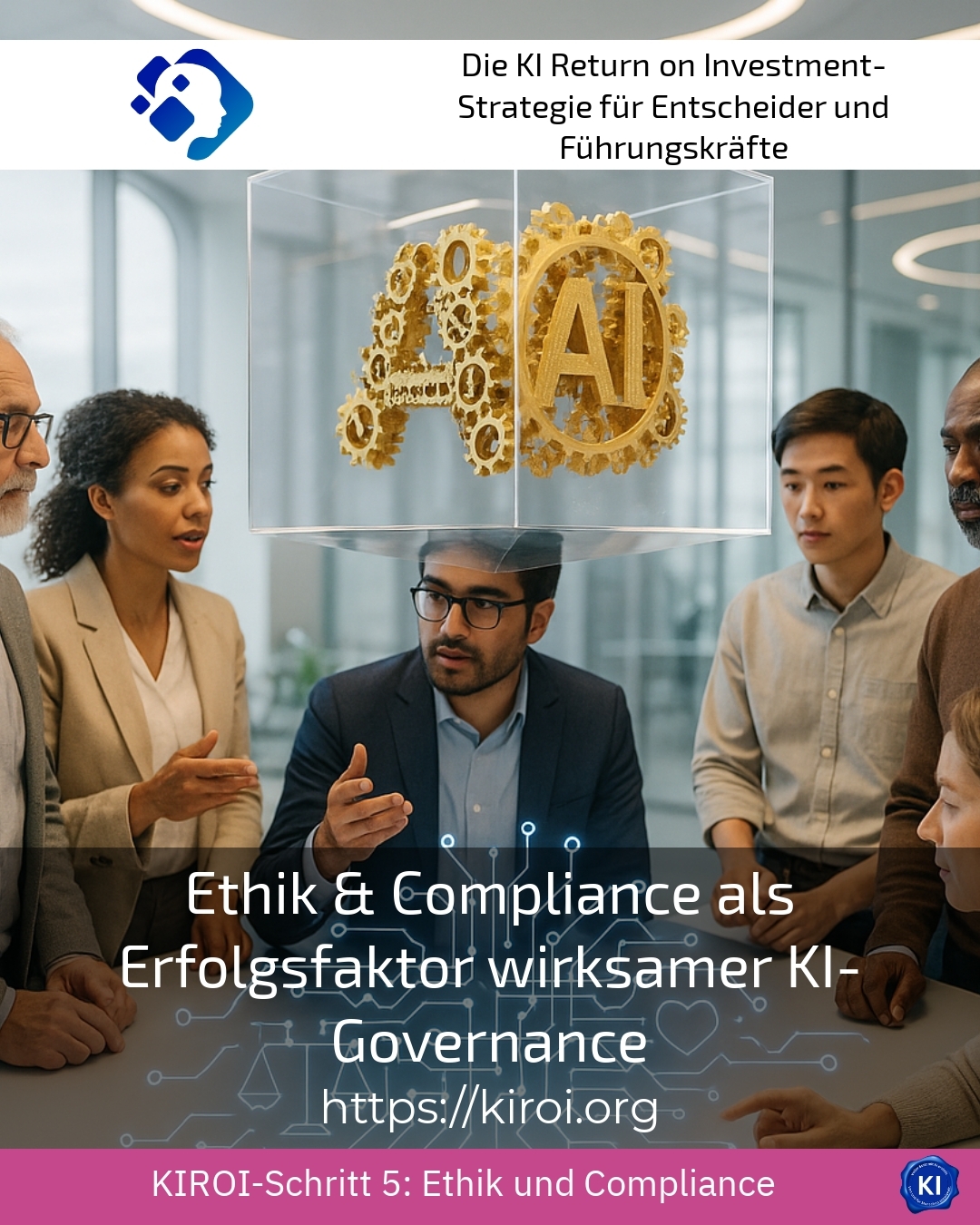
The answer often lies not in the technology itself, but in the fundamental principles that make sustainable implementation possible. Ethics & Compliance as a Success Factor for Effective AI Governance It serves as the guiding principle for organizations that seek not only short-term profits but also long-term building of trust among customers, employees, and society. In a time when algorithmic decision-making systems increasingly encroach on sensitive areas, the question of moral responsibility and legal compliance becomes increasingly pressing. This paper explores how organizations can create a solid framework. It shows practical ways that can already be implemented today.
Understanding the fundamentals of responsible technology governance
Before organizations implement complex control mechanisms, they should first understand the essential building blocks that form a solid foundation. This involves more than just adhering to legal regulations; it involves a deep understanding of the interactions between technological capabilities, societal expectations, and entrepreneurial responsibility. Many executives report that they initially felt overwhelmed by the complexity. However, they quickly realized that a structured approach creates clarity.
A medium-sized family business in the manufacturing sector faced the challenge of introducing quality control systems with intelligent components. The management team recognized early on that without clear guidelines, chaos would threaten to ensue. Therefore, it initially established a cross-departmental committee that defined fundamental principles. These principles included transparency towards employees, the comprehensibility of decisions, and regular reviews.
Another example comes from the logistics sector. A freight forwarding company implemented algorithmic route optimization. The drivers initially expressed concerns about their autonomy. Through open communication and clear regulations regarding human final decisions, trust was built. The company documented all decision-making processes transparently.
In retail, a chain of stores implemented a demand forecasting system. This raised questions about the use of customer data. The management responded with a comprehensive data protection plan. This ensured that all parties could understand how the information was used.
Ethics & Compliance as a Success Factor for Effective AI Governance in Practice
The practical implementation of moral principles and legal requirements requires more than theoretical statements or well-sounding corporate guidelines. Rather, it requires concrete structures, processes, and responsibilities that are lived out in everyday life and provide guidance in every important decision. Clients often report that only when the connection between abstract values and concrete instructions for action is made possible does the desired cultural change take place.
An automotive supplier faced the challenge of automating testing processes. The quality department developed a set of rules together with the legal department. This defined clear limits for automated decisions. Human experts retained the final say in critical cases. In this way, a balanced system was created that combined efficiency with responsibility.
In the healthcare sector, a rehabilitation clinic implemented a diagnostic support system. The medical management adhered to strict ethical guidelines. Every recommendation of the system was reviewed by expert staff. The clinic documented all cases where human judgment differed from machine recommendations. This transparency strengthened the trust of patients and staff.
An energy provider used intelligent systems for grid control. This led to questions about liability in case of incorrect decisions. The company established a three-level control system. Automated processes only ran within defined parameters. In the event of deviations, human control bodies intervened.
Best practice with a AIROI customer
An international trading company with several thousand employees approached us because it was experiencing difficulties in uniformly managing intelligent systems that had been implemented differently in different country entities, causing significant compliance risks. Together we developed a holistic approach that initially included a comprehensive inventory of all systems in use and subsequently defined clear responsibilities at three levels: strategic, tactical, and operational. Particularly important was the involvement of local compliance officers, who acted as a link between central guidelines and regional specificities, thereby increasing acceptance on the ground. The transruptions coaching accompanied the project team over several months and supported the development of uniform evaluation criteria for new applications. This not only minimized legal risks for the organization, but also strengthened the trust of business partners and regulatory authorities. Today, the company has a central registry of all applications, regular review cycles, and a training program for executives that conveys the importance of ethical principles and provides practical guidance.
Structures and processes for sustainable anchoring
The lasting integration of moral and legal principles can only be achieved if appropriate structures are created. Many organizations establish special committees or appointed representatives to this end. These coordinate all relevant activities and report directly to the management.
An insurance company established an interdisciplinary ethics board [1]. This committee reviews all new applications before they are introduced. It consists of representatives from various departments. External experts are also called in for complex questions. This results in a balanced judgment from different perspectives.
In the banking sector, an institution established a three-stage review process. New applications undergo a technical review first. Subsequently, a legal assessment is conducted by the compliance department. Finally, an ethics committee examines the societal implications. Only after all three stages have been completed is implementation allowed.
A telecommunications provider implemented regular audits [2]. External auditors evaluate all ongoing systems annually. The results are communicated transparently. Improvement measures are agreed upon in a binding manner and are monitored.
Challenges in implementing ethics & compliance as a success factor for effective AI governance
Despite the best intentions, many organizations encounter significant obstacles in practical implementation. These challenges range from a lack of expertise to resource shortages and cultural resistance. Often, those responsible report that the path was more rocky than initially assumed.
An engineering company initially underestimated the training needs. Executives lacked knowledge of ethical issues. The company subsequently invested in comprehensive training programs. External experts provided basic concepts and practical examples of application.
In the pharmaceutical sector, a company struggled with conflicting requirements [3]. Different regulatory authorities set different requirements. Internal coordination between legal and research departments proved difficult. It was only through the establishment of a central coordination team that harmonization was achieved.
A food manufacturer experienced resistance from the workforce. Employees feared being replaced by automated systems. The management responded with open communication and participation. Employees were involved in the development of policies. This participation significantly increased acceptance.
Cultural change as the foundation for long-term success
Sustainable change requires more than just new structures and processes. It requires a profound cultural transformation that permeates all levels of the organization. Leaders play a crucial role as role models in this process.
A textile company embedded ethical principles in its corporate values. Each executive committed to adhering to them in writing. Regular workshops fostered the exchange of ideas about difficult decision-making situations. This open dialogue culture enabled the early detection of problems.
In the construction industry, a company established a reporting system for ethical concerns. Employees could provide anonymous tips. All reports were taken seriously and investigated. This structure created trust and enabled quick corrections.
A chemical company introduced regular reflection rounds. Teams discussed ethical aspects of their work monthly. External moderators supported these conversations. As a result, a culture of critical questioning was created.
Future prospects and recommendations for action
The requirements for responsible technology management will continue to increase in the coming years. Regulatory authorities are continuously tightening their regulations. Social expectations regarding transparency and accountability are increasing. Organizations that establish solid foundations early on will enjoy a significant competitive advantage.
An energy producer is already preparing for future requirements today [4]. The company invests in research collaborations with universities. Together, new evaluation methods are developed. This proactive approach gives it an edge over its competitors.
In the transportation sector, a logistics company is testing new transparency formats. Customers gain insight into automated decision-making processes. This openness strengthens trust and differentiates the company from competitors.
A media house is developing standards for the ethical use of automation. These standards are made publicly available. The company thus positions itself as a responsible player in its industry.
My AIROI Analysis
The intensive focus on this subject area clearly shows that Ethics & Compliance as a Success Factor for Effective AI Governance It is not an optional addition, but rather the indispensable foundation of any sustainable technology strategy. Organizations that ignore this insight not only risk their reputation but also face significant financial and legal consequences that can extend far beyond short-term savings. The numerous examples from various industries illustrate that successful implementations always rely on a triad that encompasses structural anchoring, cultural transformation, and continuous development. Particularly noteworthy is the observation that organizations with clear ethical guidelines often also operate more economically successfully. They attract more qualified employees, enjoy greater trust from business partners, and avoid costly crisis situations. Transruptions coaching helps organizations approach these complex challenges systematically and develop tailored solutions. The key is always a willingness to honest self-reflection and open dialogue with all stakeholders. The future belongs to organizations that do not view responsibility as a burden, but rather as a strategic advantage, enabling them to take a pioneering role in their industry.
Further links from the text above:
[1] BMAS AI Observatory – Ethics Committees in Companies
[2] Bitkom – Guidelines for responsible AI
[3] EU Commission – Regulation of intelligent systems
[4] VDE – Standards for ethical application of technology
For more information and if you have any questions, please contact Contact us or read more blog posts on the topic Artificial intelligence here.









 Deutsch
 English (UK)