
Why do highly skilled executives fail to collaborate with intelligent systems, despite having decades of experience in human resource management?
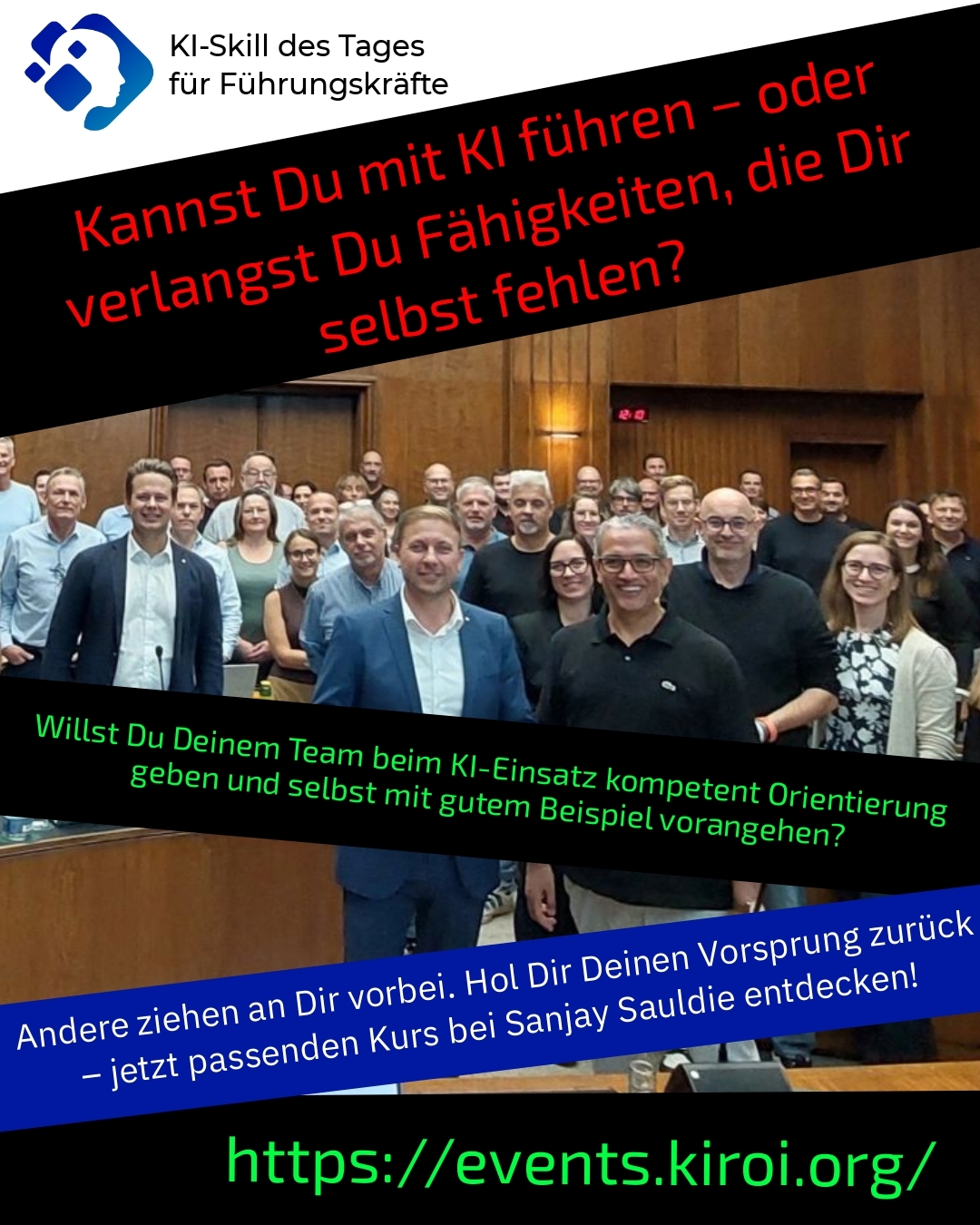
This question currently concerns decision-makers in almost all sectors of the economy. It is at the center of a profound transformation. It becomes particularly interesting when we ask ourselves: Can you lead with AI – or do you require skills that you yourself lack? This is where a fascinating paradox of our time reveals itself. We often expect from algorithmic assistants competencies that we ourselves have never fully developed. We demand precision, even though our own instructions remain vague. We demand empathy, while we struggle with emotional intelligence ourselves. This discrepancy between expectation and our own ability increasingly determines professional success and entrepreneurial growth.
The hidden competence gap in modern corporate management
In consulting situations and workshops, a recurring pattern repeatedly emerges. Executives complain that their digital tools do not deliver the desired results. They speak of poor outputs and insufficient analyses. However, upon closer inspection, it becomes clear that the real challenge lies elsewhere. The quality of the inputs decisively determines the quality of the results. Anyone who formulates tasks inaccurately receives correspondingly inaccurate answers. Anyone who cannot clearly define strategic goals cannot expect a clear strategy from even the most advanced systems. This principle applies universally, regardless of the technology used or the respective industry.
In the manufacturing industry, production managers face this challenge daily. They implement predictive maintenance systems, but do not define clear parameters for critical machine conditions. A mechanical engineering company in southern Germany recently implemented a predictive maintenance system. The expectation was to reduce downtime by fifty percent. The system was evaluated as insufficient. However, the analysis showed that the basic data were flawed and incomplete. The historical maintenance records contained gaps of several years. This is an example of how technological solutions can only be as good as their human leadership.
Best practice with a AIROI customer A medium-sized supplier from the automotive industry faced the challenge of fundamentally modernizing its quality assurance system, and the CEO had high expectations for the new automated testing systems that were to be implemented within a few months. However, the initial results fell far short of the ambitious goals. During the AIROI coaching process, it quickly became clear that the management team itself had not established a uniform definition of quality standards, as different departments employed different tolerance limits and testing criteria, leading to inconsistent data sets that the system could not process meaningfully. Through a structured workshop with all relevant decision-makers, the team developed a company-wide understanding of quality with measurable parameters for the first time, and only this human groundwork enabled the technical system to deliver reliable test results, resulting in a thirty-three percent reduction in the rejection rate within six months. This case illustrates impressively that the question is not whether technology works, but whether leaders can create the necessary foundations.
Can you lead with AI – or do you require skills that you yourself lack? An overview
Honest self-reflection forms the starting point for sustainable progress. Many leaders have neglected certain competencies throughout their careers. They delegated detailed analysis tasks to specialist departments. They relied on experienced employees for operational precision. They developed leadership qualities, but not necessarily the ability to formulate tasks clearly. This development was unproblematic in the past. Experienced teams were able to interpret and contextualize vague instructions. Algorithms, however, require clarity and structured information.
In the healthcare sector, this dynamic is particularly visible. Clinic managers are implementing systems for resource planning and patient management. However, they often report unsatisfactory recommendations. A hospital consortium in the Rhine-Main region invested heavily in a bed management system. The software was intended to optimize workloads and reduce waiting times. After six months, the metrics showed little improvement. The cause was not in the technology. The medical departments had never defined uniform criteria for admission and discharge procedures. Each chief physician worked according to individual standards. The system merely reflected this human inconsistency.
Similar patterns are found in the financial sector. Portfolio managers use algorithmic trading support and risk analyses. They complain about inaccurate forecasts and flawed assessments. Upon closer examination, it often turns out that their own investment strategies are not clearly documented. The definition of acceptable risk thresholds varies depending on the day’s conditions and market situation. Algorithms cannot interpret such implicit and fluctuating criteria. They need explicit parameters and consistent guidelines.
Communication skills underestimated as a success factor
The ability to communicate precisely is becoming increasingly important. In traditional leadership, misunderstandings could be corrected through questioning and discussions. Digital assistants do not pose clarifying questions in the traditional sense. They interpret input literally and generate corresponding outputs. This characteristic requires a new form of expression from leaders. They must learn to articulate their thoughts completely and unambiguously. This skill can be developed and trained.
A logistics company from Hamburg illustrates this point vividly. The sales manager implemented a system for creating offers and optimizing prices. His instructions were roughly as follows: to charge attractive prices for important customers. The system produced offers with significant price discounts for all inquiries. The term “important” was not defined. The word “attractive” remained open to interpretation. After a structured coaching process, the sales manager developed a differentiated criteria system. He defined customer categories based on measurable parameters such as annual turnover and payment behavior. He specified price corridors for different product categories. The results improved significantly. Not because the technology improved, but because the human leadership became more precise.
Best practice with a AIROI customer An international retail chain with over two hundred stores in Europe wanted to revolutionize its assortment management through intelligent inventory optimization, and the purchasing department formulated the goal that the system should automatically recognize which products were performing best in which stores, but after implementation, the shelves either showed overstock or empty space, leading to significant dissatisfaction among store managers and customers. The AIROI analysis revealed that the central purchasing department had never set binding standards for assortment categorizations, because identical products were categorized differently in different regions, seasonal factors were inconsistently accounted for, and regional peculiarities existed only in the implicit knowledge of individual buyers, which had never been systematically documented. Through an intensive transformation process that lasted several months and involved all levels of the hierarchy, the company developed a unified product data standard for the first time and simultaneously trained the management team in the art of precise requirement formulation, allowing the inventory optimization system to finally achieve its full potential and reducing capital tied up in the warehouse by twenty-two percent. This example vividly demonstrates that technological success directly depends on human input.
Leadership means responsibility for one's own development
The transformation of the workplace demands continuous learning from leadership figures. This requirement is not new. However, what is new is the speed and depth of the necessary adjustments. Those who yesterday successfully led with intuition and experience need additional competencies today. The good news is that these skills are learnable. They require openness and a willingness to reflect on oneself. They require time and structured practice. But they are not innate talents; they are developable skills.
There are interesting parallels in the education sector. University rectors and school principals are implementing learning management systems and adaptive educational platforms. Teachers often report that the personalized learning paths are unsatisfactory. The systems do not seem to properly understand the students. However, upon closer analysis, it becomes clear that the pedagogical concepts themselves are not clearly defined. What exactly does individualized learning mean? What criteria determine the optimal level of difficulty? These fundamental questions have often never been answered systematically. Technology can only reflect the ambiguity of human specifications.
Take your existing skills to the professional level, as already over eight thousand people from over five hundred companies have done with Sanjay Sauldie! Under events.airoi.org Do you find structured programs that address exactly these skills gaps and empower leaders to utilize the full potential of modern tools?.
Strategical thinking reinterpreted
Strategic competence gains new dimensions in this context. It is no longer enough to formulate visions and set goals. Leaders must be able to translate these visions into operationalizable sub-steps. They must be able to transform abstract concepts into measurable parameters. This translation work was previously often delegated to support departments. Today it is becoming the core competence of every leader. Anyone who does not develop this ability is increasingly cut off from the quality of their decision-making basis.
An energy provider in northern Germany faced this challenge in network optimization. The management formulated the goal of minimizing energy losses in the distribution network. The implemented optimization system provided suggestions that were technically correct but practically not implementable. There were missing ancillary conditions such as regulatory requirements, maintenance windows, and customer commitments. The management did not explicitly communicate these implicit framework conditions. They existed only in the minds of experienced engineers. After a structured process for knowledge externalization, the system was able to generate significantly better recommendations.
The question: Can you lead with AI – or do you require skills that you yourself lack? as an impetus for development
This provocative question should not be taken as criticism. Rather, it offers an opportunity for personal and organizational development. Any dissatisfaction with technological results can serve as an invitation to self-reflection. Which of my expectations have I explicitly communicated? What foundations have I created? What competencies do I still need to develop myself? These questions lead to sustainable growth. They transform frustration into learning opportunities.
In retail, this dynamic is evident in personnel planning. Store managers expect precise forecasts from forecasting systems for personnel needs. They complain about inaccurate shift schedules and overstaffing. However, analysis often reveals that the definition of optimal service is itself unclear. How many customers per employee are acceptable? What waiting times are considered tolerable? These standards often vary from store to store. Without uniform definitions, no system can deliver uniformly optimal results.
Best practice with a AIROI customer A pharmaceutical company focused on clinical trials invested significantly in automating its documentation processes, and the expectation was that intelligent systems would accelerate the evaluation of study data and detect patterns in adverse reaction profiles. However, the initial analyses produced confusing and sometimes contradictory results that undermined the medical leadership’s confidence in the entire technological initiative. The AIROI audit revealed that different study teams used different terminologies for identical medical phenomena, that severity levels of adverse reactions were classified according to subjective criteria by individual study investigators, and that historical data from different database systems had been combined with inconsistent formatting without any uniform cleaning up. Through a multi-month harmonization process that required intensive coordination between medical and technical teams, the company developed for the first time a binding documentation manual with clear definitions and classification criteria, which not only enabled algorithmic analysis but also raised the entire study quality to a new level and accelerated the approval procedures with authorities.
My AIROI Analysis
The discussion of one’s own leadership skills in the context of modern tools reveals fundamental truths about leadership in the twenty-first century. Technology serves as a mirror that mercilessly reflects the strengths and weaknesses of human leadership. Imprecise thoughts lead to inaccurate results. Unclear strategies manifest in inconsistent outputs. This insight should not discourage us, but motivate us. It shows that the key to success lies not in ever more sophisticated algorithms but in the continuous development of human competencies.
The AIROI-methodology begins right here. It does not view technological transformation in isolation, but as an integral component of organizational and personal development. It recognizes that sustainable results can only be achieved when people and systems are equally supported. Guiding leaders along this path requires patience and empathy. It is not about criticizing shortcomings, but about activating potential. It is about explicitly making implicit knowledge explicit and transforming vague ideas into clear concepts.
The numerous practical examples from various industries illustrate a universal principle. The human remains the decisive factor. His ability to communicate clearly, to strategically penetrate complex subject matters, and to continuously develop himself are all crucial factors in the success of any technological initiative. The question: Can you lead with AI – or do you require skills that you yourself lack? is therefore not a rhetorical provocation, but a serious invitation to reflection and growth. Those who answer it honestly open the door to new possibilities and sustainable success.
Further links from the text above:
[1] AIROI Events – Continuing education programs for executives
For more information and if you have any questions, please contact Contact us or read more blog posts on the topic Artificial intelligence here.







 Deutsch
 English (UK)