
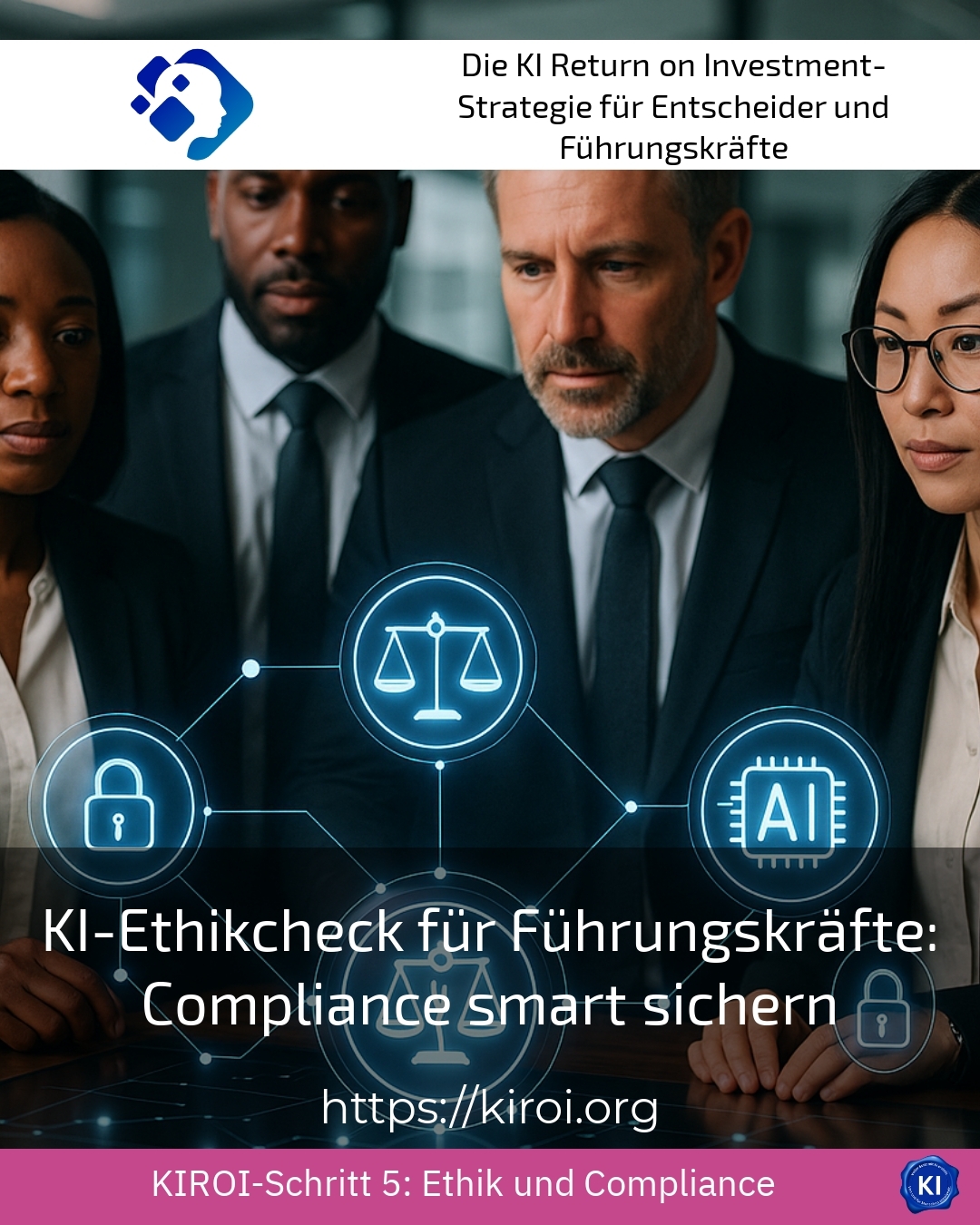
The digital transformation is changing the way companies make decisions and take responsibility. This presents leaders with a particular challenge. They must implement innovative technologies while upholding ethical principles. The AI Ethics Check for Executives: Secure Compliance Smartly This is why it has become an indispensable tool for modern corporate management. Algorithms now penetrate almost every area of business. They analyse customer behaviour, optimise supply chains and support HR decisions. But who controls the controllers? This question increasingly occupies boards of directors and managing directors. The answer lies in a structured approach that combines ethical principles with regulatory requirements.
Why responsible technology use becomes a top priority
The days of technological decisions being made exclusively in IT departments are over. Today, executives must understand the impact of automated systems on employees, customers, and society. For example, a financial services provider implemented a system for automated credit scoring. However, the results showed systematic disadvantages for certain population groups. Only a comprehensive ethical review uncovered the problematic patterns. Another example comes from the insurance industry. There, a company used algorithmic systems for claims processing. However, the software favoured certain customer groups in terms of processing speed. Management only recognised the problem after complaints and initiated a systematic review process. Similar challenges are also apparent in the healthcare sector. Clinics are increasingly relying on intelligent systems for diagnostic support. However, it must be ensured that these systems operate transparently and do not give biased recommendations.
Ultimately, responsibility always lies with people. Machines can prepare decisions, but cannot bear the moral burden. Therefore, leaders need tools and methods to ethically evaluate technological processes. The AI Ethics Check for Executives: Secure Compliance Smartly provides precisely this structured framework. It allows for a systematic review of all relevant aspects and creates transparency.
Structured Review as a Competitive Advantage
Companies that prioritise ethical standards early on gain long-term advantages. Customers trust brands that handle technology responsibly. A major retailer introduced a transparent pricing system. Communicating the underlying algorithms significantly strengthened customer trust. A telecommunications provider used intelligent systems for network optimisation. In doing so, the company placed great emphasis on data protection and proactively informed customers. This transparency led to a measurable increase in customer satisfaction [1]. Another positive example can be seen in the field of recruitment. A recruitment platform implemented a system for pre-screening applicants. To avoid discrimination, the system was regularly audited for fairness. The results of these reviews were communicated publicly.
Best practice with a AIROI customer
A medium-sized manufacturing company faced the challenge of ethically auditing its automated quality control systems. The intelligent systems analysed production data and independently made decisions about defective products and rework. However, discrepancies arose between shift teams because the algorithms appeared to apply different evaluation standards. As part of transruption coaching, we guided the management team in developing a comprehensive auditing concept. Initially, we jointly analysed the systems' decision-making logic and identified potential bias factors. Subsequently, we developed a catalogue of ethical guidelines that forms the basis for all algorithmic decisions. The managers learned to ask critical questions and challenge the systems' recommendations. The involvement of production employees was particularly important, as they possessed valuable experience. The outcome sustainably impressed all involved. Quality control became more transparent and understandable for everyone. Employee satisfaction rose significantly because the decisions now appeared fair and consistent. Furthermore, the company was able to reduce its rejection rate by twelve percent, as the audit also revealed potential for technical improvements.
AI Ethics Check for Executives: Secure Compliance Smartly with Clear Processes
A structured approach begins with an inventory of all deployed systems. Executives need to know where and how automated decisions are made. A logistics company, for example, documented all algorithms used in route planning. This transparency enabled targeted reviews for ethical issues. In the banking sector, an institution introduced a register of all automated processes [2]. Each entry contained information on the data basis, the decision logic, and human oversight. This documentation formed the basis for regular ethics audits. This approach is also proving increasingly successful in e-commerce. Online retailers often manage hundreds of algorithms for price optimisation and product recommendations. A systematic recording helps to identify problematic patterns early on.
Following the inventory, risk assessment takes place. This involves identifying and prioritising potential negative impacts. For example, a utility company analysed which customer groups could be affected by dynamic tariffs. The results led to adjustments in the pricing model to avoid social hardship. A similar sense of responsibility is evident in the public administration sector. Authorities are increasingly examining whether automated decision systems treat all citizens equally. These reviews help to strengthen trust in state institutions.
The human dimension in focus
Technology should support people, not replace them. This principle guides a responsible approach to automated systems. A care service provider implemented a scheduling system. In doing so, the company ensured that employees still had a say in their working hours. The software provides suggestions for optimal deployment plans, but the final decision is made by humans. In the education sector, clients often report similar experiences. Schools and universities use intelligent learning platforms. However, these systems should complement, not undermine, the pedagogical expertise of teachers. A further education provider therefore developed a concept that combines algorithmic recommendations with human advice.
The importance of human interaction is also evident in customer service. Chatbots can efficiently handle standard queries. However, for complex issues, customers should always have the option to speak with a human. An insurance company therefore introduced a clear escalation rule. If the chatbot cannot resolve the issue, an employee is automatically involved. This arrangement significantly increased customer satisfaction and reduced complaints.
Regulatory requirements as a framework
European legislation sets the global standard for the responsible use of technology. Leaders should view these requirements not as obstacles, but as opportunities [3]. An automotive supplier used the regulatory requirements as an incentive for comprehensive process optimisation. The documentation obligations led to greater transparency throughout the entire supply chain. The pharmaceutical sector has particularly strict requirements for algorithmic systems. A drug manufacturer therefore developed an internal certification process. Every system must go through several verification loops before it can be used productively. This diligence pays off because the company avoids regulatory problems as a result.
Internationally active companies also benefit from high ethical standards. A mechanical engineering company exports its products to many countries with different regulations. By orienting itself to the strictest requirements, the company creates a uniform basis. This strategy reduces complexity and minimises legal risks.
Best practice with a AIROI customer
A retail company with several hundred branches implemented an intelligent staff demand planning system. The system analysed historical sales data, weather forecasts, and local events to predict optimal staffing levels. Initially, however, this led to employee dissatisfaction because the shift schedules were perceived as inflexible. As part of transruption coaching, we supported the management in developing a participatory approach. First, we held workshops with branch managers and employees to understand their concerns. It became apparent that the purely data-driven planning had overlooked important social aspects. Together, we developed a hybrid model that combines algorithmic recommendations with human judgment. Branch managers were given scope for adjustments within defined parameters. Furthermore, a feedback system was established, allowing employees to submit suggestions for improvement. The results significantly exceeded the expectations of all involved. Employee turnover fell by eighteen percent, as shift scheduling was now perceived as fairer. At the same time, the efficiency of staff planning could be increased, as the system was continuously improved through feedback. The company now serves as a role model for other corporate divisions.
AI Ethics Check for Executives: Ensuring Compliance and Sustainable Impact
A one-off check is not enough. Ethical review must be understood as a continuous process. A media company therefore introduced quarterly ethics reviews. All new algorithmic systems are systematically analysed and assessed. A technology concern went a step further and established an independent ethics board [4]. This committee consists of internal and external experts. It has the right to stop problematic projects or demand improvements. This structure strengthens the confidence of investors and customers alike.
The food industry is also showing growing awareness of ethical issues. A food manufacturer is using intelligent systems for quality control. The company places great importance on ensuring that these systems do not make discriminatory decisions when selecting suppliers. Regular audits ensure that fairness is maintained.
Skills development as a strategic investment
Managers need a basic understanding of technological and ethical contexts. For this reason, an industrial company developed a training programme for all management levels. Participants learn to ask critical questions and to scrutinise the recommendations of automated systems. In the financial sector, banks are increasingly investing in the further training of their employees. One institute even created a new position: the Chief Ethics Officer. This manager is responsible for establishing and monitoring ethical standards throughout the entire company.
Awareness of responsible technology use is also growing in the chemical industry. One company introduced ethics workshops for project managers. These workshops impart practical tools for evaluating technological decisions. Participants develop a feel for potential problems and learn to take countermeasures early on.
My AIROI Analysis
The systematic ethical review of technological systems is becoming a crucial success factor for modern businesses. My analysis shows that leaders who take this topic seriously are better positioned in the long term. They not only avoid regulatory risks but also strengthen the trust of their stakeholders. The examples from various industries illustrate that there is no one-size-fits-all solution. Every company must find its own way to combine ethical principles with technological innovation. It has proven effective to create structures early on and to learn continuously.
The involvement of all employee levels seems particularly important to me. Ethical standards cannot be imposed from above. They must be embraced and lived by everyone involved. Transruption coaching can support companies in guiding this cultural change. The future belongs to companies that use technology responsibly. They will be more attractive to talent that values meaningful work. Customers will trust them more because they communicate transparently. And investors will favour them because they minimise long-term risks. The path there requires commitment and perseverance. But the effort is worthwhile, because responsible innovation creates sustainable value for everyone involved.
Further links from the text above:
[1] European Commission: Approach to Artificial Intelligence
[2] BSI: Information on Artificial Intelligence and Security
[3] Bitkom: Guidelines for dealing with AI
[4] AlgorithmWatch: Independent Observation of Algorithmic Systems
For more information and if you have any questions, please contact Contact us or read more blog posts on the topic Artificial intelligence here.








 Deutsch
  English (UK)