
Why are more and more companies consciously choosing not to take the fastest route and instead investing in responsible technology leadership?
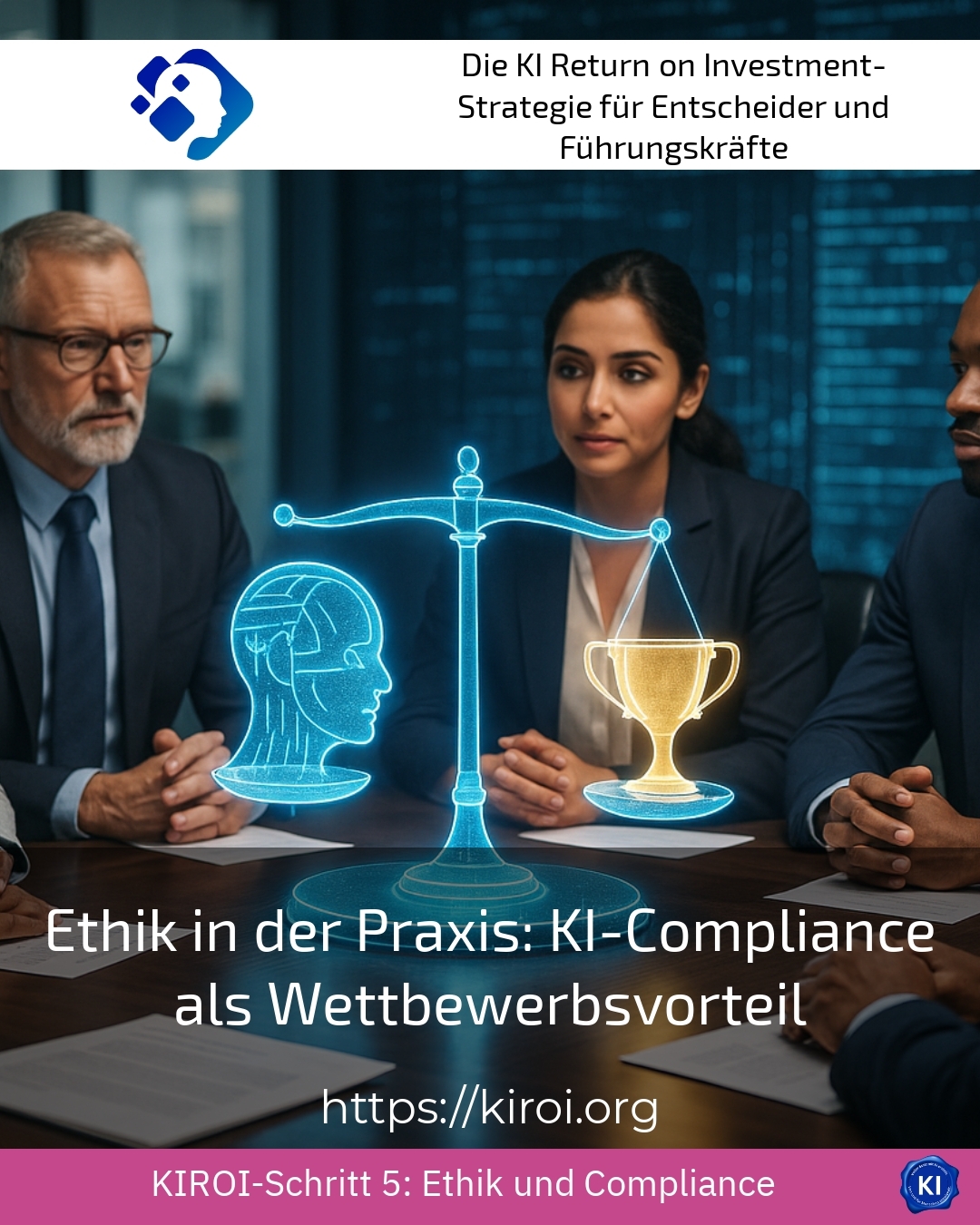
The answer to this question is changing fundamentally business models in almost all sectors of the economy. Organizations are increasingly realizing that AI compliance as a competitive advantage It represents not only a regulatory necessity but also offers a strategic leverage for sustainable growth. In a time when automated decision-making systems are deeply integrated into business processes, the question of ethical handling of these technologies becomes a central management task. Customers, partners, and employees are watching very closely how companies handle sensitive data and what values they represent in the implementation of intelligent systems. The following sections provide practical insights into how organizations can achieve measurable benefits through responsible technology management and why ethical principles are no longer an obstacle but rather a gateway to new business opportunities.
Responsible technology: More than just compliance with regulations
Many executives initially understand regulatory compliance to mean meeting legal minimum requirements. However, this view is far too narrow and misses significant potential. Companies that proactively integrate ethical principles into their technology strategy often report surprisingly positive effects on customer retention and brand perception. For example, a medium-sized machine manufacturer from southern Germany implemented a transparent explanation system for its maintenance forecasts and subsequently saw a significant increase in customer inquiries by thirty percent. A similar experience was made by a logistics service provider that revealed its route optimization and thereby was able to win new orders from sustainability-oriented clients. A trading company, on the other hand, used the documented fairness of its pricing as a differentiator in the fiercely competitive market.
These examples clearly show that responsible action is not a barrier to innovation. On the contrary, a clear ethical positioning often supports the innovative power, because it creates trust and reduces resistance. Employees are more willing to adopt new technologies if they understand how they work and can share the underlying values.
AI compliance as a competitive advantage in international business
Especially in cross-border trade, compliance with ethical standards is becoming increasingly important. International corporations are increasingly scrutinizing their suppliers for responsible technology use and consistently excluding companies with questionable practices. A automotive supplier recently reported that its documented compliance strategy was the deciding factor for a large order from Scandinavia, because the client placed great importance on comprehensible decision-making processes. A pharmaceutical company successfully used its strict internal guidelines as a selling point in discussions with Japanese partners known for their high ethical standards. Also, a mid-sized software developer won an important client in the Netherlands because it could demonstrate and document the transparency of its algorithms.
Best practice with a AIROI customer
An international financial services provider came to us with a complex challenge. The company wanted to introduce automated credit decisions, but faced significant concerns from the compliance department and the board of directors. The employees feared job losses and unclear decision-making processes, while the compliance officers saw regulatory risks. As part of our transruptive coaching, we supported the project team over several months in developing an ethical framework. Together, we developed transparency criteria that met both regulatory requirements and were understandable to end customers. We conducted regular reflection rounds with all stakeholders and supported the management in internal communication. The result exceeded expectations significantly, because the new credit platform not only received approval but was also praised by consumer protection authorities as exemplary. The customer later reported that the time invested in ethical groundwork had paid off many times over, because after-sales service issues and image damage could be avoided in advance.
Practical implementation of ethical principles
Implementing responsible technology management requires systematic action and clear structures. Successful organizations typically begin by assessing their existing automated systems and their impact on various stakeholders. For example, an energy provider mapped out all the decision points in its customer support and identified critical areas where human review seemed useful. An insurance company developed an alarm system to assess the risk of its algorithmic processes and trained its executives on how to use it. A retailer, in turn, established an ethics board that regularly evaluates new technology projects and issues recommendations.
Experience shows that such structures are particularly effective when actively supported and implemented by the company’s management. Statements of intent without real commitment rarely lead to lasting changes in the corporate culture.
Employees as the key to successful AI compliance as a competitive advantage
The best strategy remains ineffective if it is not supported by the people within the company. Therefore, forward-thinking organizations invest significant resources in training and awareness-raising for their workforce. A telecommunications provider conducted mandatory workshops for all employees with customer contact and subsequently recorded a significant decrease in complaints about automated decisions. A healthcare provider developed an interactive learning program that playfully conveys ethical dilemmas and encourages reflection. An industrial company established an internal referral point where employees can anonymously express concerns without fearing negative consequences.
Such measures create a culture of openness and critical thinking. They enable potential problems to be identified and reversed early, before greater harm occurs.
Best practice with a AIROI customer
A major staffing provider approached us with a sensitive concern. The company had already deployed automated pre-selection systems for applications and was receiving increasingly critical requests from candidates and clients regarding the fairness of these systems. The management recognized the urgency of the issue and decided to conduct a comprehensive review and realignment. As part of our support, we first analyzed the existing algorithms for potential biases and discriminatory patterns. We held discussions with rejected candidates to understand their perspectives and uncover blind spots. Together with the IT team, we developed criteria for fair evaluations and implemented regular audits by external auditors. The transruptive coaching also included intensive work with the human resources department to sensitize them to unconscious biases. After completing the project, the company published a transparency report that received great attention in the industry and won several industry awards. The number of applicants subsequently increased significantly, as the company had established a reputation as a fair employer.
Long-term strategic perspectives
Companies that invest in responsible technology leadership today position themselves for upcoming challenges. Regulatory authorities worldwide are continuously tightening their requirements for algorithmic systems, and those who act early avoid costly revisions. One banking institution successfully used its already established compliance structures to quickly and efficiently implement new regulatory requirements, while competitors were still busy with basic groundwork. A technology company won a public contract because it was the only bidder able to demonstrate that its systems met the strict ethical requirements of the awarding authority [1]. A media company, on the other hand, avoided a looming reputation damage because its internal control mechanisms recognized and corrected a problematic algorithmic decision in a timely manner.
Therefore, the investment in ethical foundations pays off multiple times and acts as insurance against future risks. At the same time, it opens up doors to customers and partners who value responsible behavior.
Document measurable success through AI compliance as a competitive advantage
To make the benefits of ethical technology management visible, it is recommended to systematically collect relevant metrics. Successful companies measure, for example, the number of legal disputes avoided, customer satisfaction with automated decisions, or employee engagement in ethics initiatives. A shipping company conducted regular surveys on the performance of its automated customer support and used the results to continuously improve [2]. A mobility provider documented the impact of its transparent pricing on customer retention and was able to demonstrate a significant positive correlation. A educational provider, in turn, regularly measured the trust of its users in automated course recommendation and adjusted its algorithms accordingly.
Such measurements allow the value of ethical measures towards stakeholders to be demonstrated and further investments to be justified.
My AIROI Analysis
The intensive focus on ethical technology leadership constantly shows me how profoundly this change is transforming the business landscape. Organizations that are seriously addressing responsible technology use often develop a completely new perspective on their overall business operations. They begin to view decisions more holistically and systematically consider their impact on various stakeholders. This maturation of corporate culture goes far beyond technical compliance and encompasses the entire value system of an organization.
From my consulting practice, I know that the path to responsible technology leadership rarely follows a straight line and is often accompanied by setbacks. Companies encounter internal resistance, have to question cherished habits, and lead uncomfortable discussions. However, these very confrontations often lead to valuable insights and ultimately strengthen the competitive position. Experienced partners can help avoid typical pitfalls and accelerate the process. Transruptions coaching offers valuable insights here because it addresses not only technical aspects but also the human dimension of change.
The coming years will show which companies have recognized the signs of the times and which continue to focus on short-term optimization. I am convinced that ethical technology leadership is not a temporary trend but will become the standard of good corporate governance. Those who set the right course today will be among the winners tomorrow.
Further links from the text above:
[1] EU Commission on regulating artificial intelligence
[2] Bitkom guide on responsible AI use
For more information and if you have any questions, please contact Contact us or read more blog posts on the topic Artificial intelligence here.










 Deutsch
 English (UK)