
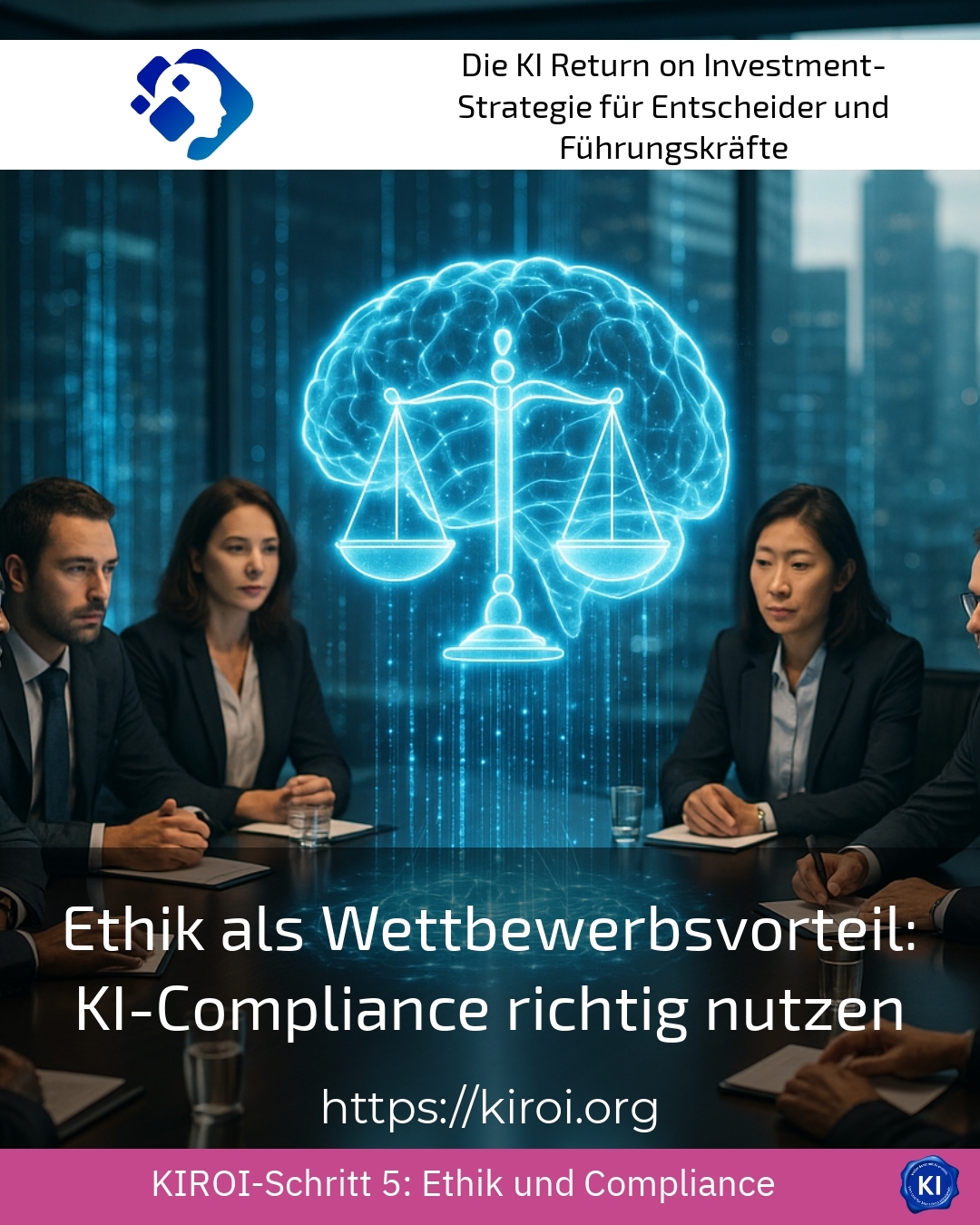
In a time when algorithmic decision-making systems are increasingly influencing our daily lives, a fundamental question arises for businesses: How can they Using AI compliance correctly, Not only to meet regulatory requirements, but also to achieve a sustainable competitive advantage? The answer lies in a strategic approach that views ethical principles not as a tiresome obligation, but as a valuable differentiating factor, consistently integrated into all business processes. Companies that make this paradigm shift often report increased customer trust and improved business results.
Why responsible use of technology is more important today than ever before
Digital transformation has initiated profound changes in almost all sectors of the economy. Automated systems now make decisions that were previously exclusively the domain of humans. Loan applications are assessed and approved or rejected within seconds. CVs go through filter algorithms before reaching human eyes. Insurance premiums are calculated individually based on complex data analyses.
This development presents enormous opportunities, but also considerable risks. Discriminatory patterns can be hidden in training data. Non-transparent decision-making processes undermine the trust of those affected. Data protection violations can have serious consequences for individuals and organisations. Therefore, the responsible use of these technologies is increasingly coming into the focus of legislators, investors, and consumers alike.
Financial institutions, for instance, face the challenge of making algorithmic credit decisions understandable. Retailers must ensure that personalised pricing does not lead to unfair practices. Healthcare providers are integrating diagnostic support systems that must meet the highest demands for accuracy and data protection. It thus becomes clear that Using AI compliance correctly is becoming a core strategic competence across industries.
The regulatory framework and its strategic dimension
European regulatory initiatives are setting global standards for the responsible use of technology [1]. Companies that establish robust governance structures early on gain a significant advantage over competitors who only react under regulatory pressure. This is no longer just about avoiding fines or reputational damage.
Rather, forward-thinking organisations recognise that ethical guardrails can promote, rather than hinder, innovation. They create clarity about acceptable use cases and development pathways. They reduce the risk of costly misdevelopments and subsequent corrections. They strengthen the trust of customers, partners and employees in the systems deployed. Furthermore, they enable constructive cooperation with regulatory authorities and other stakeholders.
In the automotive industry, experts are observing how autonomous vehicle manufacturers are integrating ethical principles into their development processes [2]. Telecommunications companies are implementing transparency standards for algorithmic network optimisation. Energy providers are utilising responsible analytics methods to predict consumption patterns. These examples demonstrate that proactive action is gaining importance across industries.
How to properly use AI compliance and position it as a differentiator
The key to successful positioning lies in the consistent linking of compliance requirements with business objectives. Companies should not view responsible technology use as a separate initiative. Instead, it is recommended to integrate it into existing quality management and innovation processes. However, this requires a rethink at various levels of the organisation.
Leaders must recognise the strategic importance of the topic and communicate it actively. Development teams need clear guidelines and practical tools for implementation. Sales and marketing should be able to authentically convey the company's ethical strengths. Transruptions coaching supports organisations in developing tailored strategies and processes.
Best practice with a AIROI customer
A medium-sized company in the logistics optimisation sector faced the challenge of making its algorithmic route planning systems more transparent, as business customers increasingly demanded proof of fair and comprehensible decision-making processes, while regulatory requirements were also expected to tighten. In an accompanying transformation project, we first analysed the existing systems and identified areas with optimisation potential regarding transparency and comprehensibility. Together, we developed a framework for documented decision logic that met technical requirements and could be communicated in a way that was understandable to laypeople. Implementation proceeded in stages over several months, with regular workshops involving various stakeholder groups ensuring that all perspectives were considered. The development of a reporting system that provided customers with detailed insights into the decision factors behind their individual route optimisations upon request proved particularly valuable. The company now actively uses this transparency initiative in its sales communications and reports significantly increased customer loyalty and successful new customer acquisitions that can be explicitly attributed to trust in its ethical standards.
Practical implementation strategies for sustainable compliance structures
The successful implementation of responsible technology standards requires a systematic approach. Firstly, companies should conduct a comprehensive inventory of their existing algorithmic systems. Which automated decision-making processes are in use? What data is being processed and how is it protected? Where do potential risks for unfair or opaque outcomes exist?
Based on this analysis, prioritised fields of action can be identified. High-risk applications require special attention and robust control mechanisms [3]. Low-risk systems can be secured with less elaborate measures. This differentiation enables efficient resource allocation and avoids excessive bureaucracy.
In the pharmaceutical industry, experts are observing innovative approaches to validating algorithmic analysis tools. Agricultural enterprises are integrating ethical guidelines into their precision farming systems. Media companies are developing transparency standards for personalised content recommendations. These industry-specific implementations demonstrate that an individualised approach is more promising than generic standard solutions.
Cultural transformation as the foundation for sustainable success
Technical measures alone are not sufficient to establish an authentic compliance culture. Critically, ethical principles need to be embedded in the values and behaviours of all employees. This begins with raising awareness of potential risks and imparting a shared understanding of acceptable practices.
Training programmes should not only impart abstract principles but also offer concrete recommendations for everyday work. Employees need to know who they can approach if they have ethical concerns. Leaders should act as role models and publicly acknowledge ethical decisions. This will foster a culture where responsible behaviour becomes second nature.
Clients in transruption coaching frequently report initial resistance to additional ethical requirements. Development teams fear delays and hindrances to innovation. Sales staff perceive competitive disadvantages compared to less scrupulous competitors. These concerns are understandable and should be taken seriously, enabling constructive dialogue and the development of shared solutions.
Best practice with a AIROI customer
A recruitment services company recognised the need to review its algorithmic pre-selection systems for potential discrimination risks after individual applicants raised concerns about the fairness of the selection process. As part of a guided transformation project, we initially conducted a comprehensive audit analysis, examining various demographic groups for systematic disadvantages, encompassing both quantitative data analyses and qualitative interviews with applicants and internal stakeholders. The results revealed subtle biases in certain assessment criteria, which were attributable to historical data structures and tended to disadvantage specific applicant groups. Together, we developed corrective mechanisms and a continuous monitoring system that automates regular fairness checks and immediately triggers alerts upon detection of anomalies. Additionally, the company implemented a transparency portal through which applicants can access detailed information about the selection criteria and their weighting. This initiative not only significantly strengthened applicant trust but also positioned the company as a pioneer for fair recruitment practices within its industry.
Measurable benefits of ethical technology use and value creation potentials
Companies that successfully implement responsible technology standards report a variety of positive impacts [4]. Customer surveys often show increased trust and loyalty. Employee satisfaction rises when ethical principles are visibly lived. Investors increasingly view ESG-compliant technology use positively in their investment decisions.
Furthermore, robust compliance structures significantly reduce operational risks. Costly rectifications of flawed systems are avoided. Regulatory sanctions and reputational damage can be averted. Collaboration with authorities becomes more constructive and less confrontational.
Insurance companies are using ethical algorithm standards for competitive differentiation. Banks are communicating transparent credit decision processes as a mark of quality. Retailers are positioning fair pricing algorithms as a customer benefit. These examples illustrate the significant value creation potential of a consistent Using AI compliance correctlyApproach.
Future prospects and development trends
The dynamics of regulatory requirements and technological possibilities necessitate a continuous adaptation of compliance strategies. Companies should closely monitor relevant developments and regularly review their structures. New technologies bring new ethical questions that must be proactively addressed.
Experts expect increasing standardisation of auditing procedures and certification systems [5]. Industry-specific best practices will emerge and serve as benchmarks. Cooperation between companies, regulators, and civil society will intensify.
Companies that invest in responsible technology structures today are laying the foundation for sustainable success in an increasingly regulated and values-driven business world. They are positioning themselves as trusted partners for customers, employees, and investors alike.
My AIROI Analysis
Intensive engagement with the ethical use of technology as a competitive factor reveals a fundamental shift in the corporate landscape, extending far beyond short-term regulatory adjustments and having the potential to fundamentally transform long-term business models. Organisations that understand the responsible use of algorithms as a strategic opportunity not only achieve regulatory certainty but also establish themselves as trustworthy players in an increasingly critical market environment. Experience from numerous support projects clearly shows that the initial additional expenditure for robust compliance structures is more than compensated for by a variety of positive effects. Customer trust, employee satisfaction, and investor interest increasingly correlate with demonstrably ethical business practices. At the same time, preventive measures significantly reduce the risk of costly corrections, sanctions, and reputational damage. The greatest challenge for many companies lies not in technical implementation, but in cultural transformation, which requires the authentic embedding of ethical principles in all areas of the organisation and presupposes long-term commitment at all management levels. Those who actively shape this change and Using AI compliance correctly Established as a guiding principle, it will be much better positioned in the competition of the coming years than reactive laggards, who only act under external pressure and thus lose valuable time and resources.
Further links from the text above:
[1] European Commission: Regulatory Framework for Artificial Intelligence
[2] VDA: Automated Driving and Ethical Guidelines
[3] BSI: IT baseline security compendium
[4] Bitkom: Artificial Intelligence in Business Use
[5] DIN: Standardisation Roadmap Artificial Intelligence
For more information and if you have any questions, please contact Contact us or read more blog posts on the topic Artificial intelligence here.










 Deutsch
  English (UK)