
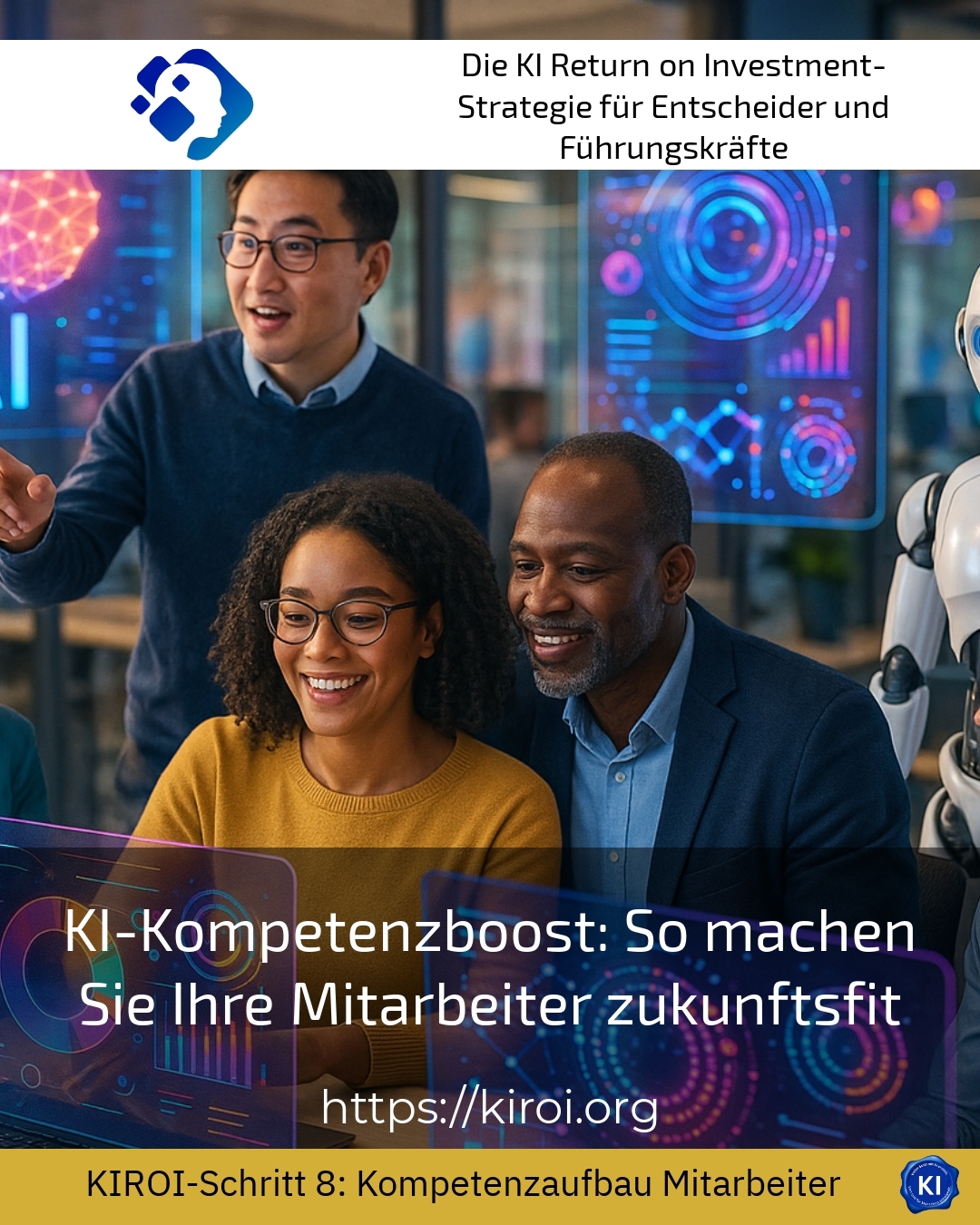
The digital transformation is changing companies at a rapid pace. Many leaders are therefore asking themselves one central question. How do we prepare our teams for the new demands? The AI Skills Boost provides crucial momentum here. It makes employees fit for the future and sustainably strengthens competitiveness. This article will show you practical ways to implement it. You will also learn how transruption coaching can support you in this transformation.
Why an AI skills boost is essential today
The world of work is undergoing fundamental change. Automation and intelligent systems are transforming almost every professional sector. Many companies are now recognising this shift. However, they often act too hesitantly or too late. A strategic approach to skills development is frequently lacking. Clients regularly report similar challenges. They feel the pressure to further develop their teams. At the same time, they lack direction in the technological jungle.
In retail, for example, customer behaviour is fundamentally changing. Chatbots automatically answer initial enquiries. Warehouse management systems optimise inventory independently. Personalised recommendations are generated by intelligent algorithms. These developments require new skills from employees. They must be able to understand and use technology effectively. Checkout staff increasingly work in conjunction with self-checkout systems. Sales assistants use digital assistants for complex product information. This leads to hybrid working models in brick-and-mortar retail [1].
This change is also clearly evident in the logistics sector. Route planning is now carried out by intelligent optimisation systems. Warehouse workers cooperate with autonomous transport robots. Schedulers use forecasting tools for better capacity planning. These changes demand completely new competencies. Employees must learn to understand technical contexts. However, they also need soft skills for human-machine interaction. Therefore, continuous professional development is becoming increasingly important.
Strategic Foundations for Boosting AI Competence within the Company
Successful competence development begins with a clear analysis. Companies must first understand which skills will be needed in the future. This is helped by a structured approach with defined milestones. The AIROI methodology offers a proven framework for this. It supports organisations in systematic transformation.
In the healthcare sector, for example, entirely new job profiles are emerging. Medical assistants work with diagnostic assistance systems. Nurses use digital documentation tools in their daily work. Doctors critically interpret the results of image analysis software. These changes require both technical and ethical understanding. Hospitals are therefore increasingly investing in interdisciplinary training programmes. They purposefully combine specialist expertise with the development of digital skills. Acceptance among employees is increasing thanks to practical application examples [2].
In the manufacturing industry, too, fundamental changes are taking place. Production workers today monitor intelligent machine parks. They interpret sensor data and react to anomalies. Quality inspectors work together with automated inspection systems. Maintenance technicians use predictive maintenance systems for their planning. These tasks require analytical skills and system understanding. Companies are therefore creating new further training formats for their workforce. They combine theory and practice directly at the workplace.
Best practice with a AIROI customer
A medium-sized manufacturing company faced a particular challenge. The workforce was very hesitant about new technologies. Many employees feared losing their jobs. Management recognised the need for a sensitive approach. As part of a transruption coaching project, we developed a strategy together. This took employees' concerns into account from the outset. We initially held open discussion rounds with all departments. We actively listened and took concerns seriously. We then jointly identified areas with high potential. Employees themselves selected pilot projects for initial experience. Within six months, the mood changed fundamentally. Skepticism turned into curiosity and commitment. Today, the teams independently develop improvement suggestions for digital processes. Staff turnover decreased significantly and productivity increased measurably. This example impressively shows the importance of support during such transformations.
Individual learning pathways for sustainable competence development
Every employee brings different prerequisites with them. For this reason, standardised training programmes often only have limited success. Individual learning paths, on the other hand, take personal strengths and development areas into account. They enable self-directed learning at your own pace. Managers can provide supportive impetus in this process [3].
In the banking sector, for example, customer relationships are fundamentally changing. Advisors use analysis tools for personalised investment proposals. Loan officers work with automated credit check systems. Compliance officers monitor transactions using intelligent pattern recognition. These tasks require both expertise and digital competence. Banks are therefore investing heavily in modular further training programmes. Employees choose their own focus areas according to their needs. Learning progress is documented and recognised.
Similar developments are evident in the insurance sector. Claims adjusters are using automated image recognition for initial assessments. Customer advisors are working with chatbots for standard queries. Actuaries are employing advanced analytical methods for risk models. These changes necessitate a continuous adaptation of skills. Consequently, companies are developing comprehensive competence frameworks for all functional areas. They are defining clear development levels and qualification pathways, thereby creating transparency regarding requirements and opportunities.
The AI skills boost as a cultural change process
Technical skills alone are not enough for success. Companies also need an appropriate learning culture. This promotes a willingness to experiment and tolerates constructive mistakes. Employees must feel secure when trying out new technologies. Leaders play a crucial role-model function in this.
In the media sector, for example, content creation is fundamentally changing. Journalists use research tools with intelligent data analysis. Graphic designers collaborate with generative design assistants. Editors creatively employ automated text suggestions. These tools significantly support the work process. However, they do not replace human creative judgment. Therefore, successful media companies combine technical and creative training. They promote critical thinking in dealing with automated systems [4].
New ways of working are also emerging in the legal sector. Lawyers are using intelligent document analysis for contract reviews. Law firms are deploying automated research systems for case precedents. Notaries are working with digital assistants for standard procedures. These developments necessitate a new understanding of professional roles. Legal expertise remains central and indispensable. However, the way it is applied is fundamentally changing.
Leadership Development as the Key to an AI Competence Boost
Leaders significantly shape their teams' attitudes. Therefore, they must possess sufficient digital competence themselves. At the same time, they need skills to guide change processes. Transruption coaching supports leaders precisely with these challenges. It provides impetus for their own further development and team leadership.
In the education sector, for example, headteachers face particular challenges. They must strategically implement digital learning platforms. At the same time, they support their teachers in making methodological changes. University professors integrate new tools into their teaching. Educational institutions develop guidelines for the meaningful use of technology. These tasks require both pedagogical and digital expertise. Therefore, leaders in the education sector are increasingly investing in their own further training.
Similar requirements are evident in public administration. Department heads are driving the digitalisation of citizen services. Case workers use automated application processing in their day-to-day work. Project managers coordinate complex modernisation initiatives. These changes require new leadership skills at all levels. Administrations are therefore developing special programmes for their leaders. They purposefully combine administrative knowledge with digital competency development [5].
Best practice with a AIROI customer
A local council was seeking support in digitising its processes. The challenge lay less in the technology than in the culture. Long-serving employees were hesitant about new ways of working. Managers themselves felt insecure in their use of digital tools. As part of our support, we developed a multi-stage concept. First, we worked intensively with the management team on their own skills. This investment quickly paid off and built trust. Next, we worked with the teams to identify potential improvements in their work areas. Employees contributed valuable ideas from their practical experience. We closely and continuously supported the implementation of initial pilot projects. Successes were made visible and communicated throughout the organisation. After a year, working methods and attitudes had changed significantly. Citizen services improved measurably and received positive feedback. This project shows how cultural change can be achieved through patient guidance.
Practical implementation in daily work
Theoretical knowledge must be transferred to practice. Therefore, application-oriented learning formats are particularly effective. Learning by doing significantly promotes sustainable competence development. Companies therefore create spaces for experimentation for their employees. These allow for low-risk testing of new technologies.
In the trades, for instance, traditional working methods are changing. Carpenters use computer-controlled manufacturing facilities for precise work. Electricians employ digital planning tools for complex installations. Plumbing companies are working with augmented reality applications for customer consultations. These tools require new skills from experienced craftspeople. Therefore, guilds and chambers are developing suitable further training courses. They specifically combine craftsmanship with digital competence.
New ways of working are also emerging in the catering industry. Chefs are using intelligent kitchen systems for process optimisation. Service staff are working with digital ordering systems and guest management. Hotel managers are using revenue management tools for dynamic pricing. These changes require technical understanding in the service sector. Catering businesses are therefore investing more in staff training. They are creating time and space for continuous learning [6].
Measurable successes and continuous improvement
Competence development requires clear goals and success indicators. Companies should regularly review the progress of their initiatives. Both quantitative and qualitative metrics can help with this. Employee surveys provide valuable insights into effectiveness. Performance indicators show the business benefit of investments.
In the energy sector, for example, successes can be measured well. Network technicians work more efficiently with intelligent diagnostic tools. Customer advisors resolve inquiries faster with automated support. Engineers optimise facilities through data-driven analysis methods. These improvements are reflected in concrete key figures. Energy providers therefore systematically document their progress. They use the insights for continuous programme improvements.
In the chemical industry, safety aspects play a particularly important role. Laboratory technicians use automated analysis systems for precise results. Process engineers work with intelligent process controls. Safety officers use predictive models for risk assessments. These applications require both expertise and system understanding. Chemical companies therefore develop integrated training concepts for all areas. They systematically combine safety culture with digital competence development.
My AIROI Analysis
The systematic development of digital skills is decisive for the future viability of organisations. My experience from numerous consulting projects shows recurring patterns. Successful companies understand skills development as a strategic priority. They invest continuously in their employees and leaders, combining technical training with cultural transformation. The human component always remains at the heart of all efforts.
Clients often report initial resistance within their organisations. However, this subsides through patient support and visible successes. Employees gain trust when they can have positive experiences. Leaders gain confidence through their own development of skills. The company culture gradually shifts towards greater openness and a willingness to experiment.
Transruption coaching offers valuable support for these change processes. It provides impetus for strategy development and implementation support, taking into account the individual circumstances of each organisation. The AIROI methodology provides a structured framework for systematic action. It meaningfully combines proven management principles with current technological developments.
For the coming years, I expect these developments to accelerate further. Companies that invest in skills development today will benefit. They will build competitive advantages and secure their market position sustainably. Investment in people remains the most important success factor. Technology is only as valuable as the people who use it meaningfully.
Further links from the text above:
[1] Bitkom – Digital Transformation in Retail
[2] Federal Ministry of Health – Digitalisation in Healthcare
[3] BMAS – Digitalisation of the World of Work
[4] German Journalists' Association – Digital Tools in Journalism
[5] Online Access Act – Digitalisation of Administration
[6] DEHOGA – Digitalisation in the Gastronomy Sector
For more information and if you have any questions, please contact Contact us or read more blog posts on the topic Artificial intelligence here.








 Deutsch
  English (UK)