
Why do so many companies fail to implement AI despite having purchased the most modern tools?
This question currently concerns countless executives and decision-makers in almost all industries, because reality paints a sobering picture: Despite massive investments in artificial intelligence, the hoped-for results often remain elusive, and the Introduction of AI It becomes a costly experiment with no measurable added value. The reason lies not in deficient technology or lacking budgets, but rather in a fundamental misunderstanding of what a successful digital transformation actually entails and the role played by human factors in this process.
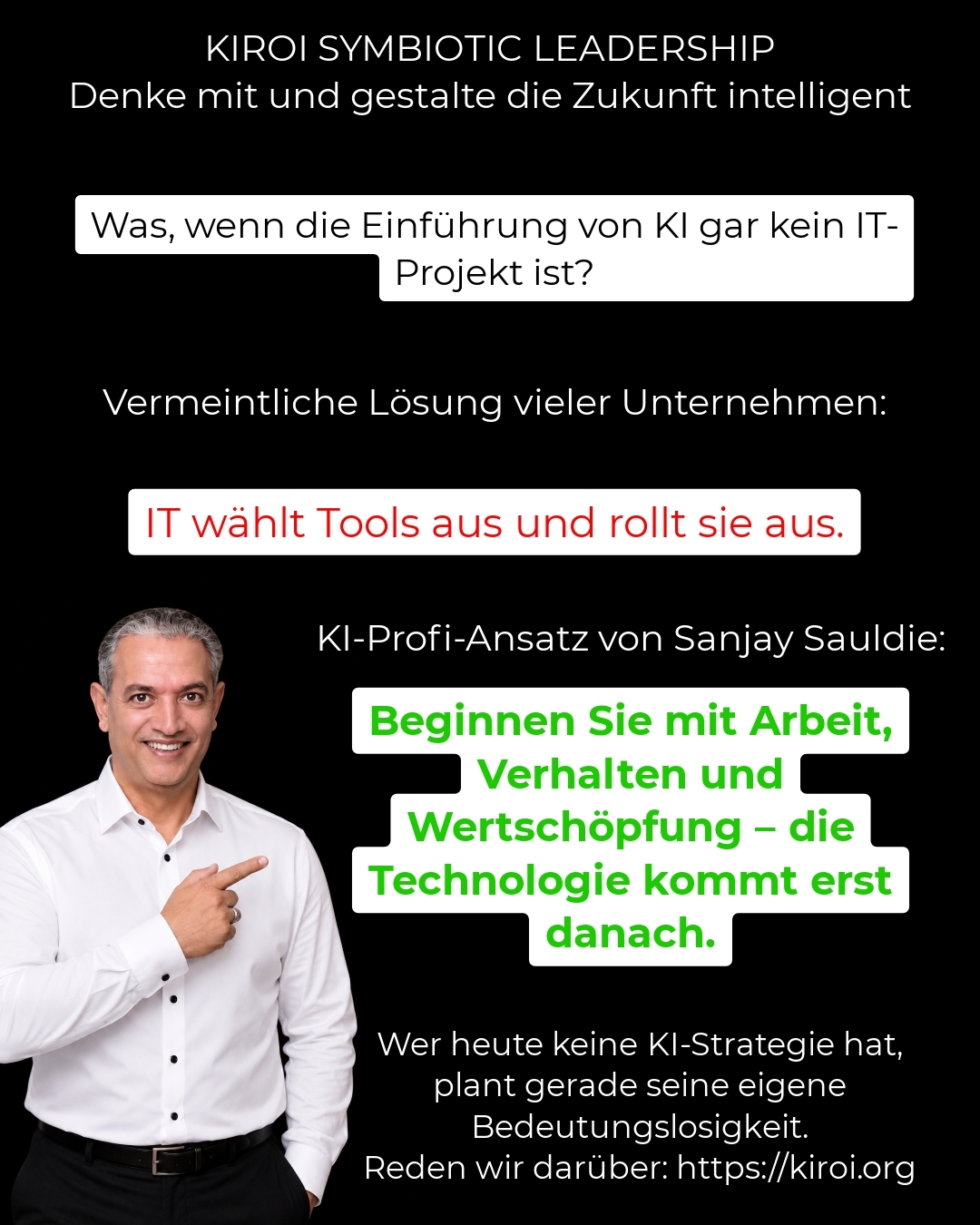
The classic approach: When IT departments take over the helm
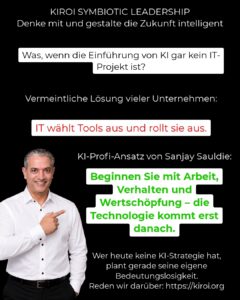
In average companies, the Introduction of AI Following a well-known pattern that has established itself over decades and is now becoming a stumbling block. The IT department is tasked with evaluating and selecting suitable tools. Subsequently, the rollout is carried out according to a proven scheme.
This process typically begins with an extensive market analysis of various software solutions and platforms. After that, the company negotiates licenses and plans the technical integration. The employees are subsequently trained in using the new systems. So far, so familiar.
But this is precisely where the fundamental problem lies, one that many organizations only recognize belatedly and consumes significant resources without creating any lasting benefits. The technology is considered the starting point, while the actual success factors – namely work practices, behavioral changes, and concrete value creation potential – are only addressed subsequently and often half-heartedly, leading to frustration at all levels.
For example, a manufacturing company invested in a state-of-the-art predictive maintenance system for its production facilities. The installation went smoothly and technically flawlessly. Nevertheless, the maintenance teams continued to use their tried-and-tested methods and relied on experience rather than on algorithmic predictions, because no one had explained to them why the new approach should be better and what concrete added value it would offer in their day-to-day work.
A logistics company implemented intelligent route optimization for its fleet of vehicles. The software worked precisely and reliably. However, the dispatchers regularly ignored the system’s suggestions because they believed they could better assess local conditions than an algorithm, and because their expertise in implementation had not been sufficiently acknowledged.
A trading company implemented AI-based inventory management that was intended to automate reorders. The system functioned technically flawlessly. However, the buyers constantly resorted to manual intervention because they did not trust the forecasts and no one had made the underlying calculations transparent to them.
Typical symptoms of the technology-centric approach to introducing AI
The signs of a flawed approach usually do not appear until several months have passed, when the initial euphoria has faded and the harsh reality of everyday work returns. Employees develop workarounds to circumvent the new systems. They revert to familiar processes as the pressure eases. The promised efficiency gains do not materialize into measurable results.
In a manufacturing facility, we observed that production managers systematically over-rigorized automated quality checks because they trusted the algorithmic judgment less than their trained eye, even though the machine provided objectively more precise measurements than any manual inspection.
One energy provider found that its technicians ignored the AI-based maintenance recommendations and instead worked according to traditional intervals. The investment in intelligent infrastructure remained largely ineffective and did not justify the high acquisition costs.
A medium-sized machine manufacturer implemented a solution for automatic quote generation. However, the sales representatives continued to create their calculations manually because they felt they were losing control of their customer relationships.
The AIROI-approach: A new perspective on digital transformation
The AIROI-methodology is based on a fundamentally different philosophy that puts people and their working reality at the center, rather than viewing technology as a driver of change. The approach begins with three fundamental questions: How do people work today in practice? What behaviors shape the organization? And where is actual value creation actually generated?
This approach may seem counterintuitive at first, because it deliberately puts the technological dimension back in the background and prioritizes the organizational and human factors that ultimately determine the success or failure of any transformation, regardless of how powerful the software used is.
At an automotive supplier, we first analyzed the existing workflows in quality assurance before even considering possible technological support. It turned out that the biggest inefficiencies were not caused by a lack of automation but by unclear responsibilities and redundant testing steps.
A pharmaceutical company wanted to accelerate its research processes through artificial intelligence. Our analysis showed that the real bottlenecks lay in cross-departmental communication. Only after these organizational hurdles were removed could the technological support fully unleash its potential.
A chemical company planned massive investments in automated laboratory analyses. However, the preliminary behavioral analysis revealed that the scientists spent their time predominantly on administrative tasks. The solution initially consisted of organizational adjustments.
Understanding work: The first step towards successful implementation of AI
Before any discussion of technology at all, the AIROI methodology involves a deep analysis of existing work practices that goes beyond superficial descriptions of processes and captures the actual activities of employees in all their complexity. This inventory includes formal processes as well as informal practices, documented workflows as well as tacit knowledge.
In a steel plant, we discovered that experienced smelters used subtle changes in the melt to identify optimal times for specific process steps – a knowledge that was not documented in any manual and that any purely technological solution would have first had to capture.
Through our analysis, a food manufacturer recognized that the most experienced bakers in production evaluated their dough ingredients based on smell and consistency. This implicit expert knowledge had to be explicitly communicated before meaningful technological support could be provided.
A textile manufacturer discovered that its best quality inspectors evaluated certain fabric patterns by simply touching them. Translating this haptic expertise into algorithmic parameters required intensive collaboration between humans and machines.
Best practice with a AIROI customer
A medium-sized company in the industrial manufacturing sector faced the challenge of optimizing its production planning while preserving the expertise of its long-standing employees, rather than replacing them with technological solutions. As part of the AIROI mentoring process, we initially conducted intensive discussions with all involved parties, from machine operators to shift supervisors to the management team, to gain a comprehensive understanding of the actual working practices. It became apparent that, while production planning was formally centrally controlled, in reality it was based on countless informal arrangements between departments that were nowhere documented and that would have circumvented any purely technological solution. Together with the teams, we initially developed a new communication concept that formalized these informal channels and made them more transparent, before any consideration was given to supporting technologies at all. It was only when the organizational foundations were laid and all stakeholders understood the concrete added value that AI-supported planning would offer for their daily work that the gradual technological implementation began, which was actively co-created by the employees. The result exceeded the initial expectations significantly, because acceptance was given from the outset and the technology was perceived as support rather than a threat.
Analyzing behavior: Why people do what they do
The second component of AIROI the methodology focuses on the patterns of behavior within the organization, because any technological change encounters ingrained habits, established routines, and deeply rooted beliefs that cannot be changed by mere organization. People act rationally – but according to their own internal logic, which from the outside may sometimes appear irrational.
In a process industry company, we observed that employees systematically shortened certain safety checks even though they knew the regulations exactly. The reason was not negligence but an incentive system that rewarded throughput over diligence.
A medical device manufacturer found that its engineers were reluctant to share design data. The behavioral analysis revealed that the internal evaluation system rewarded individual performance and effectively punished collaboration.
An electronics manufacturer wondered why his technicians were rejecting the new assistance systems. Analysis revealed that they feared being monitored and controlled through the documentation of their work steps.
Defining value creation: Where does actual benefit arise?
The third fundamental step consists in the precise identification of those areas where technological support can actually create added value, rather than implementing solutions for problems that no one has, or promising efficiency gains that cannot be realized in practice. This analysis requires a deep understanding of business logic and the actual drivers of value.
A packaging manufacturer realized that the biggest leverage lay not in automating production, which was already highly efficient, but in accelerating the order configuration process, where customers often waited for days for individual offers.
A manufacturer of industrial components identified its after-sales business as the area with the greatest potential for value creation. The originally planned automation of production was postponed in favor of intelligent service planning.
A building material manufacturer found that its margins were not limited by production costs but by inefficient logistics. The Introduction of AI Therefore, they focused on tour optimization rather than on production control.
The technology is coming lately – but it is coming
It would be a misunderstanding to interpret the AIROI-approach as being technologically hostile, because modern tools and systems certainly play an important role in transforming organizations and increasing their competitiveness. However, the crucial difference lies in the order and the way technology is introduced.
When the foundations are laid, when work methods are analyzed and optimized, when behavioral changes are prepared and initiated, and when the potential for value creation is clearly identified, then technology can unleash its full potential. It works best with ready structures and receptive people.
A manufacturer of precision tools only implemented its AI-based quality control after the organizational prerequisites were in place. Acceptance was high from the outset, because the employees understood the benefits and were involved in designing the system themselves.
A plastics processing company implemented its predictive maintenance solution after careful preparation. The maintenance teams viewed the technology as support for their expertise, not as a replacement for it.
A glass manufacturer only started its automation project after all those involved had understood how their roles would change. The transformation was carried out almost smoothly.
Best practice with a AIROI customer
An established company with multiple production sites and a corporate culture that had grown over decades turned to us because several previous digitization initiatives had failed and the workforce had by now become skeptical of any technological innovation. Our support began with a comprehensive analysis of the corporate culture and the historical experience with change projects, revealing that previous initiatives had been regularly implemented top-down without involving the expertise of the employees. In the next step, together with representatives from all levels of the hierarchy, we identified specific pain points in the working day that could be mitigated through intelligent support, and allowed the teams to prioritize which issues they wanted to tackle first. The initial pilot projects were deliberately kept small and jointly developed by mixed teams of IT experts and production professionals, which not only led to better solutions but also restored confidence in the change process. Following the success of these initial initiatives, the willingness to tackle larger projects grew, and the previously skeptical workforce became active participants in the digital transformation, which today serves as a model for other locations within the group.
My AIROI Analysis
The numerous experiences from supporting transformation projects show a consistent pattern: organizations that choose technology as the starting point for their change initiatives regularly struggle with acceptance issues, untapped potential, and disappointed expectations, while those that adopt the AIROI-approach and initially address the human and organizational dimensions achieve significantly better results and bring about more sustainable changes.
This observation does not contradict the value of modern technologies; on the contrary, it underscores the importance of creating the prerequisites for their successful deployment before significant resources are invested in implementation and rollout. The question should never be which tool is the most efficient; rather, it should be how the organization must be prepared to make the most of that tool.
Especially in production-oriented environments, where long-standing experience and tacit knowledge play a central role, the people- and labor-centered approach proves to be superior. The employees do not feel overlooked or replaced, but rather as valuable partners in a shared development process, which increases their willingness to adopt and utilize new tools productively.
The AIROI-methodology provides a structured framework for this process and supports leaders in asking the right questions in the right order. It does not replace technological expertise, but complements it with the often overlooked organizational and human perspectives that ultimately determine success or failure.
Transruptive coaching accompanies organizations precisely at this critical point where technological possibilities meet human realities and where the foundations for sustainable change are laid. Experience shows that those who invest here reap the fruits of a transformation that is driven by the people, rather than having to fight against their resistance.
Further links from the text above:
[1] AIROI-Strategy and methodology at a glance
[2] Understanding Transruption and Digital Transformation
[3] McKinsey Digital Insights on successful AI implementation
Are you a leader and would you like to learn how you can genuinely introduce AI into your company in a valuable and sustainable way, away from the hype? Take part Contact us or read more blog posts on the topic Artificial intelligence here.






 Deutsch
  English (UK)