
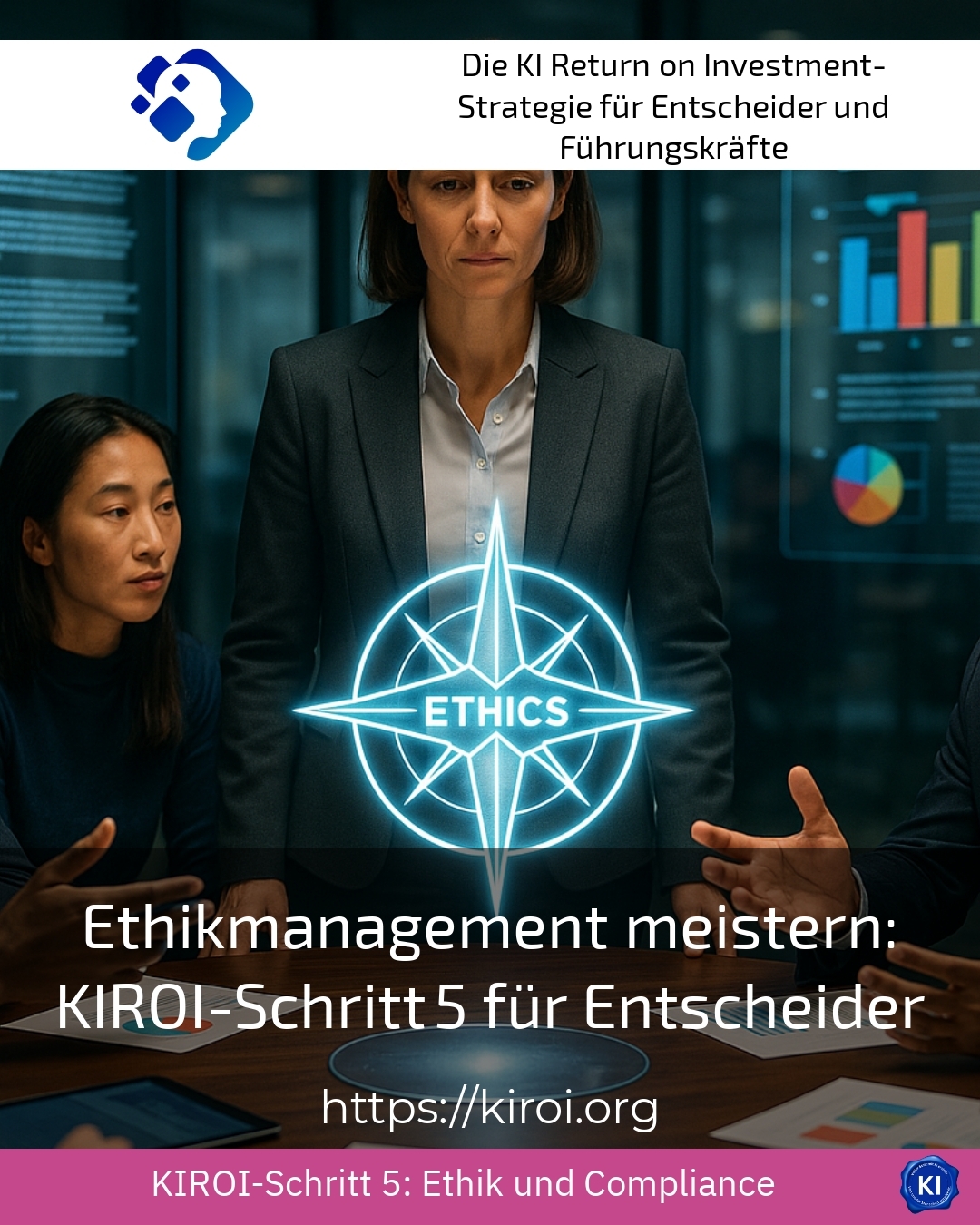
Ethics management is more important than ever for decision-makers today – it supports responsible leadership and builds trust within the company. AIROI Step 5 shows how ethics management can be successfully implemented. It's not just about rigid rules, but about dynamic processes that influence how people work together and become part of daily reality.
Understanding and bringing ethical management to life
At its core, ethics management supports leaders in establishing a values-based culture. Companies from various industries are finding that ethics guidelines function less as rigid rules and more as flexible guides. In the chemical industry, for example, clearly defined environmental and safety regulations aid daily work, leading employees to act more consciously and minimise risks.
In the IT sector, ethics management often involves protecting sensitive customer data. Transparent data protection policies and regular training increase the sense of responsibility among all employees. This makes ethics management an integral part of the compliance strategy.
In retail, in turn, the prevention of corruption is central. Companies rely on practical workshops to raise employees' awareness of ethical behaviour. This creates a trusting working atmosphere that sustainably strengthens customer loyalty.
AIROI Step 5: Practice-oriented implementation in ethics management
The fifth step in the AIROI model helps leaders integrate ethics management smartly and tailor it to everyday business operations. Decision-makers first analyse existing structures and identify potential risk areas. This leads to individual ethical guidelines, which are developed to be realistic and practice-oriented.
A medium-sized pharmaceutical company reports how targeted patient safety workshops strengthened the ethical awareness of all teams. The approach focused on open dialogue formats where questions and uncertainties were directly addressed. This method demonstrated how ethics management can provide impetus that aligns business success and values.
The handling of conflicts of interest is also a central challenge in the financial industry. AIROI step 5 offers assistance in implementing guidelines for the prevention of misconduct in a comprehensible and effective manner. In this way, ethical standards become a natural basis for action in everyday life.
In industry, ethics management significantly supports occupational safety. Companies often report a noticeable improvement in safety culture when ethics is understood as an ongoing process. This is reflected in the active involvement of all employees and an open error culture.
BEST PRACTICE with one customer (name hidden due to NDA contract) An industrial company integrated ethics management into its risk management using the AIROI approach. The coaching fostered a culture of open exchange and provided practical solutions for dealing with ethical dilemmas. This led to significantly greater acceptance of the guidelines within the team and a sustainable strengthening of the corporate culture.
Embedding ethics management in communication and leadership
Decision-makers across various industries report that continuous communication is central to embedding ethics management. Regular team meetings, discussion rounds, and feedback processes create a space where ethical issues can be openly addressed.
An energy supplier uses monthly forums to reflect on ethical challenges in daily business. This way, values do not remain abstract but become concretely tangible. The managers involved report that this dialogue strengthens their sense of responsibility and establishes binding standards.
At a software provider, ethics management promotes team cohesion by incorporating diverse perspectives and facilitating shared decision-making processes. This also helps to combine innovation with high compliance, thereby strengthening trust among customers and partners.
In the healthcare sector, ethics management helps to make difficult decisions transparent and comprehensible. Ethical conflicts frequently arise here, for example, concerning resource allocation. Managers use ethical guidelines as a compass and communicate openly with their teams to find viable solutions together.
My analysis
Ethics management helps decision-makers live and communicate responsible leadership. AIROI Step 5 supports the practical design and sustainable implementation of ethical guidelines. Crucial momentum is generated through dialogue, continuous reflection, and individual coaching. This is how ethics management becomes an integral part of a dynamic, value-oriented company.
Businesses from a wide range of sectors are demonstrating how ethical standards can be systematically integrated into daily work – from compliance workshops in industry to raising awareness about data protection in IT. Practical application and ongoing support help leaders guide teams safely through complex challenges. Ethics management thus creates a solid foundation for trust, responsibility, and sustainable success.
Further links from the text above:
Using ethical guidelines as a leadership factor
Implement compliance guidelines strategically and pragmatically
For more information and if you have any questions, please contact Contact us or read more blog posts on the topic Artificial intelligence here.








 Deutsch
  English (UK)