
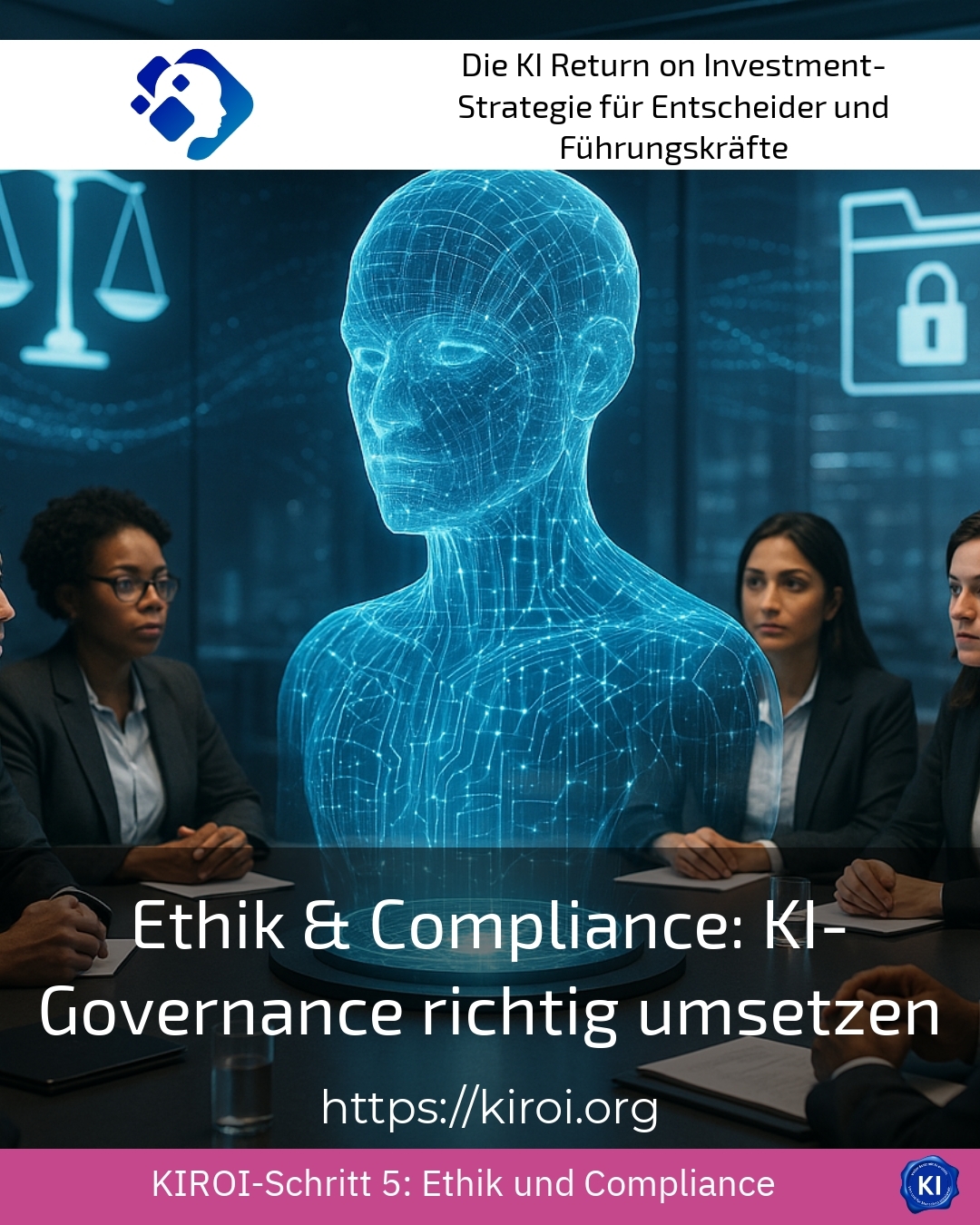
Imagine your automated systems making thousands of decisions every day, yet nobody can explain why. This is precisely where the challenge of begins Implementing AI governance correctly, which presents companies today with fundamental questions. While intelligent algorithms have long influenced credit decisions, pre-sorted job applications and controlled production processes, control mechanisms frequently lag behind. The question is no longer whether organisations must act, but how quickly they can react before regulatory requirements overtake them.
Why responsible governance of intelligent systems is becoming indispensable
The integration of algorithmic decision-making systems is fundamentally changing business processes. Banks use automated credit checks to evaluate loan applications in fractions of a second. Insurance companies deploy risk models that forecast claims. HR professionals rely on screening tools for the pre-selection of candidates. These applications offer enormous efficiency gains while simultaneously harbouring significant risks. For if no one can understand why an algorithm makes a specific decision, blind spots are created that can entail legal and ethical consequences.
A financial services provider recently reported a problematic situation with its credit-scoring system. The model had systematically disadvantaged applicants from certain postcode areas without this being intentional. The cause lay in historical training data that contained unconscious biases. Such cases illustrate why a structured approach to Implementing AI governance correctly is not an optional measure, but a business-critical necessity [1].
Properly implementing transparency as a cornerstone of AI governance
Transparency means more than the mere documentation of algorithms. It encompasses the ability to trace decision-making pathways and explain them comprehensibly. For example, a telecommunications company introduced a customer churn model designed to predict which customers are likely to cancel their contracts. Initially, the system functioned technically without flaw. However, customer service staff were unable to explain why certain customers received specific offers. This led to trust issues and complaints. Only the introduction of explainable decision pathways resolved this difficulty.
In healthcare, the importance of transparency is particularly evident. Diagnostic support systems must be able to justify their recommendations. Doctors require comprehensible explanations before making therapeutic decisions. One hospital implemented an image analysis system for the early detection of skin lesions. Acceptance among dermatologists only increased once the system was able to visually highlight its evaluation criteria. This case illustrates how transparency not only meets regulatory requirements, but also improves practical usability [2].
Best practice with a AIROI customer
A medium-sized automotive supplier faced the challenge of making its quality assurance algorithms transparent. The company was using several image recognition systems designed to identify production defects. However, there was a lack of unified documentation for the decision-making logic. As part of a transruptive coaching engagement, we jointly developed a structured governance framework that covered all relevant aspects. First, we analysed the existing systems regarding their risk classification under the European regulatory framework. Subsequently, we defined clear responsibilities for each algorithm within the company. A particular focus was placed on creating comprehensible explanatory texts that non-technicians could also understand. The project team established regular audits to continuously review system performance. After six months, the company had not only established complete documentation of all algorithmic systems, but also a dynamic governance body that meets quarterly and proactively assesses potential risks.
Practical steps for implementing effective control structures
The implementation of effective governance mechanisms requires a systematic approach. Companies should first carry out a complete inventory of all algorithmic systems. Many organisations underestimate how many automated decision-making processes are already embedded in their business operations. During this inventory, a retail group discovered over 40 different models, ranging from pricing to workforce planning. Without this overview, targeted governance would have been impossible.
Following the inventory comes the risk assessment of each individual system. Various factors play a role here, such as the impact on individuals, the sensitivity of the processed data, and the complexity of the model. An energy supplier classified its systems into three categories: low, medium, and high risk. The company defined different control and documentation requirements for each category. This differentiated approach enabled a resource-efficient use of compliance capacities [3].
Implementing organisational integration and AI governance correctly in everyday practice
The best guidelines are of little use without clear responsibilities. Successful organisations establish dedicated roles and committees for the monitoring of algorithmic systems. A logistics company created the position of an Algorithm Accountability Officer, who reports directly to the executive board. This person coordinates all activities relating to the control of automated decisions and serves as the central point of contact for questions and concerns. The direct reporting line underlines the strategic importance of the topic.
Training plays a central role in cultural embedding. Employees need to understand the ethical implications of using intelligent systems. An insurance company developed a modular training programme that addresses various target groups. Developers learn about fairness metrics and bias detection. Managers gain insight into regulatory requirements and liability issues. Administrative staff are empowered to critically question algorithmic recommendations. This broad qualification creates a common understanding and promotes responsible action at all levels.
A pharmaceutical company integrated ethical considerations directly into its development process. Before any project with algorithmic components takes place, a structured impact assessment is conducted. The project team answers a standardised questionnaire on potential risks and countermeasures. This preventive approach identifies issues early on and avoids costly corrections at a later stage. Experience shows that prevention is significantly more efficient than subsequent troubleshooting.
Best practice with a AIROI customer
An international financial services provider approached us because they were having difficulty documenting their algorithmic credit decisions in an audit-proof manner. Their existing processes had evolved over years and exhibited significant gaps. Together, as part of the transruptions coaching support, we developed a comprehensive documentation concept that meets all regulatory requirements. We began with a detailed analysis of the existing models and their decision-making logic. In doing so, we identified several areas where traceability needed to be improved. The team implemented automated logging mechanisms that record every step of the decision-making process. In addition, we introduced regular fairness audits to identify potential discrimination at an early stage. A particular focus was placed on training employees in how to handle the new documentation requirements. Upon completion of the project, the company had a robust system that easily passes both internal and external audits. The management reported a significantly increased level of trust among regulatory authorities and customers.
Technical tools to support compliance work
Modern software solutions help businesses to efficiently fulfil their compliance obligations. Model monitoring platforms continuously monitor the performance and fairness of algorithms. They trigger an alert when deviations from defined thresholds occur. An online retailer uses such a system to monitor its recommendation model. When the system detected an unusual clustering of certain product suggestions, the team was able to intervene quickly and correct a potential bias.
Explainability tools make complex model decisions understandable. They visualise which factors have particularly influenced a decision. A personnel service provider uses such tools to be able to explain to applicants upon request why they were not put forward for a specific position. This transparency strengthens trust and reduces the risk of legal disputes. The investment in such technologies pays off through lower compliance costs and better stakeholder relationships [4].
Audit trail systems log all changes to models and data comprehensively. They enable complete traceability of every decision. A medical technology company implemented such a system for its diagnostic algorithms. During regulatory audits, the company can now demonstrate every step of development in detail. This documentation capability is not only relevant for regulatory purposes, but also significantly supports internal quality assurance.
Properly implementing continuous improvement through regular review of AI governance
The control of intelligent systems is not a one-off task. It requires ongoing attention and adaptation. Technologies evolve, regulatory requirements change, and new risks emerge. A mechanical engineering company carries out half-yearly reviews of all algorithmic systems. In the process, key performance indicators are evaluated, feedback from users is taken into account and current best practices are incorporated. This systematic review ensures that the governance structures remain up-to-date and effective.
External perspectives enrich the improvement process. Some organisations invite independent experts to evaluate their practices. A telecommunications provider commissioned an external audit of its customer segmentation models. The auditors identified several areas for potential improvement that had not been recognised internally. This external view proved valuable and led to significant optimisations of existing processes.
Engaging with other organisations promotes mutual learning. Industry associations and expert panels provide platforms for the exchange of experience. A consortium of insurance companies developed joint standards for assessing algorithmic fairness. This cooperation enables all participants to benefit from each other's insights and to deploy resources more efficiently. Such initiatives help to raise standards across the entire sector.
My AIROI Analysis
Accompanying numerous organisations in implementing responsible algorithmic governance has provided me with important insights. First of all, it time and again becomes apparent that technical excellence alone is not enough. The best models fail when organisational structures and cultural prerequisites are lacking. Therefore, I always recommend a holistic approach that equally considers people, processes and technology. The most successful projects are characterised by strong support from the executive level, which views the topic not as a burdensome duty, but as a strategic opportunity.
I also observe that many companies initially underestimate the complexity of the task. They start with great enthusiasm, but quickly run into obstacles. Here, professional support through transruption coaching can provide decisive momentum and help avoid typical pitfalls. Experience from comparable projects accelerates progress considerably and ultimately saves resources. The early involvement of all relevant stakeholders, from IT and the legal department to the operational business areas, seems particularly important to me.
Finally, I would like to emphasise that the implementation of effective control structures is not a project with a defined endpoint. Rather, it represents an ongoing journey that requires attention, resources and commitment. Organisations that shy away from this investment risk not only regulatory sanctions, but also reputational damage and the loss of customer trust. Those who act proactively, on the other hand, create competitive advantages and position themselves as trustworthy players in an increasingly algorithm-driven economy. The time to act is now.
Further links from the text above:
[1] EU Regulatory Framework for Artificial Intelligence
[2] ISO standard for AI management
[3] NIST AI Risk Management Framework
[4] OECD Guidelines for Trustworthy AI
For more information and if you have any questions, please contact Contact us or read more blog posts on the topic Artificial intelligence here.










 Deutsch
 English (UK)