
Why do so many companies fail to implement intelligent systems responsibly, even though they actually want to take advantage of all the benefits?
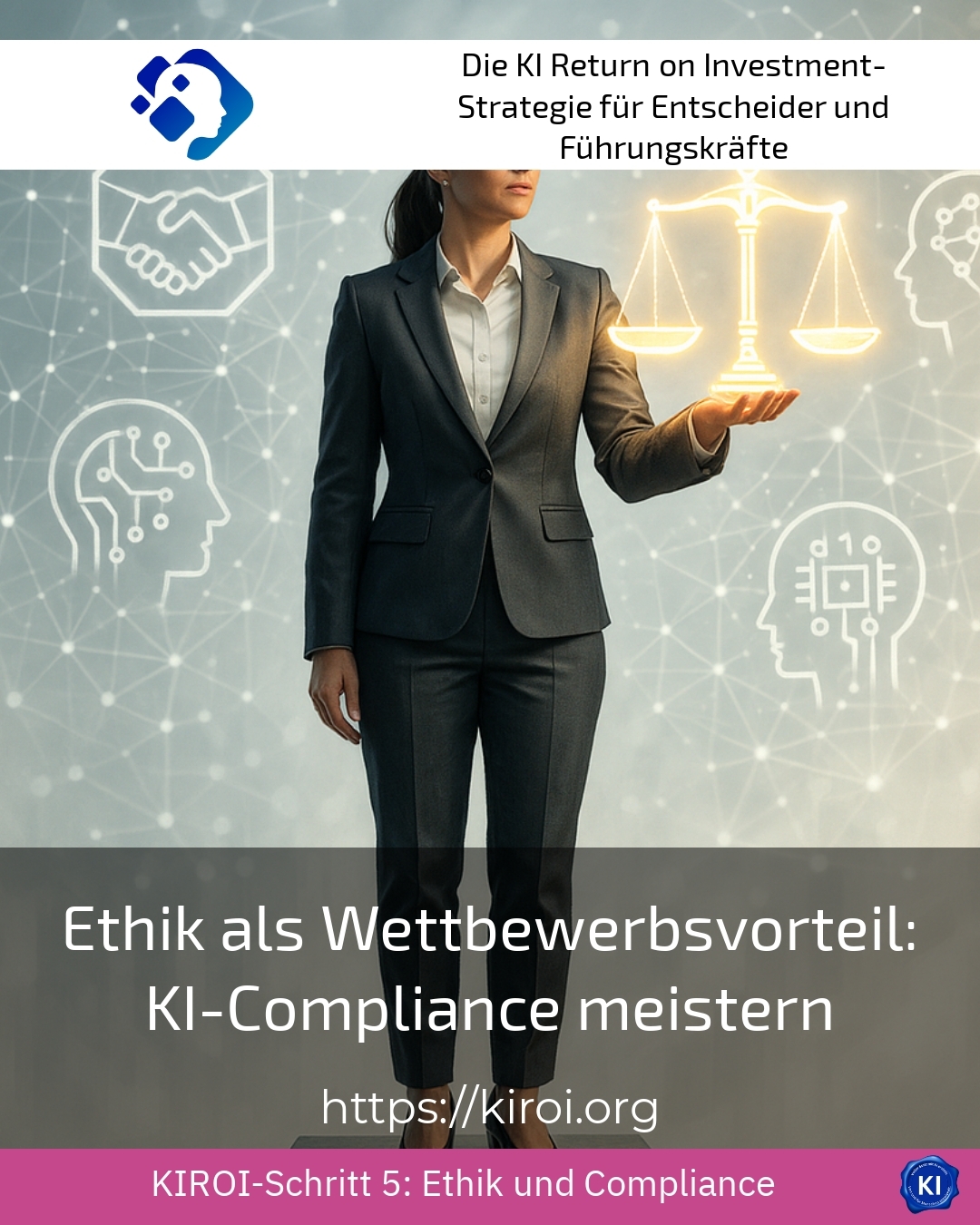
This question currently concerns numerous executives and decision-makers in almost all sectors of the economy. Rapid technological development presents organizations with completely new challenges. At the same time, it becomes increasingly clear that Mastering AI Compliance It is no longer just a regulatory compliance exercise. Rather, the ethical orientation is developing into a real differentiator in competition. Companies that adopt responsible implementation early often report increased customer trust. They also experience higher employee satisfaction and more sustainable business relationships. This paper explores how organizations can successfully manage this transformation.
The new importance of ethical principles in the digital transformation
At a time when algorithmic decision systems are increasingly permeating more and more areas of life, societal awareness of potential risks is growing steadily. Customers are increasingly questioning how their data is processed. Business partners want to know what principles apply to automated processes. Regulatory authorities are developing increasingly detailed guidelines for the use of learning systems. This development affects financial service providers as well as trading companies or manufacturing companies.
For example, a medium-sized machine manufacturer from southern Germany faced the challenge of modernizing its quality control. The introduction of image-recognition systems promised significant efficiency gains and fewer errors. However, it also raised questions about transparency and accountability. A large logistics company, in turn, had to ensure that no discriminatory patterns emerged during the optimization of its route planning. An insurance company implemented automated claims processing and required clear guidelines for fair decision-making processes.
Best practice with a AIROI customer
An international pharmaceutical company approached us with a complex request. The company planned to introduce predictive analytics in research and development. The data from clinical studies were to be evaluated in order to identify promising drug candidates earlier. The management team quickly realized that special ethical requirements applied here. Patient data required the highest level of protection and absolute confidentiality. At the same time, the algorithmic decisions had to remain comprehensible to scientists. As part of the transruptions coaching, we supported the project team over several months. Together, we developed a comprehensive governance framework for the use of the new technology. This included clear documentation obligations and regular audits by independent experts. Particularly important was the involvement of the works council from the outset. This resulted in viable agreements that ensured both innovation and employee protection. After the successful implementation, the participants reported a significantly strengthened culture of trust. The project became an internal model for other digitization initiatives.
Mastering AI compliance through a structured approach
The path to responsible use of intelligent systems always begins with a thorough inventory of existing processes. What automated decision-making processes already exist within the organization? Where are learning algorithms being used? What data flows feed these systems? These questions form the foundation for any further planning. Clients often report surprising findings during this initial analysis.
A retail conglomerate with several hundred stores discovered during such an inventory review that over twenty different algorithmic systems were in use. Many of them had not been centrally captured or documented by anyone. An energy provider found that its customer service chatbots were based on outdated training data. This led to suboptimal responses and occasional misunderstandings. An automotive supplier recognized optimization potential in the transparency of its supplier selection algorithms.
After the inventory review, the risk assessment of all identified applications follows. Various factors play an important role in this process. The sensitivity of the processed data is just as important as the impact on the individuals involved. The complexity of the models used also significantly influences the risk profile. Organizations that carefully carry out this step create a solid foundation for all further measures [1].
Governance structures as the foundation of successful compliance
Effective governance requires clear responsibilities and defined processes within the entire organization. Many companies establish dedicated roles for monitoring algorithmic systems. For example, a Chief AI Ethics Officer can act as a central point of contact for all relevant questions. Ethics committees bring together different perspectives and promote a broad dialogue. Review boards review new applications before their implementation for potential risks.
A telecommunications provider established an interdisciplinary committee to evaluate all new projects. This committee is composed of engineers, lawyers, data protection experts, and human resources representatives. A chemical company developed a multi-stage approval process for data-driven applications. An insurance group implemented regular training for all executives on ethical core issues.
Transruptions coaching helps organizations develop these structures in a tailored manner and establish them in a sustainable way. The guidance always takes into account the specific circumstances and challenges of each company. This results in customized solutions instead of standardized one-size-fits-all concepts. Insights from other industries and international best practices further enrich the development process [2].
Transparency and traceability as anchors of trust
People are more likely to trust systems if they can understand how decisions are made. This fundamental principle applies especially to algorithmic applications with far-reaching consequences. Transparency does not mean disclosing every technical parameter. Rather, it involves understandable explanations for affected individuals and relevant stakeholders.
A staffing provider had to explain to its applicants how automated pre-selection works. The solution consisted of simple, comprehensible representations of the most important criteria. A credit institution developed individual explanatory modules for customers regarding automated credit decisions. A healthcare provider created transparent documentation for its diagnostic support systems.
The technical implementation of explainability often requires specialized knowledge and sophisticated architectures. Explainable AI methods offer different approaches for different use cases and target audiences. Local explanations refer to individual decisions and their specific influencing factors. Global explanations describe the overall behavior of a system and its underlying logics [3].
Best practice with a AIROI customer
A large savings bank came to us with a sensitive topic. The company wanted to partially automate its application review process to achieve faster processing times. At the same time, high regulatory requirements meant that all decisions had to be fully explained. The supervisory authorities expected detailed documentation and plausible justifications for each rejection. Customers should receive understandable explanations as to why their application might not have been approved. In the coaching process, we first developed a clear understanding of all relevant stakeholder requirements. Subsequently, we defined different levels of transparency for different target groups. Process officers received detailed technical insights into the model decisions. Customers received understandable summaries in everyday language. For the supervisory authorities, comprehensive audit trails were created with full traceability of all process steps. The system was introduced gradually and continuously improved. Feedback from employees and customers was directly incorporated into the further development. After one year, the company reported significant increased customer satisfaction while reducing complaints. The supervisory authority explicitly praised the exemplary documentation and transparency.
Mastering fairness and non-discrimination as ethical guidelines in AI compliance
Algorithmic systems can unintentionally reinforce existing inequalities or create new discriminations. This risk exists especially when historical data contains problematic patterns. Bias in training data often directly transfers to the resulting models. Therefore, it requires Mastering AI Compliance a systematic examination for potential fairness issues.
An real estate portal discovered during an audit that its recommendation algorithm systematically favored certain neighborhoods. A retailer found that its price optimization led to higher charges in some regions. A financial services provider identified unintended correlations between postal codes and credit ratings.
Measuring fairness turns out to be a complex task in practice with various possible definitions. Statistical parity requires equal distributions of outcomes across different groups. Equal opportunity requires equal probabilities for positive decisions regardless of qualification. Individual fairness postulates similar treatment of similar cases regardless of group affiliation. Organizations must consciously decide which fairness concepts are relevant for their applications [4].
Data protection and privacy as indispensable foundations
The protection of personal data forms the foundation of any responsible data processing and algorithmic application. European regulations set particularly strict standards for all economic actors in this regard. Compliance with these requirements represents a significant challenge for many organizations. At the same time, it also offers opportunities for differentiation in international competition.
A healthcare startup had to process particularly sensitive patient data for its analytics platform. The solution lay in innovative anonymization methods and strict access control. A mobility provider developed privacy-compliant analyses of movement profiles for urban planning. A educational institution implemented Privacy-by-Design principles in its learning platform.
Modern approaches such as Federated Learning or Differential Privacy enable data-driven innovation while maintaining data privacy. These techniques allow analyses across distributed datasets without the centralized aggregation of sensitive information. Synthetic Data Generation generates artificial datasets with similar statistical properties to the original data. This allows models to be trained and tested without compromising real personal data [5].
Continuous monitoring and improvement as a constant task
Compliance does not end with the successful implementation of a system or the completion of a project. Rather, the actual phase of implementation begins in day-to-day operations. Algorithmic systems can change over time and develop unexpected behaviors. Model drift describes the phenomenon of declining performance when input data changes.
A trading company noticed that its demand forecasts became increasingly inaccurate after a crisis. The changing customer behavior fundamentally altered historical patterns. An industrial conglomerate observed creeping quality deterioration in its image-based testing. A service provider recorded declining acceptance of its automated recommendations among employees.
Effective monitoring systems capture relevant metrics and promptly alert when deviations occur. Regular audits verify compliance with defined standards and identify potential for improvement. Feedback loops systematically collect feedback from users and affected parties. This creates a learning system that continuously evolves and improves.
Best practice with a AIROI customer
A leading provider of commercial real estate commissioned us to oversee a comprehensive transformation project. The company had already deployed several algorithmic systems, but lacked a comprehensive monitoring strategy. Individual departments monitored their respective applications according to different standards and with varying levels of diligence. This led to inconsistencies and made it difficult to identify systemic issues. As part of our support, we initially developed a uniform set of key performance indicators for all relevant applications. This included technical metrics such as model accuracy and response times as well as ethical indicators. Fairness metrics were defined for different user groups and regularly evaluated. A central dashboard visually presented all important information in a clear manner for various stakeholders. Automated alerts alerted the relevant teams to significant deviations from normal behavior. Quarterly reviews brought all parties together to share insights and plan improvements. After introducing this integrated monitoring approach, the company’s responsiveness improved significantly. Problems were detected earlier and resolved faster than ever before.
Cultural change and employee development for sustainable success
Technical solutions and formal structures alone do not guarantee ethically responsible practice in everyday life. What is crucial, however, is the corporate culture, which shapes all actions and decisions. Employees at all levels must understand and internalize the importance of ethical principles. Only then can they respond appropriately and make the right decisions in concrete situations.
A technology company introduced mandatory training on algorithmic ethics for all developers. A financial corporation integrated ethical reflection into its regular project meetings and decision-making processes. A trading company established internal discussion forums on difficult boundary cases and dilemma situations.
Transruptions coaching provides important impulses for designing more effective development programs and cultural initiatives. The accompaniment often also includes moderating workshops and facilitating organizational learning processes. Leaders learn to constructively address ethical issues and act as role models. Teams develop common values and behaviors for dealing with algorithmic systems.
My AIROI Analysis
The intensive engagement with numerous projects and organizations constantly shows me that ethical excellence does not have to be at odds with economic performance. Quite the opposite: Responsible action is increasingly becoming a real competitive advantage in many markets. Customers and business partners prefer companies they can trust and that share their values. Regulatory authorities reward proactive engagement with less time-consuming inspections and faster approvals.
What particularly impresses me is how creatively some organizations handle the perceived constraints. Instead of viewing compliance as a burdensome obligation, they use the requirements as drivers of innovation. The need for transparency leads to better models and more comprehensible systems overall. The focus on fairness unlocks previously overlooked market potentials and customer groups.
At the same time, I observe that the path to ethical excellence requires time and patience. Quick solutions and superficial measures rarely lead to lasting results. The deep-rooted integration into processes and culture requires continuous attention and resources. Leaders must prioritize the topic on a permanent basis and authentically lead by example.
My recommendation to all organizations is therefore: Start working systematically on your ethical positioning now. Use the current phase to build structures and develop competencies. Seek exchange with experts and other organizations to learn from their experiences. In this way, you will create the foundation for long-term success in an increasingly responsible economic world.
Further links from the text above:
[1] EU AI Act – Regulatory Framework for Artificial Intelligence
[2] ISO/IEC 42001 – Artificial Intelligence Management System
[3] Interpretable Machine Learning – A Guide for Making Black Box Models Explainable
[4] Fairlearn – Toolkit for Assessing and Improving Fairness in AI
[5] GDPR – General Data Protection Regulation full text
For more information and if you have any questions, please contact Contact us or read more blog posts on the topic Artificial intelligence here.










 Deutsch
 English (UK)