
Modern businesses face the challenge of sustainably strengthening their innovative capacity. Many report that while ideas are present, they are often not systematically implemented. This is precisely where rethinking idea management comes in. It is no longer about simply collecting suggestions, but about a dynamic process that involves employees and sparks real change. The KIROI step 7, in particular, supports the company-wide anchoring and continuous support of idea management.
Idea management as a dynamic process
Traditional approaches to idea management are often no longer sufficient today. They are frequently too rigid and leave little room for genuine dialogue. Modern companies are therefore relying on flexible processes, digital tools, and a culture of open communication. This creates a dynamic innovation cycle that is supported by all employees.
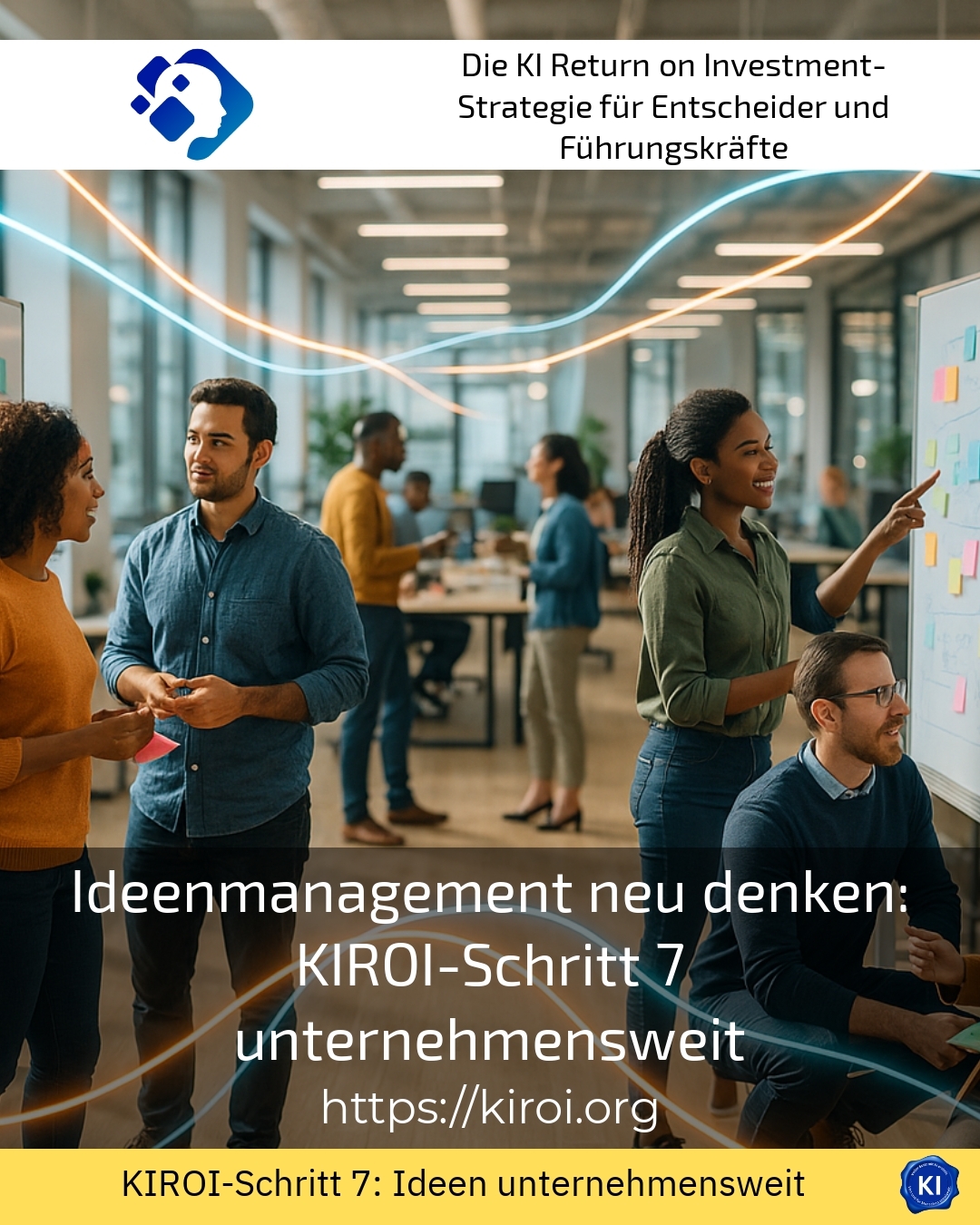
In practice, this means that ideas are not just collected but also continuously monitored. Moderated workshops, feedback rounds and digital platforms create transparency and encourage exchange. Employees receive feedback and see how their suggestions are implemented. This is motivating and strengthens the innovation culture.
Real-world examples show: In the automotive industry, manufacturing optimisations are implemented through guided workshops. In the financial sector, agile approaches enable the rapid implementation of customer-focused improvement ideas. In retail, a digital platform creates transparency, on which ideas from various branches can be evaluated and transformed into innovative projects.
Ideas Management and Transruptive Coaching
Transruptions-Coaching helps teams identify blockages and develop new perspectives. It supports taking concrete steps towards implementation and sustainably strengthening the culture of innovation. Clients often report that through targeted coaching, they can overcome obstacles and implement their ideas more quickly.
For example, an engineering company introduced regular innovation workshops to shorten development cycles. This resulted in practical solutions that were directly adopted into production. In software development, the active involvement of teams strengthened collaboration and accelerated the implementation of new features. A retail company relied on a digital platform to transparently document suggestions and promote exchange between branches.
In all cases, continuous support from experienced coaches was crucial for sustainable success. Employees felt more engaged and contributed more ideas. The result was a culture where innovations are realised more quickly.
Practical tips for implementation
To successfully implement idea management, companies should pay attention to the following points:
- Establishment of regular exchange formats, such as moderated workshops or feedback sessions, that bring together different departments.
- Implementation of digital tools for transparent documentation and tracking of ideas and their implementation status.
- Establishing clear responsibilities and milestones to consistently manage implementation processes.
- Training and coaching of employees to identify and overcome blockages.
- Promoting an open culture of communication where mistakes are seen as learning opportunities.
These measures create the foundation for vibrant ideas management, supported by all employees.
Examples from various industries
In retail, a company used a digital idea platform to create transparency and achieve rapid assessments. This facilitated collaborative exchange between different locations and increased the speed of implementation for customer suggestions.
In the field of software development, retrospectives and regular feedback rounds were introduced, which integrated the team more closely. This enabled innovations to be implemented in a targeted manner and continuously improved.
An industrial company established moderated innovation workshops which brought together various specialist departments. The resulting interdisciplinary exchange contributed significantly to the identification and integration of new ideas.
BEST PRACTICE with one customer (name hidden due to NDA contract) In a medium-sized manufacturing company, KIROI-Step 7 was used to accelerate the implementation of innovations. Through workshops and targeted coaching, cross-departmental obstacles were removed. The result was a culture in which employees are actively involved and product developments are realised more quickly. This significantly boosted employee motivation.
My analysis
Idea management is a crucial success factor for companies looking to sustainably increase their innovative strength today. It is no longer about collecting suggestions, but about a dynamic, sustainable process that involves all employees. Modern approaches such as KIROI Step 7 support the continuous promotion of ideas and their implementation in concrete projects. The active involvement of teams creates a culture of innovation that is not only inspiring but also strong in execution.
Further links from the text above:
Rethinking ideas management: KIROI Step 7 for innovation
Implement KIROI step 7 company-wide
Unleashing Innovation Management: KAIROI Step 7
With Ideas Management, KIROI, Step 7, company-wide
Rethinking idea management: KIROI step 7
For more information and if you have any questions, please contact Contact us or read more blog posts on the topic Artificial intelligence here.











 Deutsch
  English (UK)