
How do leading companies create breakthrough innovations from hundreds of small improvement suggestions that change entire markets?
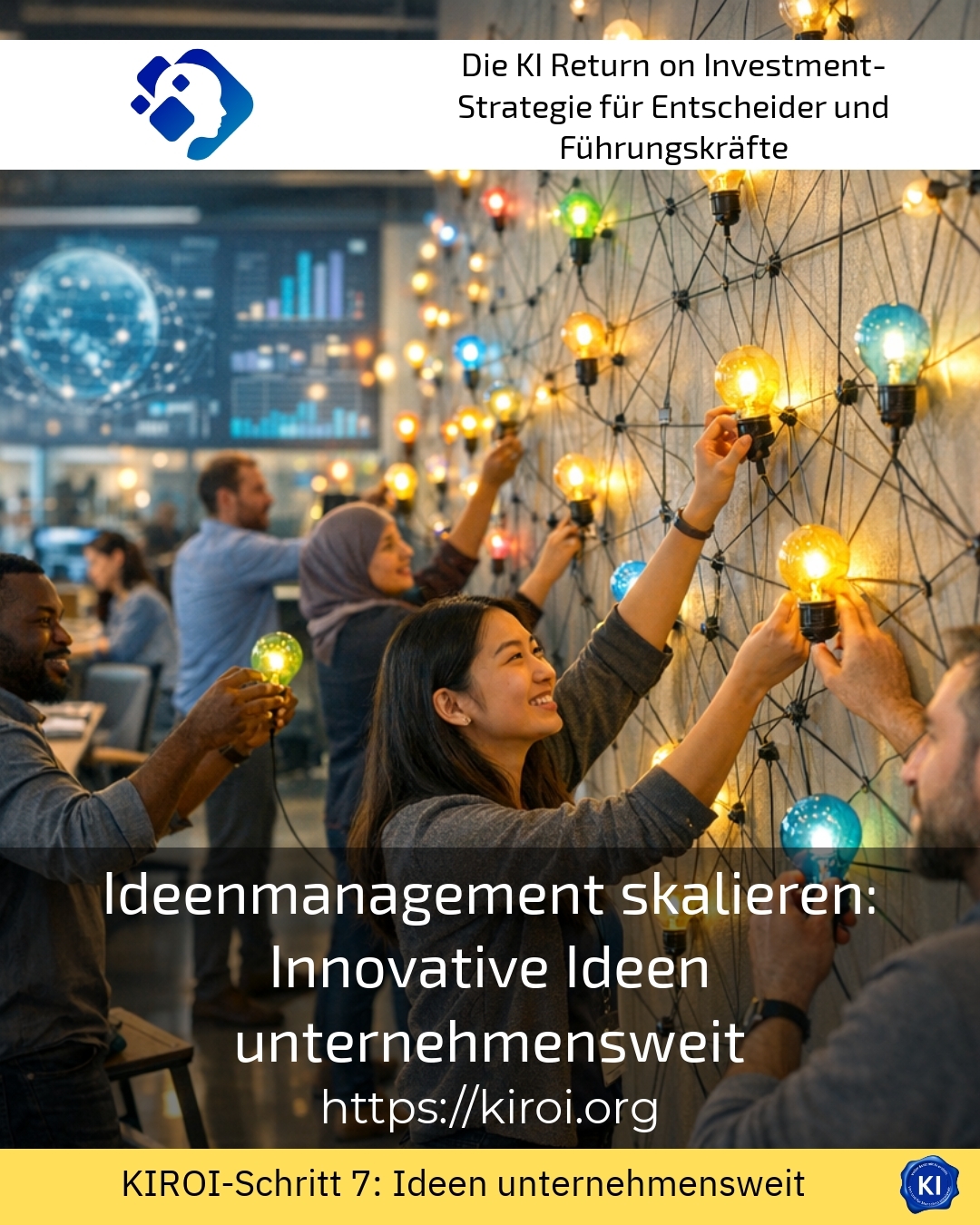
At a time when competitive advantages are eroding faster than ever before, this Scaling ideas management It is a crucial success factor. Many organizations struggle with systematically capturing the creative impulses of their employees. Making these impulses usable across the company is even more challenging. Yet, there is enormous potential for improvement and innovation lurking within every department. The challenge lies in systematically unlocking this potential and transforming it into measurable results. transruptions coaching accompanies companies precisely during this demanding transformation. The following article outlines ways in which innovative ideas can be systematically promoted.
The fundamentals for successful idea management are scalable
Before companies consider scaling, they need to understand their base. A functioning system for capturing creative ideas forms the foundation of any further development. Many organizations start with simple suggestion boxes or digital forms. However, these approaches quickly reach their limits as submissions increase. Evaluating and prioritizing proposals requires clear criteria and transparent processes. Additionally, employees need feedback on their submissions to stay motivated.
A medium-sized machine manufacturer initially implemented a simple platform for improvement suggestions. Within a few months, over 500 submissions came in. However, resources were lacking for the systematic evaluation and implementation. The company had to fundamentally rethink its processes and restructure them. A automotive supplier established a multi-stage evaluation system with defined responsibilities. This enabled the processing time per proposal to be reduced by 60 percent. An electronics company linked its system with strategic corporate planning. This created direct connections between creative impulses and business goals.
Best practice with a AIROI customer
An internationally operating manufacturer of industrial components faced a complex challenge. The company had twelve locations on three continents with different cultures and languages. Creative suggestions had previously remained trapped in local silos and never reached other locations. As part of a transruptive coaching project, we jointly developed a multilingual platform. This platform enabled the cross-location exchange of improvement ideas in real time. Automatic translation functions eliminated language barriers between teams from different countries. An intelligent categorization system automatically assigned relevant subject areas to the proposals. Within six months, submissions increased by a significant 340 percent. However, even more important was the quality of the cross-location collaboration during implementation. Teams from different countries worked together for the first time to find solutions to similar problems. The implementation rate doubled because proven solutions could be adapted more quickly. The return on investment exceeded the original expectations threefold.
Scaling technological infrastructure as an enabler for idea management
Modern technologies play a central role in scaling creative processes. Artificial intelligence supports the automatic categorization and prioritization of submissions. Machine learning algorithms detect patterns and identify promising concepts early on. Cloud-based platforms enable remote access for distributed teams worldwide. Mobile applications significantly reduce the barrier to submitting proposals.
A pharmaceutical company uses AI-powered text analysis to detect duplicate research ideas. This avoids redundant development projects and makes resources more efficiently used [1]. A chemical company links its creative management system to worldwide patent databases. This allows researchers to immediately check whether similar concepts already exist and are protected. A medical technology manufacturer relies on gamification elements in its digital platform. Employees collect points for submissions and receive awards for successful implementations.
Choosing the right technology depends on various factors. Company size, industry, and existing IT infrastructure all significantly influence the decision. It is important to ensure seamless integration with the organization’s existing workflows and systems. A solution that is too complex can jeopardize employee acceptance and create resistance.
Cultural prerequisites for idea management scale up
Technology alone does not guarantee success in scaling creative processes. The corporate culture determines the success or failure of such initiatives. Employees must feel safe to express and submit unconventional ideas. Leaders play a key role as role models and supporters of creative initiatives. Toleration of mistakes and constructive feedback significantly encourage the willingness to participate.
A technology company introduced regular innovation days where employees were free to experiment. These days generated disproportionately many high-quality proposals and concepts. An energy provider established a mentoring program for creative talent from all backgrounds. Experienced innovators mentor younger colleagues in developing their concepts and proposals. A logistics service provider hosts quarterly hackathons on strategic industry challenges. Cross-functional teams develop prototype solutions for real-world problems within 48 hours.
Structures and processes for sustainable success
Clear responsibilities and defined processes form the backbone of scalable innovation systems. Without structured workflows, promising concepts fall by the wayside in day-to-day operations. A dedicated team should be responsible for coordinating and advancing the system. Regular reviews ensure that the system remains current and relevant for everyone.
A consumer goods manufacturer established an innovation board with representatives from all business units worldwide. This committee makes decisions monthly about prioritizing and allocating resources for projects. A financial services provider implemented a stage-gate process for the development of concepts. Each stage has clear criteria and milestones that must be met before moving forward. A telecommunications provider links its creative management system directly to budget planning. This way, resources flow automatically into promising projects that exceeded defined thresholds.
Best practice with a AIROI customer
A leading manufacturer of precision tools wanted to significantly increase and improve its innovation speed. The existing system was too slow and bureaucratic for the dynamic market demands of its customers. As part of the transruptive coaching, we first thoroughly analyzed all existing processes and bottlenecks. It was revealed that the average time from submission to decision was 127 days. Together, we developed a streamlined process with only three decision stages and clear deadlines. Maximum processing times of seven days were set for each stage. Automatic escalation mechanisms were introduced in the organization if deadlines were not met. At the same time, we introduced a quick process for smaller improvement suggestions and implemented it. These could now be decided and implemented directly at the departmental level without delay. The average decision time decreased to 23 days, which represented an improvement of 82 percent. Employee satisfaction with the system increased by 67 percentage points according to an internal survey. The company was able to introduce several product improvements to the market significantly faster than previously possible.
Scalability of measurability and continuous improvement in idea management
What is not measured cannot be improved in organizations of any size. Key Performance Indicators help evaluate the success of the creative management system. Relevant metrics include the number of submissions, implementation rates, and the concrete economic benefits. Qualitative aspects such as employee satisfaction and cultural changes also deserve attention and measurement.
A construction company tracks the financial return of each implemented improvement over three years. This data feeds back into the development of the evaluation criteria and prioritization mechanisms. A software company measures the participation rate by department, thus systematically identifying potential [2]. Targeted measures in underrepresented areas significantly increase the diversity of submissions. A food manufacturer regularly and systematically analyzes the lead times of different proposal categories. This allows bottlenecks to be identified early and can be proactively addressed by the responsible parties.
Challenges and approaches
Scaling creative processes brings typical challenges to many organizations. Resistance from middle management often hinders progress and implementation. Lack of resources for implementation frustrates employees and reduces engagement in the long term. Silos prevent the company-wide exchange of concepts and best practices in a sustainable way.
One insurance company addressed the resource problem with a dedicated implementation budget for creative projects. Ten percent of the innovation budget is reserved and protected exclusively for employee proposals. An industrial company established cross-functional implementation teams for complex projects from different departments. These teams work together for a limited period and disband again after the project is completed. A retail company addressed resistance by directly integrating innovation goals into leadership evaluations. Managers are now also measured on how they promote creative initiatives in their area.
Transruptions coaching systematically assists organizations in identifying and overcoming such obstacles. Through external perspectives and proven methods, new solutions to old problems are created. Clients often report that the neutral guidance was able to dissolve stuck situations and enable progress.
My AIROI Analysis
The systematic scaling of creative processes represents one of the most important levers for sustainable business success. Organizations that succeed in utilizing the collective knowledge of their employees develop significant competitive advantages. Time and again, it is shown that technology is only one component of a multi-faceted process. The cultural and structural conditions determine at least as strongly the success or failure of such initiatives. Leadership plays a special role as facilitators and role models in this process. They must actively promote a culture that fosters creativity and understands mistakes as learning opportunities. The examples presented here from various industries impressively demonstrate the potential that can be unlocked. At the same time, they illustrate that each company must find its own path and go its own way. Standard solutions rarely work, because each organization brings unique challenges and strengths to this process. transruptions-coaching supports in developing these individual paths and successfully navigating them. The investment in a functioning system pays off manifold and amortizes quickly. Not only through direct savings and increased sales, but also through higher employee engagement and satisfaction. In a time of increasing complexity and uncertainty, the ability to collective innovation is gaining further importance. Companies should now lay the foundations for future-proof creative processes and structures. The presented approaches offer impulses for one’s own path to excellence in this important field.
Further links from the text above:
[1] McKinsey: The Eight Essentials of Innovation
[2] Harvard Business Review: Insights on Innovation
For more information and if you have any questions, please contact Contact us or read more blog posts on the topic Artificial intelligence here.








 Deutsch
 English (UK)