
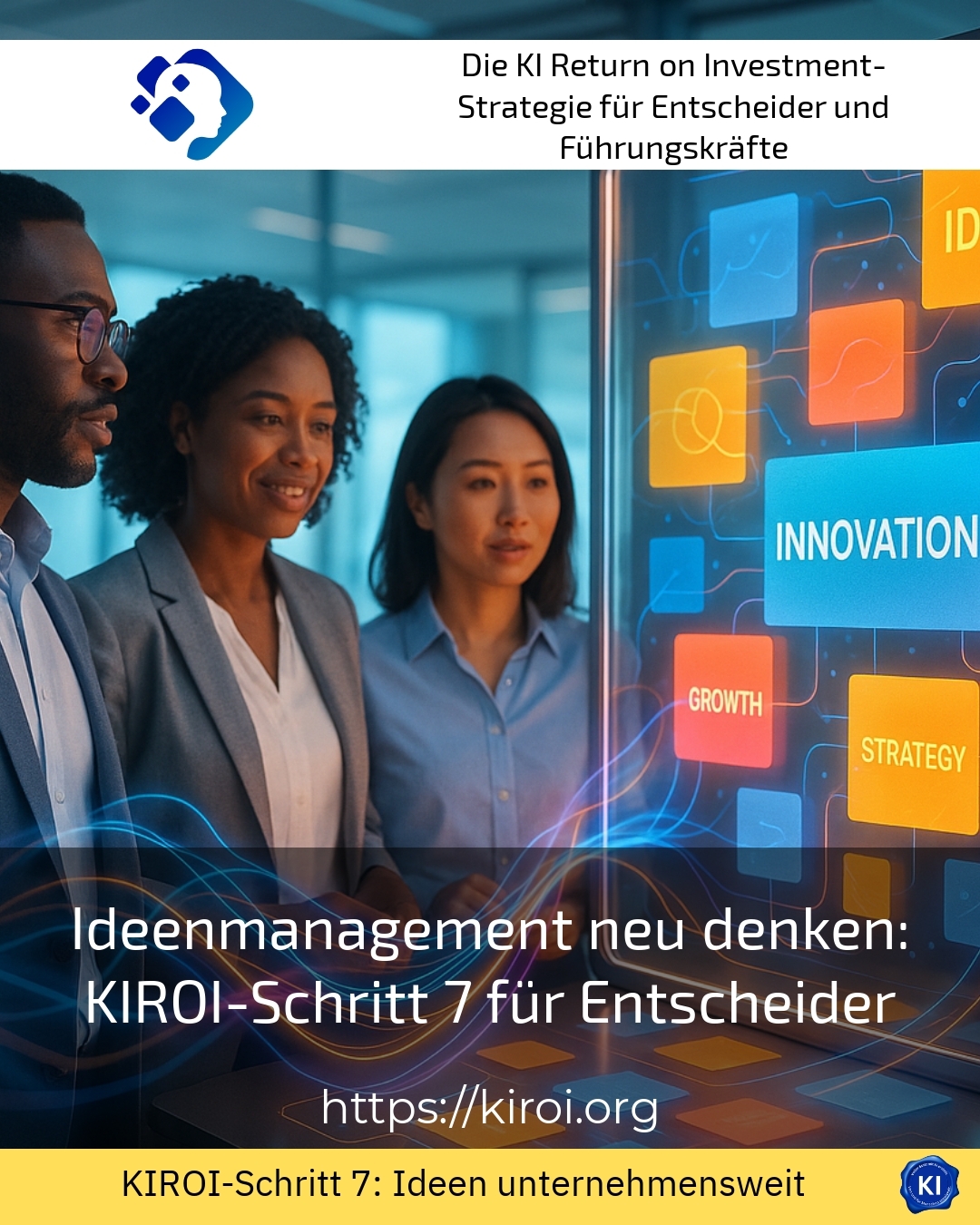
The topic of idea management is increasingly gaining importance in modern companies because it systematically unlocks creative potential and sustainably supports innovation processes. KIROI Step 7 shows a particularly effective approach for decision-makers who want to rethink idea management. Especially in times of rapid technological change and diverse challenges, this structural approach helps to promote cross-departmental collaboration and an open corporate culture, so that ideas are not just collected, but actively implemented.
Ideas management as a driver for company-wide innovation
KIROI Step 7 highlights the importance of idea management by specifically supporting networking between different departments. This often leads to unexpected synergies: In customer service, more efficient self-service tools are developed through close coordination with the IT department. In marketing, collaboration with product development can lead to new campaigns that better respond to customer needs. And in production, the exchange with logistics experts generally leads to optimised processes and cost savings.
This cross-departmental perspective ensures the holistic implementation of innovations. All too often, the best ideas have remained hidden within individual departments due to a lack of exchange. Step 7 of the KIROI framework addresses this very issue and promotes knowledge transfer through moderated workshops and targeted idea development.
BEST PRACTICE with one customer (name hidden due to NDA contract)A medium-sized engineering company used targeted workshops to better connect the interfaces between development and sales. This revealed and eliminated obstacles, leading to a measurable acceleration of innovation projects. Cross-departmental communication was intensified, new impetus became quickly apparent and contributed to increased competitiveness.
Practical implementation: How to succeed with idea management using KIROI, Step 7
A key success factor for idea management is a transparent process. A central platform for capturing and evaluating suggestions increases the participation of all employees. For example, a service provider implemented a digital idea portal, through which suggestions from various branches were collected and commented on. Public recognition of the idea generators strengthened motivation, and innovation cycles were significantly shortened.
Furthermore, regular feedback and clear responsibilities play a significant role. They help to steer the implementation of ideas and prevent suggestions from getting lost in everyday business. An example from software development shows how closely integrated teams of programmers and UX designers have produced faster and more creative solutions through constant dialogue.
For example, in retail, the combination of customer feedback and employee suggestions ensures that the product range and service remain aligned with current market demands. This dynamic adaptability arises from the systematic handling of ideas, as enshrined in the KIROI framework.
Promoting Ideas Management: An Open Culture and Continuous Support
An open company culture is the foundation for successful ideas management. When employees feel that their suggestions are valued and taken seriously, their willingness to actively participate increases. It is also important to reduce fears of change and create a positive climate for innovation.
In many industries, such as logistics or technical support, the supported introduction of new tools has led to greater acceptance and faster success. Targeted training and open feedback sessions strengthen motivation and prevent resistance.
BEST PRACTICE with one customer (name hidden due to NDA contract)A producer used transruption coaching to support staff in the introduction of new AI-powered tools. The training was individually tailored to different departments. Open discussions about the changes created a positive environment, ensuring the technologies were efficiently integrated into existing workflows.
Furthermore, innovative transfer structures, such as an „Innovation Transfer Board,“ help to make ideas and projects visible across different departments. Representatives from various teams regularly exchange ideas, remove obstacles, and secure support from management. This prevents innovations from getting stuck in individual projects.
AI and technological support in the ideation process
Modern technologies are playing an increasingly important role in idea management. Digital platforms enable the systematic collection and evaluation of suggestions. Artificial intelligence can also recognise patterns, prioritise and intelligently link innovation impulses from various sources. This creates a dynamic, learning system that supports both idea generators and decision-makers alike.
A customer service example demonstrates how automated chatbots handle routine enquiries, freeing up staff to focus on more complex issues. This increase in efficiency was supported by a company-wide idea management system, which also promoted and integrated technical innovations.
My analysis
Step 7 of reimagining idea management with KIROI lays the foundation for a sustainable and integrated innovation culture. Decision-makers benefit from a structured framework that prioritises not just collecting and evaluating, but above all, implementing and networking. Practical examples show that cross-departmental collaboration, open communication, and the use of modern technologies significantly boost innovation power within companies. Those who support and promote these impulses create long-term competitive advantages and motivate employees equally.
Further links from the text above:
AI as a threat or an opportunity in times of skills shortages?
Successfully introducing idea management in the company
KIROI Step 7 – Company-wide rollout
Rethinking idea management: KIROI Step 7 for decision-makers
Idea management: KIROI step 7 for company-wide success
Rethinking ideas management: KIROI Step 7 in the company
For more information and if you have any questions, please contact Contact us or read more blog posts on the topic Artificial intelligence here.











 Deutsch
  English (UK)