
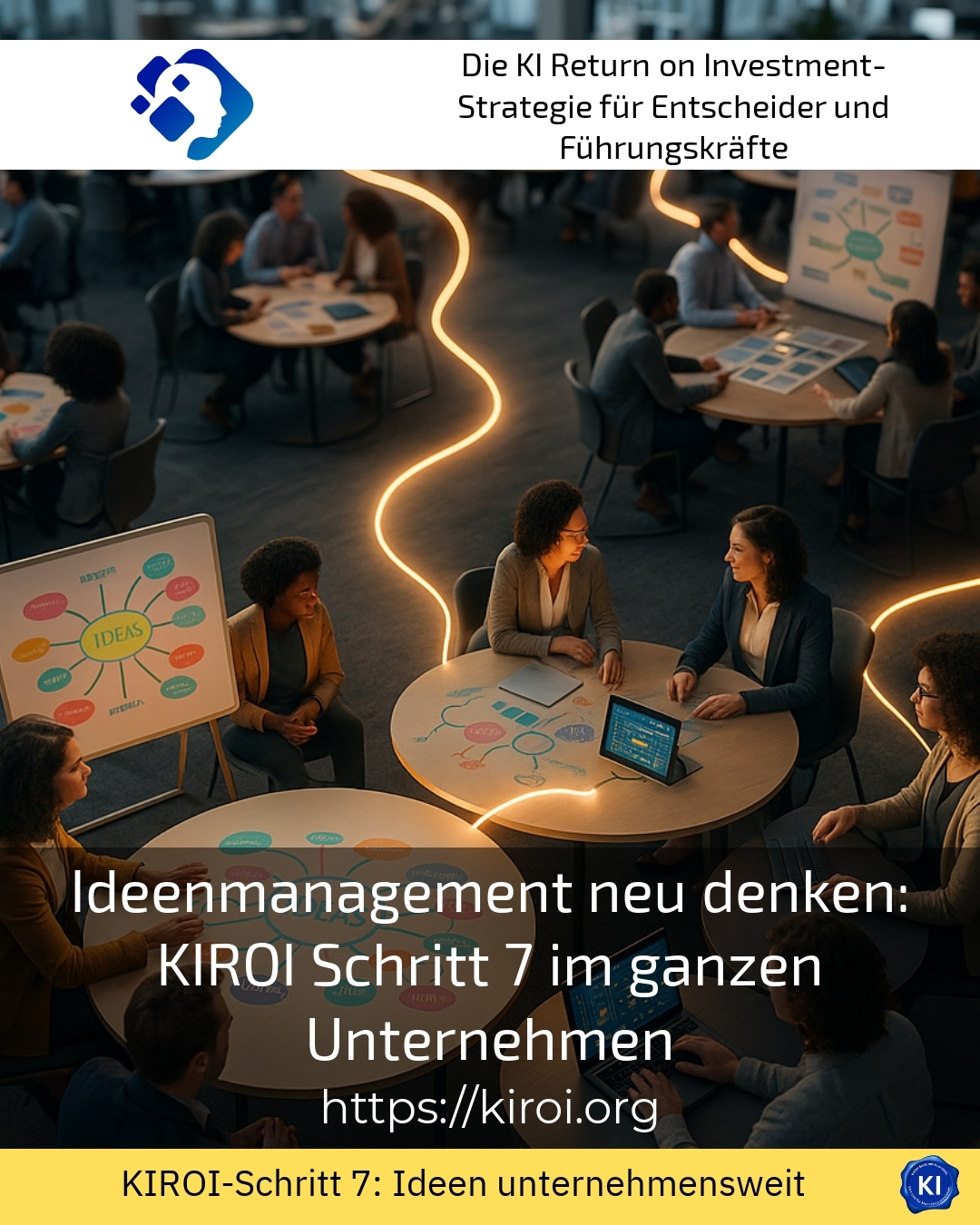
The topic of idea management is becoming increasingly important in companies. To systematically foster employee creativity and successfully tackle innovative projects, a well-thought-out approach is needed. The KIROI Step 7 offers a modern guide to rethinking idea management throughout the entire company, thereby setting sustainable impulses.
Ideas Management – The Foundation for Company-Wide Creativity
Ideas management encompasses far more than just collecting suggestions. It describes a structured process that captures, evaluates, develops, and ultimately implements ideas. In particular, the sustainable support of ideas within the company increases the chances of successful implementation. KIROI Step 7 supports this by identifying obstacles early on and removing them through continuous feedback. This ensures that ideas management remains not a one-off project, but a dynamic process that fosters the creative potential of all employees and enhances innovation.
In manufacturing, for instance, companies regularly demonstrate how disruptive blockages can be removed through targeted workshops. This form of departmental optimisation leads to more efficient collaboration and shortens development cycles. In software development, on the other hand, transparent feedback is crucial to maintain the flow of innovation and achieve broader acceptance of new solution approaches. Service providers also report that improved customer service can be achieved through an increased understanding of internal processes.
BEST PRACTICE with one customer (name hidden due to NDA contract) A workshop format has been established in an industrial company that systematically identifies and removes obstacles to the implementation of ideas. The accelerated project implementation improved cross-departmental communication and ensured a sustainable strengthening of the innovation climate.
KIROI Step 7 – Idea Management as a Continuous Process
What's special about KIROI Step 7 is its holistic approach to idea management. Instead of managing the process in isolation, KIROI guides the entire journey from idea to implementation. The focus is on identifying obstacles and blockages early on and removing them through moderation and appreciative feedback. This not only encourages employees to actively contribute suggestions but also ensures that their input is taken seriously and followed up on.
In mechanical engineering companies, it has been observed how regular feedback cycles shorten development times and promote knowledge exchange between departments. In software firms, those responsible report higher acceptance of novel solutions through the active involvement of the workforce in the idea process. Individual retail companies, in turn, benefit from digital platforms that transparently document and clearly manage suggestions.
BEST PRACTICE with one customer (name hidden due to NDA contract) With KIROI, step 7 of the entire ideation process was analysed and optimised. Through moderated workshops, previous implementation barriers were made visible and specifically addressed. The result was a noticeable acceleration of innovation projects and more intensive exchange between departments, which overall strengthened competitiveness.
Practical implementation of idea management with KIROI
Many companies opt for small, practical changes to get started with idea management. KIROI supports these steps with targeted workshops and creative impulses. This way, the focus is placed on employees, who contribute directly to process optimisation through their suggestions.
For example, an industrial company successfully developed new process control in manufacturing using this method. Bottlenecks in material procurement were significantly reduced by having teams directly raise questions and develop suggestions for improvement.
In the logistics industry, KIROI helps to optimise transport routes. Employees suggest more efficient routines, saving time and costs, and allowing the service to respond more quickly to customer wishes.
Service companies also benefit from the increased transparency of internal processes through KIROI, as processes are designed to be leaner and more flexible. This often leads to improved customer care and higher satisfaction on both sides.
From idea to implementation – success factors in idea management
Success factors for effective idea management are an open company culture, clear processes, and the involvement of all employees. Only when ideas are taken seriously, evaluated, and appreciated does an atmosphere arise in which creativity thrives. KIROI promotes this culture through systematic feedback and transparent communication.
Another key point is the continuous support of idea development. This allows potential stumbling blocks to be identified and removed early on. Regular workshops and innovative digital platforms are used to make the idea management process transparent and comprehensible.
In practice, two challenges often arise: Firstly, processes need to be designed in such a way that they motivate employees to contribute suggestions. Secondly, clear responsibilities are required for the evaluation, prioritisation, and implementation of these suggestions. Specialised idea managers can help here by coordinating the overall process and acting as a liaison between departments.
My analysis
Ideas management is a dynamic, ongoing process that systematically harnesses the innovation potential within companies. KIROI Step 7 offers a modern, holistic perspective based on sustainable support and active involvement of all employees. Ideas management can be effectively supported through targeted removal of obstacles, structured workshops, and the use of digital tools. This leads to creative solutions that contribute to real positive change and ensure long-term competitiveness.
Further links from the text above:
Rethinking ideas management: KIROI step 7 in the company
Department Optimisation: Unfold Pioneering Ideas with KIROI 6
Idea management 2.0: KIROI Step 7 for Company-Wide Ideas
What is idea management and what contribution can it make?
What is Idea Management: Introduction and Definition
For more information and if you have any questions, please contact Contact us or read more blog posts on the topic Artificial intelligence here.











 Deutsch
  English (UK)