
Why do so many companies fail to develop groundbreaking ideas, even though they employ highly skilled employees and have sufficient resources?
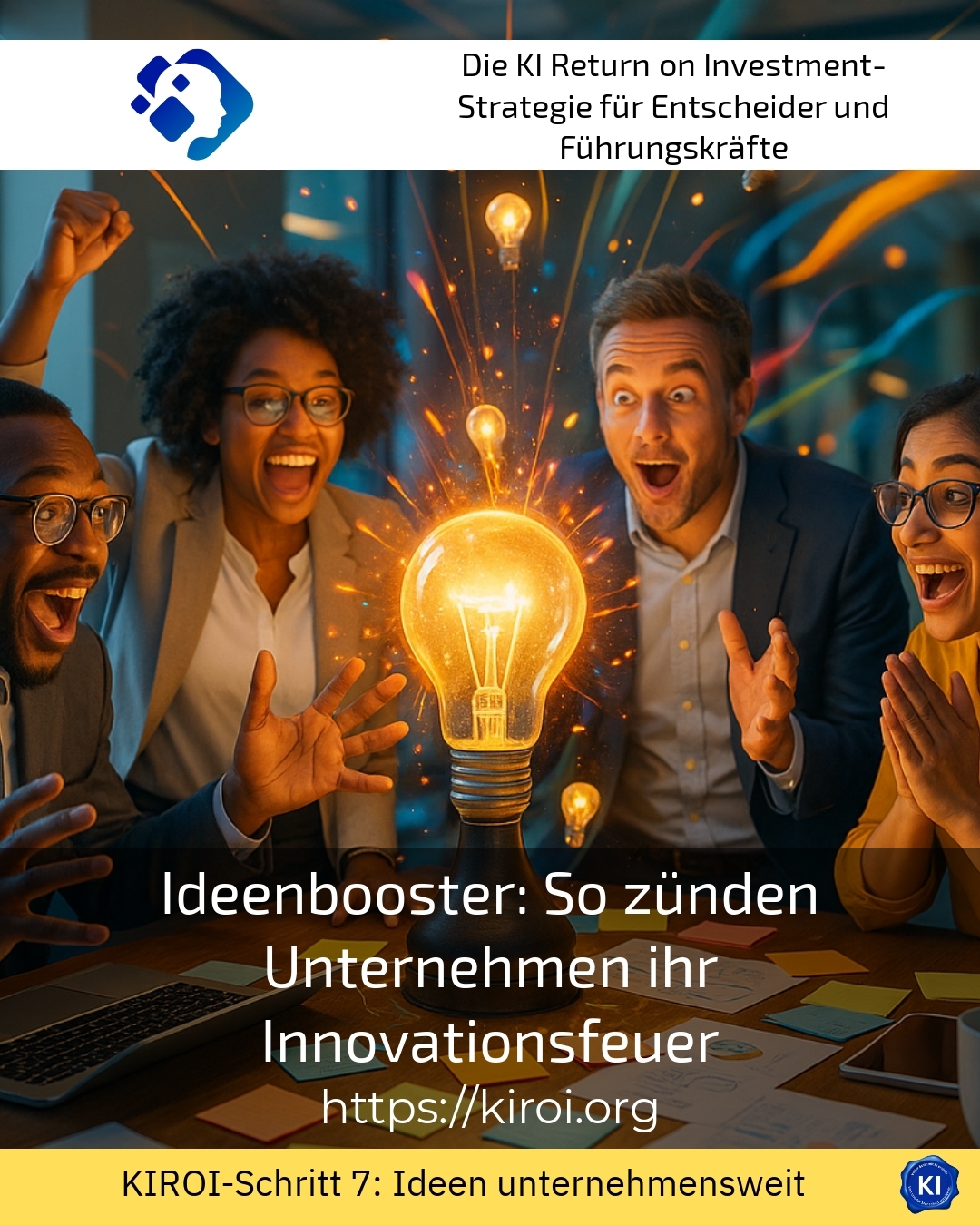
This question concerns executives and strategy planners worldwide. The crucial difference between stagnating organizations and dynamic market leaders often lies in the ability to effectively communicate a vision and strategy. Idea-booster To activate it. Companies that understand how to systematically unleash their creative potential gain sustainable competitive advantages. They not only respond to changes but actively shape them. However, the spark of renewal rarely leaps across by itself. It requires targeted impulses, the right framework conditions, and a culture that welcomes experimentation.
Why classic structures stifle creative sparks
Over the years, many organizations have established hierarchies and processes that are intended to maximize efficiency. While these structures support productivity in day-to-day operations, they often act as invisible barriers to fresh ideas. Employees are not willing to bring unconventional proposals; they fear rejection or negative consequences for their careers.
For example, a automotive supplier from southern Germany reported on this problem. Engineers developed innovative solutions for lightweight components. However, these ideas regularly went through endless rounds of coordination. Only when management consciously created spaces for creative experimentation did the dynamics change. A similar experience was made by a medium-sized machine manufacturer from North Rhine-Westphalia. There, rigid departmental boundaries blocked the exchange between development and sales. The best customer feedback never reached the design department. A pharmaceutical company from Switzerland, on the other hand, recognized that strict compliance requirements unintentionally also hindered harmless improvement suggestions.
The idea booster as a systematic approach for creative breakthroughs
An effective Idea-booster It does not work as a one-time event. Rather, it requires a well-thought-out strategy. Companies that want to develop sustainable renewal power integrate creative impulses into their corporate DNA. They create structures that reward the joy of experimentation instead of punishing it.
The Swedish furniture company IKEA, for example, established so-called bootcamps for new product ideas [1]. There, interdisciplinary teams work intensively on concepts for sustainable living. The results are directly incorporated into product planning. The sportswear manufacturer Adidas, on the other hand, uses digital platforms to collect ideas from its global workforce. Employees in Asia can thus work with colleagues in Europe on joint concepts. The technology company Siemens, in turn, supports internal startups. These receive resources and freedom to develop disruptive business models.
Best practice with a AIROI customer
A traditional family business in the food industry faced the challenge of fundamentally renewing its product portfolio. The previous bestsellers were losing market share because younger target groups developed different taste preferences. The management realized that the previous development processes were too slow and not customer-oriented enough. Together with transruptive coaching, the company developed a multi-stage program for systematic idea development. First, we analyzed the existing obstacles in the organization and identified hidden talents in various departments. Subsequently, we established monthly creative sessions where employees from production, marketing, and logistics worked together on new concepts. The involvement of apprentices, who brought fresh perspectives and created contact with younger consumer groups, proved particularly valuable. After six months of intensive support, the company had collected and prioritized over fifty concrete product ideas. Three of them are now in the market and show promising initial results. Employee satisfaction increased measurably because team members felt respected and valued.
Cultural prerequisites for sustainable renewal power
Technical solutions and process adjustments alone are not enough. The decisive factor for a successful Idea-booster lies in the corporate culture. Leaders must communicate mistakes as learning opportunities. They should actively encourage curiosity and honor risk-taking.
Google became world-renowned for its policy allowing employees to use part of their working time for their own projects [2]. Products such as Gmail and Google Maps emerged from this practice. The insurance company Allianz promotes similar approaches through internal competitions for digital business ideas. Winners receive budgets and mentoring to implement their concepts. The chemical company BASF, in turn, established so-called innovation incubators in various locations worldwide. Researchers work on future technologies there without the pressure of short-term performance expectations.
External impulses as a catalyst for internal transformation
Many organizations benefit from gaining external perspectives. Organizational inertia develops gradually and often remains unnoticed. External guidance from experienced coaches can reveal hidden potential. It helps to break through established patterns of thinking.
The luxury goods manufacturer LVMH regularly collaborates with art schools and design studios. This collaboration brings fresh aesthetic impulses into product development. The energy company E.ON uses partnerships with startups to test digital business models more quickly. The retail company Lidl hired external consultants to accelerate the development of its own brands. The combination of internal expertise and external perspectives proved particularly effective.
Transruptions coaching accompanies companies precisely during such transformation projects. Clients often come away with the feeling of being stuck and unable to find new solutions. They report frustration in teams and declining motivation among long-standing employees. The support provided by external facilitators can offer valuable assistance and unleash fresh energy.
Technological tools for the idea booster in the digital age
Modern technologies open up entirely new possibilities for systematic idea development. Digital platforms enable the networking of employees across locations and time zones. Artificial intelligence can recognize patterns in customer feedback and highlight potential for improvement. Virtual reality allows for the prototyping of new products without high material costs.
For example, aircraft manufacturer Boeing uses virtual simulations to develop new cabin concepts [3]. Designers can thus test different layouts before physical models are created. The telecommunications company Deutsche Telekom relies on AI-based analysis tools to identify customer needs. These insights are directly integrated into product development. The consumer goods company Unilever is experimenting with crowdsourcing platforms where consumers can submit product ideas.
Best practice with a AIROI customer
A medium-sized IT services company approached us with the challenge of making its service portfolio future-proof. The core services in the field of traditional system administration were losing importance, while customers increasingly demanded cloud solutions and automation. The management team felt overwhelmed by the speed of technological change and sought structured guidance. As part of the transruptive coaching, we first developed a comprehensive inventory of the existing competencies and identified transferable skills. Subsequently, we established a systematic trend scanning process in which selected employees regularly observed and documented market developments. The introduction of so-called future workshops, where teams developed concrete scenarios for the next five years and derived action options from them, proved particularly effective. Through this structured approach, the company was able to identify three new business areas and start initial pilot projects with existing customers. The transformation is not yet complete, but the organization has now developed the ability to continuously seize new opportunities and translate them into concrete offerings.
The human factor as an indispensable component
Despite all the technological possibilities, the human being remains at the center of every successful project. Ideas Boosters. Machines can analyze data and recognize patterns. However, the creative combination of seemingly unrelated concepts is primarily achieved by the human mind. Companies should therefore invest in the development of their employees.
The automobile manufacturer BMW operates its own academies for creativity training and design thinking. Employees from all business divisions can acquire methodological skills there. The consulting firm McKinsey promotes so-called sabbaticals, where consultants receive time for personal further education. The pharmaceutical company Roche supports employees in attending external conferences and professional events. These investments pay off in the long term through higher innovation power.
Measurability and continuous improvement of creative processes
A common argument against structured creativity promotion is that results cannot be measured. However, this assumption is not true. Companies can certainly define metrics that document the success of their efforts. The number of submitted improvement proposals forms a possible indicator. The implementation rate shows how many ideas are actually realized.
The Japanese technology company Sony systematically tracks the time from the initial idea to market launch. This metric has been continuously improved over the years. The retail company Amazon measures the share of revenue generated by products introduced in the last three years. The industrial company Bosch uses employee surveys to capture and target improvements in the perceived innovation culture.
My AIROI Analysis
Coaching numerous companies in transformation projects has shown me that sustainable renewal power is not a coincidence. It requires conscious decisions at the leadership level and consistent implementation in everyday life. Organizations that successfully unleash creative energy share certain characteristics. They create psychological safety, where employees can admit mistakes without fearing negative consequences. They establish structures that allow experimentation without jeopardizing the core business. They invest in methodological expertise and provide teams with the tools they need to systematically develop ideas.
At the same time, I often observe pitfalls that prevent well-intentioned initiatives from succeeding. These include the expectation of quick results, even though cultural changes take time. This also includes neglecting middle management, which often acts as a bottleneck for new ideas. I find symbolic measures particularly critical if they are not backed by genuine commitment from the leadership. Employees are very quick to recognize whether an initiative is genuine or merely serves external marketing purposes.
My recommendation therefore is: Start with an honest assessment of your current situation. Identify the biggest barriers to creative work in your organization. Start with small, manageable pilot projects and scale successful approaches gradually. Seek external guidance when needed to identify blind spots and benefit from the experiences of other companies. The path to more sustainable renewal is not a sprint, but a marathon that pays off in the long run.
Further links from the text above:
[1] IKEA Innovation and Sustainability Initiatives
[2] Google re:Work – Workplace Innovation Guide
[3] Boeing Innovation and Technology
For more information and if you have any questions, please contact Contact us or read more blog posts on the topic Artificial intelligence here.







 Deutsch
 English (UK)