
The term Human-Aware Navigation belongs in the categories of Artificial Intelligence, Automation, and Robotics. It describes technologies where machines such as robots or autonomous vehicles are controlled in such a way that they recognise and take into account the presence, movements, and needs of people in their environment.
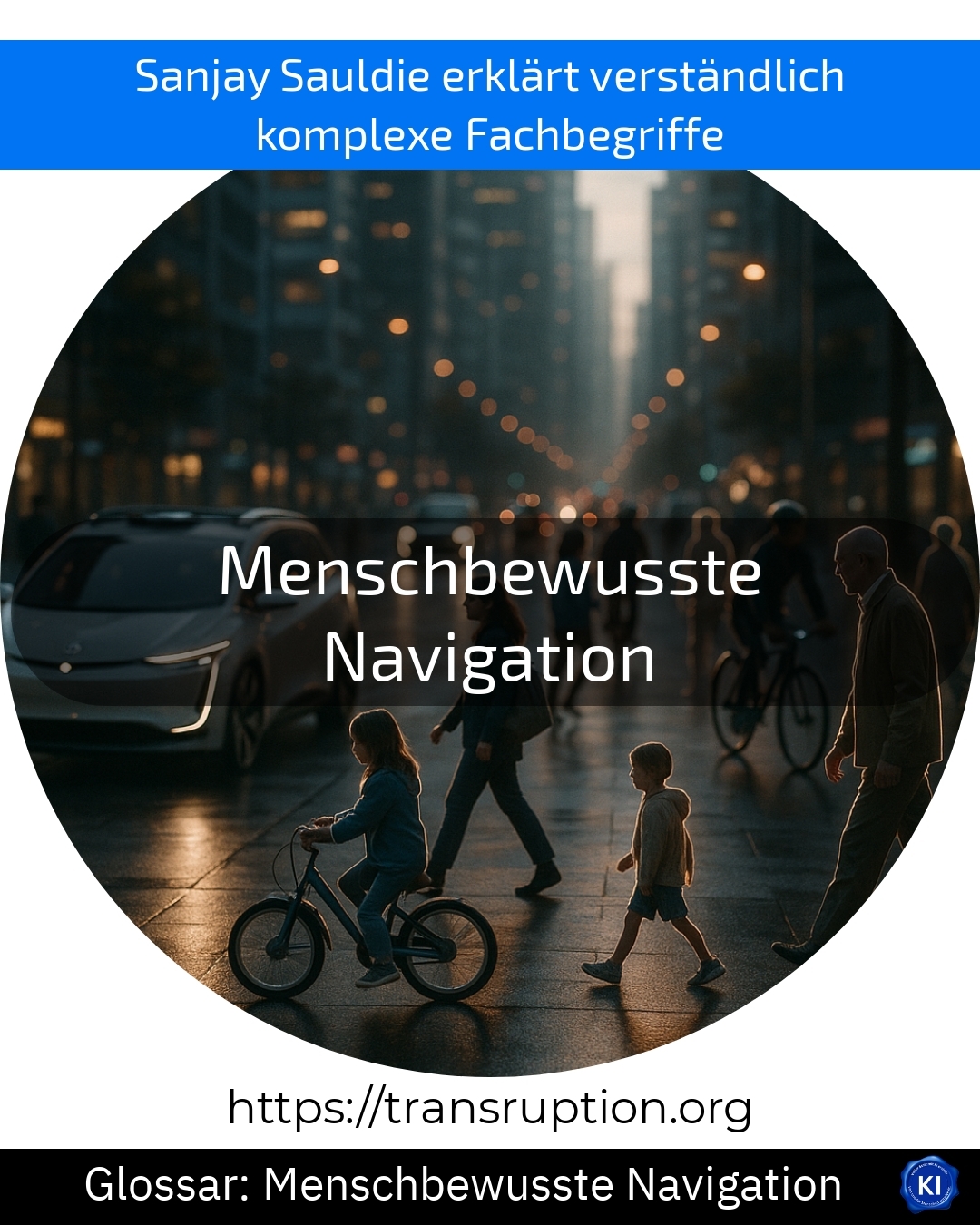
Human-aware navigation ensures that robots or self-driving vehicles don't just stubbornly follow their path but take people into account. This means they slow down, swerve, or stop completely as soon as a person gets in their way. This reduces the risk of accidents and makes collaboration between humans and machines safer and more comfortable.
A clear example is an autonomous delivery robot in an office building. If a group of people is standing in the corridor, the robot recognises them using sensors and artificial intelligence. It then chooses a route that causes as little disruption as possible and waits, if necessary, until the way is clear again. Human-aware navigation thus improves the daily lives of many people and makes modern technologies suitable for everyday use and safe.











 Deutsch
  English (UK)