
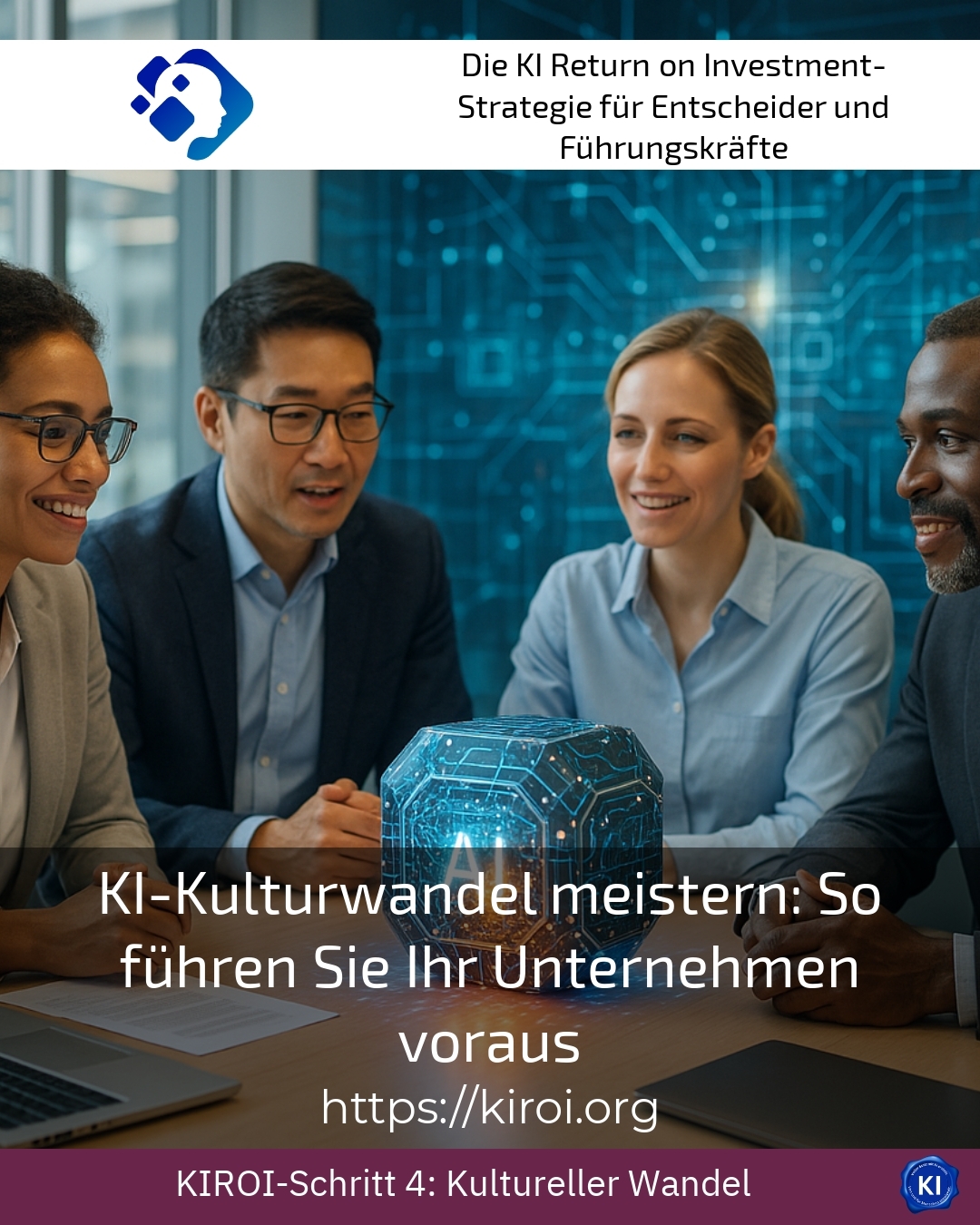
The digital transformation is changing companies at an astonishing pace. Anyone who does not act today will lose the race tomorrow. Mastering AI cultural change It means much more than just introducing new technologies. It involves a fundamental change in the way of thinking in your entire organization. Leaders face the challenge of navigating their teams through unfamiliar territory. They need clear strategies and proven methods. This article shows you concrete ways to lead your company successfully into the future.
Why corporate culture is the decisive success factor
Many companies invest significant sums in new technologies. They purchase software, implement systems, and train their employees. Nevertheless, numerous transformation projects fail due to one crucial factor. The corporate culture does not adapt to the new way of working. People are creatures of habit and often react with resistance to changes. This resistance is not malicious, but humanly understandable. Leaders must understand this dynamic and actively shape it. Without cultural adaptation, technical investments remain ineffective.
For example, a medium-sized logistics company implemented an automated route planning system. The software was technically advanced and promised significant efficiency gains. However, the experienced dispatchers ignored the system’s suggestions. They preferred to rely on their years of experience. It was only when management took the concerns seriously that the situation changed. The dispatchers were actively involved in optimizing the system. This resulted in genuine acceptance and the project became a success.
A trading company faced similar challenges in implementing an intelligent inventory management system. The buyers felt patronized by the automated order suggestions. They feared that their expertise would no longer be in demand. The transruptions coaching accompanied the project team in developing a new collaboration culture. The buyers learned to use the system suggestions as a decision-making aid. Their experience remained indispensable for complex decisions.
Mastering the Role of Leaders in AI Cultural Change
Leaders shape the corporate culture through their daily behavior. They set standards and provide guidance in uncertain times. When managers themselves are skeptical of new technologies, they transmit this attitude to their teams. Conversely, enthusiastic leaders can inspire and engage their employees. The role of role models is not to be underestimated. Authentic interest in change has a contagious effect on the entire organization.
A manufacturing company in mechanical engineering shows how important this role of role model is. The production manager initially used the new analysis tools reluctantly. He preferred his proven methods for quality control. His skepticism spread to the entire team. Only individual coaching helped him recognize the benefits of the new tools. After that, he became an enthusiastic advocate for the change.
Best practice with a AIROI customer
An international chemical company faced a particular challenge in its digital transformation. The senior management had decided to implement intelligent process controls in all production sites. However, the plant managers in different countries reacted very differently to these plans. While some sites welcomed the change, others showed massive resistance to the new systems. The transruptive coaching accompanied the company over several months during this complex change process. First, we conducted detailed discussions with all the involved management teams and identified their specific concerns. It turned out that many plant managers feared their influence and autonomy. Others were concerned that their long-standing experience could be undermined by the new technical systems. We developed a customized program that took these concerns seriously and addressed them constructively. The management team learned to understand the new tools as support for their work. At the same time, their experiences were actively incorporated into the system configuration. After six months, the mood in all the plants had improved significantly and the implementation was successful.
Involving employees as active agents of change
Change projects often fail due to a lack of involvement from those affected. When decisions are communicated only from above, the emotional connection is missing. Employees feel left out and respond with passive or active resistance. Successful companies therefore rely on participation from the outset. They involve their teams in planning processes and actively utilize their knowledge. This creates genuine identification with the intended changes.
An insurance company developed a system for automated claims processing together with its claims handlers. The employees themselves defined which cases should be automatically processed. Complex cases remained their responsibility. This involvement led to high acceptance and rapid implementation. The claims handlers felt valued and not replaced.
Similarly successfully, an energy provider designed the introduction of intelligent grid control. The field technicians were involved in the project from the outset. They brought their practical knowledge of the specifics of the grid to the project. The system was thus significantly better adapted to the real requirements. The technicians saw themselves as co-creators and not as those affected.
A pharmaceutical company adopted a similar approach when automating its laboratory processes. The lab technicians developed the new workflows together with the project managers. Their expertise directly contributed to the configuration of the new systems. The transruptions coaching supported the communication between the different departments. This resulted in solutions that were supported by all involved parties.
Taking fears seriously and addressing them constructively
The fear of job loss is one of the most common concerns in transformation projects. Many employees fear that new technologies could make them redundant. These fears are real and deserve an honest discussion. Leaders should not respond with empty promises. Instead, they need clear perspectives and concrete opportunities for development. Only in this way can real trust in the change be created.
An automotive supplier openly communicated about the effects of automation. The company offered comprehensive training programs for all employees. Those who wanted to develop further received the necessary support. This transparent communication significantly reduced fears. The employees saw opportunities rather than just threats.
A telecommunications company went a step further in its communication strategy. It established regular dialogue formats in which employees could express their concerns. The management took time to have detailed discussions and provide individual advice. Transruptional coaching accompanied these dialogue processes and trained the management in dealing with resistance. The results were impressive and the turnover rate dropped significantly.
Successfully master the AI cultural change through strategic communication
Communication is the core of any successful transformation. It must be continuous, honest, and tailored to the target audience. One-time announcements are far from enough. Employees need regular updates about progress and challenges. They want to understand why certain decisions are made. Only through consistent communication is the necessary trust in the change process created.
A bank established a weekly newsletter about the transformation project. It celebrated successes but also openly addressed setbacks. The employees appreciated this transparency and felt well informed. Additionally, there were monthly town hall meetings with the management. Questions could be asked and answered directly.
A retail company used internal social media channels for project communication. Employees could share their experiences and learn from one another. Success stories from individual branches inspired other locations. The communication thus became an instrument for motivation and knowledge exchange. The transruptions coaching supported the development of the communication strategy.
A technology company adopted a particularly creative approach for its change communication. It produced short video messages in which employees shared their experiences. These authentic stories reached the workforce much better than official statements. The videos were viewed thousands of times and sparked thought.
Best practice with a AIROI customer
A large logistics company with several thousand employees faced the challenge of automating its entire warehouse management. The workforce consisted largely of long-standing employees with limited technical affinity. Many were afraid of the upcoming changes and felt overwhelmed by the complexity of the new systems. transruptions coaching developed a comprehensive accompaniment program for all those involved together with the human resources department. We began with an inventory of the existing competencies and identified individual development potential for each employee. Subsequently, customized training programs were developed that addressed different learning levels and took into account different learning styles. Peer mentoring programs were particularly important, in which technically-oriented employees supported their colleagues. These teams proved to be extremely effective and also significantly promoted team cohesion. After one year, eighty percent of the employees reported an increase in job satisfaction and new development prospects. Productivity rose by more than twenty percent and the error rate dropped to a historic low. Today, the project is considered a model for successful transformation.
Sustainable embedding of the new culture in the company
Cultural changes take time and continuous nurturing. They are not a project with a defined end point. After the initial transformation, the phase of consolidation and further development begins. Companies must create structures that permanently support the new culture. This includes adapted incentive systems, career paths, and leadership principles. Only in this way will the change be sustainable and irreversible.
A medical technology company adapted its promotion criteria to the new corporate culture. Enthusiasm for innovation and a willingness to change became important evaluation factors. Executives were also judged on how well they supported changes in their teams. These structural adjustments significantly strengthened the cultural transformation.
A consulting firm integrated continuous learning into its work routine. Each employee received time for further training and experiments every week. This learning time was protected and was not allowed to be used for operational tasks. This created a real culture of continuous improvement and lifelong learning.
An industrial company implemented an internal innovation program that involved all employees. Everyone could submit improvement suggestions and participate in their implementation. The best ideas were rewarded with prizes and public recognition. Transruptions coaching helped in the conception and implementation of this program. It continues to foster the innovation culture in the company to this day.
My AIROI Analysis
The experiences from numerous transformation projects reveal clear patterns for successful cultural change. Companies that actively involve their employees achieve significantly better results than those that communicate only from above. The role of leaders cannot be underestimated and deserves special attention in any change process. They must lead as authentic role models while being sensitive to the needs of their teams at the same time.
Companies that do not ignore fears but address them constructively are particularly successful. Transparent communication creates trust and significantly reduces resistance. Investing in training shows employees that they have a future in the company. This message is often more important than technical training alone.
Den Mastering AI cultural change it requires a lot of patience and continuous commitment from the entire organization. Rapid success is possible, but lasting change takes time and patience. Transruptive coaching can provide valuable impetus and professionally guide the process [1]. It helps companies develop and implement their individual transformation strategy.
The examples described show that successful transformation is possible. However, it requires more than technical expertise and financial resources alone. The human factor ultimately determines the success or failure of any change project. Companies that understand this and act accordingly will also be successful in the future and be able to strengthen their competitive position [2].
Further links from the text above:
[1] Business Transruption Coaching
[2] AI strategy development and guidance
For more information and if you have any questions, please contact Contact us or read more blog posts on the topic Artificial intelligence here.







 Deutsch
 English (UK)