
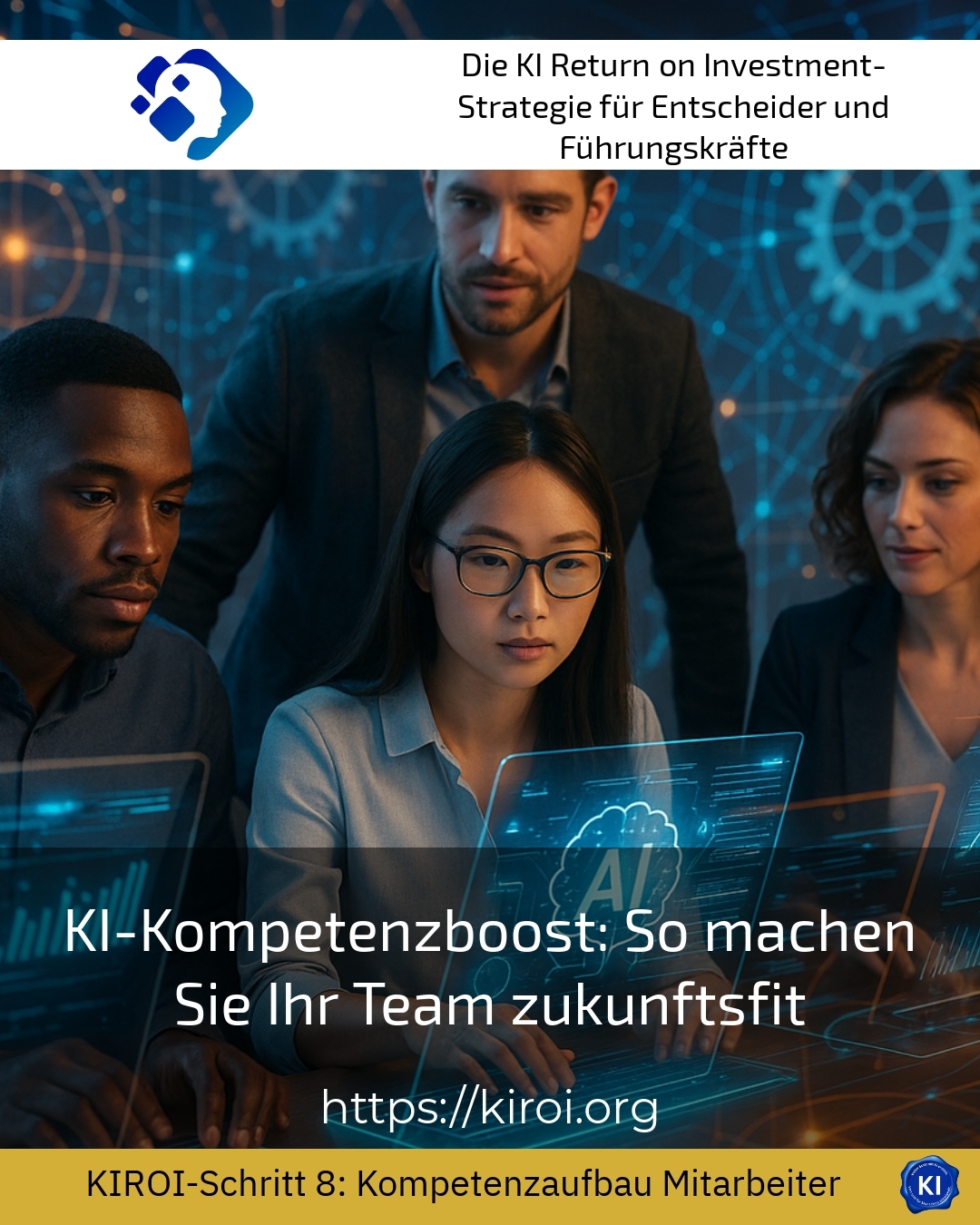
Have you ever wondered why some organizations seem to keep pace with technological changes effortlessly, while others, despite enormous investments, lag behind? The answer often lies not in the technology itself, but in the people who are supposed to use it. A targeted approach AI Skills Boost Today, you will decide whether your team can take advantage of the opportunities presented by digital transformation. The development of artificial intelligence is advancing at an astonishing pace, and professionals from all sectors face the challenge of continuously upskilling themselves. This article shows you practically how you can systematically prepare your workforce for the demands of tomorrow.
Why traditional continuing education concepts are no longer sufficient
The traditional training formats that many organizations have been using for decades are increasingly reaching their limits. One-time seminars or sporadic workshops can hardly keep up with the dynamics of current developments. Employees often report that after such events they return motivated but ultimately overwhelmed. This is because isolated knowledge quickly fades away without the possibility of direct application. Instead, integrated learning concepts are needed that accompany the work day and gradually build up competencies.
In the financial sector, for example, advanced institutions are now relying on Micro-learning units, These tools are seamlessly integrated into the daily workflow. Advisors receive short learning sessions on algorithmic analysis tools daily. This way, they integrate new knowledge directly into their customer consultations. This trend is also evident in the healthcare sector. Instead of multiple-day courses, caregivers no longer learn how to use intelligent documentation systems. Instead, they acquire the necessary skills in supervised practical phases. This approach significantly reduces resistance to new technologies.
Best practice with a AIROI customer
A medium-sized manufacturing company faced the challenge of introducing its experienced skilled workers to intelligent quality control systems. The workforce consisted predominantly of long-standing employees who initially had a skeptical attitude towards technical innovations. As part of the transruptive coaching process, we developed a multi-stage concept that placed the existing expertise of the skilled workers at the center. Experienced machine operators were trained to become internal mentors and accompanied their colleagues in the gradual integration of the new systems. The implementation phase lasted six months and included regular reflection rounds. In these rounds, the employees were able to openly express their concerns and make suggestions for improvement. The result surprised even the management, as the acceptance rate after the completion of the project was over eighty percent. In addition, the skilled workers themselves identified additional application possibilities that were not included in the original project plan.
The AI competence boost as a strategic leadership tool
Leaders play a crucial role in developing the skills of their teams. They do not have to become technology experts themselves, but they need a thorough understanding of the possibilities and limitations. Only in this way can they communicate realistic expectations and adequately support their employees. Many managers report that they feel torn between operational pressure and strategic development. Professional guidance here provides the impetus and guidance needed.
In retail, for example, store managers have begun to hold weekly meetings. Learning Circles They conduct these discussions with their teams. Together, they discuss how intelligent asset management systems can transform daily work. These conversations not only foster technical understanding but also strengthen team cohesion. In the logistics industry, shift leaders use similar formats to introduce autonomous transport vehicles. They accompany their teams through the initial practical experiences and provide space for questions. Insurance companies are also increasingly adopting this approach when introducing automated claims processing.
This is how you keep your team future-ready through targeted learning architectures
A well-thought-out learning architecture forms the foundation for sustainable competence development. It not only defines content but also learning paths, timeframes, and responsibilities. It is important to take into account different learning styles and prior experience. A uniform program for all employees often fails to achieve its goal. Instead, a modular structure with individual customization options is recommended.
Pharmaceutical companies have developed pioneering concepts in this regard. Their field sales representatives receive personalized learning paths to intelligent customer analysis tools [1]. These paths take into account the respective prior knowledge and the specific requirements of the regions they serve. The automotive industry is also adopting differentiated approaches in training for robotic-assisted manufacturing processes. Factory workers with technical training undergo shortened programs, while commercial employees complete more fundamental modules. In law firms, the focus is on intelligent research systems and automated contract review.
Best practice with a AIROI customer
An international auditing firm approached us because the implementation of intelligent auditing software was stalling. The partners had invested in modern technology, but the usage rates remained far behind expectations. The analysis conducted as part of the transruptive coaching revealed an interesting pattern that surprised at first glance. The younger employees enthusiastically used the new tools, but did not communicate about them with their more experienced colleagues. A kind of parallel world had developed that blocked the transfer of knowledge. We implemented a reverse mentoring program in which young talent mentored their more experienced colleagues. At the same time, we created moderated exchange formats where both groups could learn from each other. The experienced auditors brought their expertise to complex issues, while the younger ones shared their technical know-how. After four months, the usage rate of the new software had tripled, and the operating environment improved noticeably.
Psychological aspects of technological transformation
The introduction of intelligent systems causes uncertainty among many people. These feelings are justified and should not be dismissed. A genuine AI Skills Boost Therefore, they always take into account the emotional dimension of learning. People need the feeling of being able to maintain control over their work. They need to understand how new tools support their work, rather than replacing it.
In the media industry, for example, journalists report on initial difficulties in using automated text generation [2]. Professional guidance helps them to understand the technology as a support for routine tasks. This frees up time for investigative research and creative work. Architects also make similar experiences with intelligent design systems. The software performs standardized calculations, while the creative core competencies of the architect become more important than ever. In the education sector, teachers experience similar processes when integrating adaptive learning systems.
Practical steps for successful AI competence boost
The path to a competent team leads through concrete, actionable measures. First and foremost, an honest assessment of existing skills is recommended. Where are your employees currently positioned, and what skills will be needed in the future? This analysis forms the foundation for all further steps. It is important to involve the employees themselves and to take their perspectives seriously.
Energy providers have demonstrated how such asset inventories can be conducted [3]. They conducted structured discussions with all departments to identify the training needs. Technicians, customer advisors, and administrative staff require different skills when dealing with intelligent grid systems. Similarly, tourism companies are adopting similar approaches when introducing AI-based booking systems. They distinguish between basic application skills and in-depth understanding of the system. Banks, in turn, differentiate between customer advisors and analysts when training for automated credit decisions.
After the inventory, a realistic timeline is developed. Rapid introductions often lead to frustration and resistance. Instead, you should plan sufficient time for practical training phases. During these phases, employees can try out new skills in a protected environment. Errors are explicitly allowed and are part of the learning process.
Best practice with a AIROI customer
A long-established trading company with several hundred employees wanted to expand its inventory management system with intelligent forecasting components. The management had formulated ambitious goals and set a tight schedule. In transruptive coaching sessions, we advised slowing down the process and more closely involving the affected departments. Together, we developed a pilot project that was initially implemented in only one branch. The employees in this branch received intensive support and were able to thoroughly test the system. Their feedback was directly incorporated into the adaptation of the training materials. After three months of successful pilot phase, the gradual rollout began to other locations. The employees in the pilot branch act as internal ambassadors and contact points. They inform their colleagues about their experiences and thus address any concerns. The project is now on schedule and has even exceeded the original quality targets.
Long-term prospects for sustainable organisations
Competency development is not a one-time project, but a continuous process. Organizations that have understood this establish structures for continuous learning. They create spaces for experimentation and reward curiosity and initiative. Such cultures do not emerge overnight, but they can be purposefully fostered and developed.
The chemical industry offers interesting examples for this. Leading companies have Innovation labs These laboratories are deliberately designed to be open to employees so that they can try out new technologies. They also take new approaches in mechanical engineering with so-called learning factories. There, skilled workers simulate the work with intelligent production systems before they are deployed in real operations. Telecommunications providers, in turn, use virtual environments for the training of their service technicians.
My AIROI Analysis
The systematic development of competencies in the field of intelligent technologies presents organizations with multifaceted challenges that go far beyond mere knowledge dissemination. In my opinion, many decision-makers still underestimate the importance of psychological and cultural factors in technological transformation. A true boost in AI competencies is only achieved when it puts people with their individual strengths and concerns at the center. The examples presented in this article vividly demonstrate that successful organizations do not employ miracle solutions, but instead consistently focus on participation and gradual development.
What seems particularly remarkable to me is the growing importance of peer-learning formats and internal mentoring programs. These approaches leverage existing resources and simultaneously strengthen the cohesion within the organization. External guidance through transruptive coaching can provide valuable impulses and uncover blind spots. However, it never replaces the internal leadership responsibility and the commitment of the employees themselves. The coming years will show which organizations are able to successfully prepare their teams for the demands of an increasingly technologically-driven work environment. Those that invest in sustainable competency development today gain a strategic advantage that will pay off in the medium and long term.
Further links from the text above:
[2] World Economic Forum: Artificial Intelligence Insights
[3] Bitkom: Artificial Intelligence in the company
For more information and if you have any questions, please contact Contact us or read more blog posts on the topic Artificial intelligence here.







 Deutsch
 English (UK)