
Have you ever wondered why hospitals still work with piles of paper, while your smartphone has long been monitoring your heart rhythm and analysing sleep patterns?
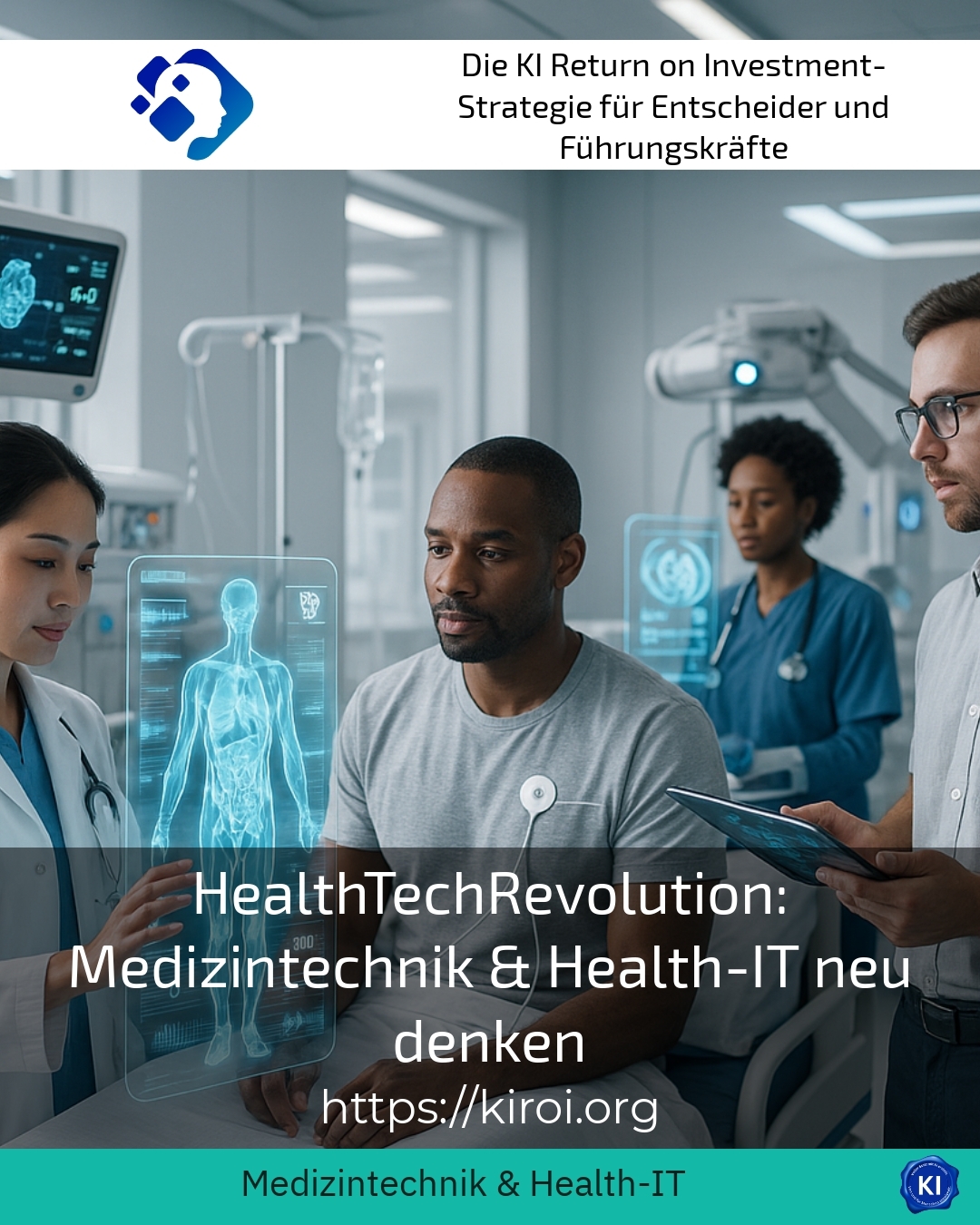
The answer to this question takes us right into the middle of a fascinating transformation that is currently well under way and fundamentally changing the way we understand healthcare. The HealthTechRevolution: Rethinking Medical Technology & Health IT affects not only large clinic groups or technology companies, but every single individual who will at some point require medical care. We are currently experiencing a paradigm shift that is dissolving traditional boundaries between patients, doctors and technology, and opening up completely new possibilities for prevention, diagnosis and therapy. This is not simply about new devices or software, but about a fundamental realignment of the entire healthcare system.
Connected diagnostics as a cornerstone of the HealthTech revolution
Modern diagnostics have changed dramatically in recent years. Today, wearable sensors continuously record vital signs. Algorithms analyse image data faster than human experts. This creates completely new diagnostic possibilities.
An example of this is smart blood glucose meters that do not only display current readings. They also forecast future fluctuations. This gives diabetics timely warnings. Insulin dosage can be managed more precisely. Hospital admissions can frequently be avoided.
Radiological departments are increasingly relying on imaging procedures with automated pre-analysis. CT scans are examined for abnormalities in seconds. Radiologists can then focus on critical findings. Waiting times for patients are significantly reduced.
Remarkable progress is also evident in pathology. Tissue samples are recorded digitally and analysed. Patterns are recognised that might escape human eyes. The accuracy of cancer diagnoses is measurably increasing.
Best practice with a AIROI customer
A medium-sized hospital in southern Germany faced the challenge of modernising its radiology department. Diagnostic reporting times averaged several days. Patients and referring doctors were increasingly dissatisfied. transruptions coaching supported the project team intensively over several months. First, we jointly analysed the existing workflows and identified bottlenecks. This revealed that there were not only technical deficiencies. Communication problems between various departments also played a significant role. Following the implementation of a networked imaging platform with intelligent pre-analysis, reporting times fell to under 24 hours. The radiologists reported a significant reduction in workload for routine reports. They were able to devote more time to complex cases. According to internal surveys, patient satisfaction rose noticeably. The continuous support provided for the change process through regular reflection loops proved particularly valuable.
Telemedicine and virtual care models
The spatial distance between doctor and patient is increasingly losing significance. Video consultations are now established in many practices. Remote monitoring systems enable the care of chronically ill patients at home [1]. This development is accelerating further.
Telecardiological systems transmit ECG data in real time to specialist clinics. Heart failure patients wear small sensors beneath the skin. These report critical changes immediately to the medical team. Emergencies can thus be averted at an early stage.
Neurological aftercare is increasingly taking place via digital platforms. Parkinson's patients document their symptoms using a smartphone app. Movement patterns are analysed automatically. The medication can then be adjusted in a targeted manner.
Psychiatric treatments are also making more intensive use of digital channels. Therapy sessions take place via video. Between sessions, digital diaries provide support. Patients in rural areas benefit particularly from this provision.
Rethinking medical technology and health IT in rehabilitation
Rehabilitation benefits enormously from technological innovations. Exoskeletons assist stroke patients in relearning how to walk. Virtual reality systems simulate everyday situations for training. Gamified elements motivate regular practice.
Robot-assisted therapy systems enable hundreds of precise repetitions per session. Sensors record every movement progress in detail. Therapists thus receive objective data for treatment management. Documentation takes place largely automatically.
Home-based rehabilitation programmes usefully complement in-patient stays. Patients train at home with guided exercise videos. Their progress is recorded via connected devices [2]. The treatment team can intervene correctively if necessary.
Interoperability as a key challenge
Despite all technological advances, a fundamental problem remains. Different systems frequently do not communicate with one another. Patient data resides in separate silos. The flow of information stalls at system boundaries.
International standards such as FHIR (Fast Healthcare Interoperability Resources) are intended to provide a remedy. They define standardised interfaces for data exchange. However, implementation is progressing at varying paces. Many older systems first have to be laboriously adapted.
Hospital groups are investing significantly in integration platforms. These act as translators between different systems. As a result, test results from the emergency department can appear directly in the ward system. The quality of care increases through a better flow of information.
Community-based doctors also need access to hospital information. Electronic health records are intended to make this possible. Acceptance among patients and practitioners is growing slowly. Data protection concerns must be taken seriously in the process.
Best practice with a AIROI customer
A network of three hospitals and around fifty registered practices in a northern German region approached us with a specific concern. The handover of patients between inpatient and outpatient care was not working well. Important information was regularly lost. Repeated examinations were the result. The transruptions coaching accompanied the project team in developing an integrated communication platform. We moderated intensive workshops between clinicians, IT managers and practice owners. In the process, reservations were openly addressed and worked through together. The technical solution was created in close coordination with all participants. After about a year, a functioning network was established. Discharge letters now reach the treating physicians within hours instead of days. Medication plans are automatically transmitted and reconciled. According to internal evaluations, the number of avoidable hospital readmissions fell significantly. In particular, supporting the cultural change proved to be critical to the success of this project.
Personalised medicine through data analysis in the context of the HealthTech revolution
The availability of large volumes of data opens up entirely new approaches to treatment. Genetic information is incorporated into therapy decisions. Medications can be individually dosed. Side effects can frequently be predicted and avoided.
Cancer centres are increasingly using tumour genome sequencing on a routine basis. The molecular characteristics of the tumour are precisely determined. Targeted therapies can then be selected with precision. Treatment success is noticeably improving in many types of cancer [3].
Prevention programmes are also becoming more individualised. Risk scores take genetic predispositions and lifestyle factors into account. People with an increased risk of certain conditions receive targeted preventive recommendations. Screening programmes are becoming more efficient as a result.
Pharmacogenomics helps in the selection of suitable medications. Some people metabolise certain active substances faster than others. This significantly influences the optimal dosage. Adverse drug reactions can thus be reduced.
Ethical issues and data protection
With increasing digitalisation, new ethical challenges are also arising. Who actually owns the collected health data? Who is allowed to access it and for what purpose? These questions require public debate.
The European General Data Protection Regulation sets important guardrails. Health data enjoys special protection. Patients must give informed consent. However, implementation in practice is complex.
Algorithmic decision support raises questions of transparency. How precisely is a therapy recommendation arrived at? Can doctors and patients comprehend the logic? Trust requires comprehensibility.
Training and continuous professional development in digital healthcare
The technological transformation requires new competencies from all participants. Medical students today learn how to use digital tools. Doctors in training deal with data analysis. Nursing staff increasingly operate complex technical systems.
Simulation centres enable the safe training of critical situations. Virtual patients react realistically to treatment decisions. Mistakes become learning opportunities without real risks. The quality of care benefits from better-trained specialists.
Interdisciplinary degree courses combine medicine and informatics. Medical Data Scientists are becoming sought-after specialists. They understand both clinical requirements and technical possibilities. These bridge-builders are indispensable for successful projects.
My AIROI Analysis
The transformation of healthcare through digital technologies is progressing inexorably and affects all stakeholders in this complex system. In my estimation, the decisive success factor lies not primarily in the technology itself, but in the way organisations shape these changes and bring their employees along with them. Many projects fail not due to technical hurdles, but because of a lack of acceptance, inadequate communication or a missing strategic alignment.
Transruption coaching supports clinics, practice networks and healthcare companies in the sustainable implementation of technological innovations. This is not about introducing technology for its own sake, but about genuine improvements for patients and treatment teams. The HealthTechRevolution: Rethinking Medical Technology & Health IT requires more than just investment in hardware and software. It calls for a cultural transformation that involves everyone and takes resistance seriously.
Clients frequently report feeling overwhelmed by the abundance of options and demands. Professional guidance can provide important momentum here. We help with prioritisation, moderate difficult decision-making processes and support the development of realistic implementation strategies. The future belongs to healthcare that uses technological opportunities intelligently without losing sight of people.
Further links from the text above:
[1] Digital Healthcare – Federal Ministry of Health
[2] Digital Health – Fraunhofer-Gesellschaft
[3] Personalised cancer medicine – Cancer Information Service
For more information and if you have any questions, please contact Contact us or read more blog posts on the topic Artificial intelligence here.











 Deutsch
  English (UK)