
Ethical guidelines as the basis for responsible decisions
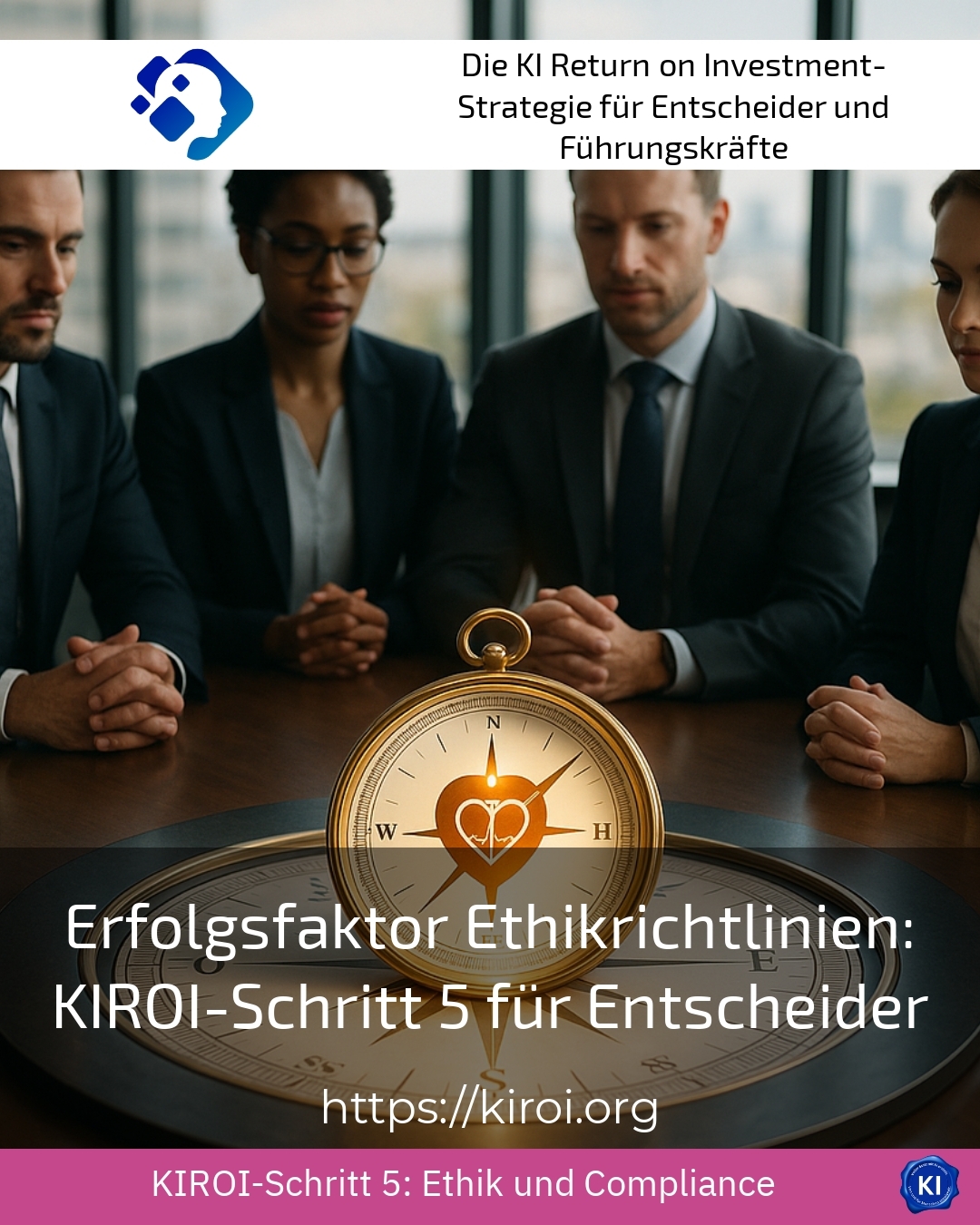
Ethical guidelines offer leaders and companies valuable guidance in complex and dynamic environments. They help to draw clear boundaries and foster trust within the team, as well as with external partners. That is precisely why ethical guidelines are a crucial success factor in the sustainable management of projects, especially when new technologies and artificial intelligence play a role. The support of such projects repeatedly reveals challenges where ethical guidelines help to translate ethical principles into concrete recommendations for action.
Embedding ethical guidelines in everyday business operations
To effectively implement ethical guidelines, they must not only be in writing but, above all, be lived. Leaders assume a role model function in this regard and, through open communication, foster a climate of safety. Based on practical experience, managers often report that regular discussions within the team about ethical issues and differing values are helpful in creating a shared understanding. This strengthens cohesion and promotes mutual respect.
Even projects in the digital sector show how important it is to have concrete guidelines. For example, those responsible often report that ethical guidelines form a safe framework within which technical innovations can be implemented without disregarding the principles of transparency and accountability.
Concrete examples from practice
KIROI BEST PRACTICE at company XYZ (name changed due to NDA contract) In a guided project, ethical guidelines were developed that are specifically adapted to the challenges of automation and digitalisation. Management was supported in integrating ethical principles such as fairness and transparency into decision-making processes, which improved team communication and increased employee motivation. The clear rules created a more trusting working environment, which positively influenced project progress.
KIROI BEST PRACTICE at ABC (name changed due to NDA contract) In another project, ethical guidelines helped to systematically clarify critical questions regarding data usage. Employees felt actively involved in the process, allowing them to openly address ethical concerns. This not only fostered a safe and fair company culture but also supported innovation through a responsible attitude.
KIROI BEST PRACTICE at DEF (name changed due to NDA contract) In a company that develops digital customer solutions, ethical guidelines proved valuable in establishing uniform standards for AI-based applications. This ensured that customer information was handled sensitively and that algorithmic decisions remained traceable. The resulting clarity contributed to increased customer satisfaction and a stronger sense of internal accountability.
How ethical guidelines support leaders
Leaders often report that ethical guidelines provide them with direction and security. Especially in uncertain situations or for innovation projects, clear ethical guidelines help to make decisions with confidence. This has a positive effect on employee motivation because they know what they can orient themselves towards. Responsibility is consciously assumed and mistakes can be addressed openly, which promotes a culture of trust.
Furthermore, ethical guidelines help to minimise long-term risks. They play a key role in building a corporate culture that values respect and transparency. Leaders who champion this approach thus create the breeding ground for sustainable business success.
Impulses for the development and implementation of ethical guidelines.
Companies looking to implement ethical guidelines often face the question of how to make them both flexible and specific. A first step is to develop clear, understandable values that can be experienced in everyday life. It is crucial to communicate these values transparently and to get managers on board as role models. It is advisable to regularly create spaces for discussion where employees can contribute their perspectives and concerns, leading to the development of shared solutions.
Such spaces offer the opportunity to strengthen cultures that not only accept rules but actively shape ethical conduct. This often succeeds particularly well when leaders visibly take responsibility and communicate openly, even in critical situations.
My analysis
Ethical guidelines are more than just a formal step – they are a practical tool for leaders and teams. Especially in projects with high pressure for innovation and new technologies, they offer clear guidance that is easy to understand. The positive impact on motivation and communication is often confirmed by companies that consistently implement and live by ethical guidelines.
Guidance from experienced coaches can provide impetus and help to design ethical guidelines that are both successful and practical. The goal is not perfect security, but a shared foundation that builds trust and opens up space for responsible action.
Further links from the text above:
[1] KIRoi Step 5: Ethical Guidelines as a Success Factor for Leadership – SAULDIE
[4] Ethics Guidelines Archive – SAULDIE
[5] SEO: Optimisation for better search engine rankings
For more information and if you have any questions, please contact Contact us on or read further blog posts on the topic Artificial Intelligence Blog here.











 Deutsch
  English (UK)