
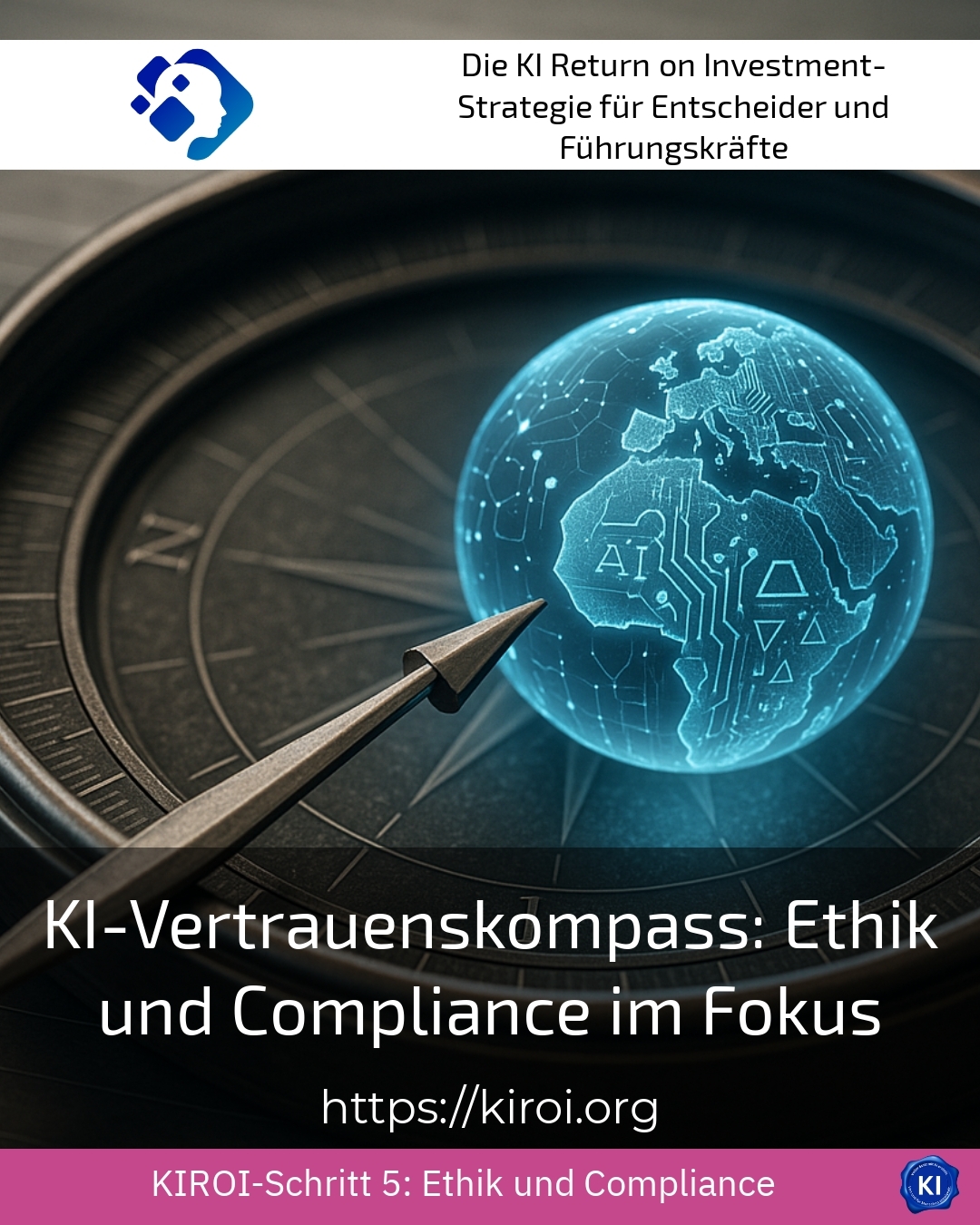
Imagine you could illuminate any algorithm and understand why it makes the decisions it does. The AI Trust Compass: Ethics and Compliance in Focus provides precisely this orientation in an increasingly automated world. Today, companies face the challenge of combining technological progress with social responsibility. This is no longer just about efficiency and profit maximisation. Instead, issues of fairness, transparency and accountability are at the forefront of strategic considerations. Clients often report feeling caught between innovation and regulation. However, this conflict can be resolved. With the right guidance, solutions emerge that take both sides into account.
Why an AI Trust Compass is indispensable today
Digital transformation has affected almost all industries and is fundamentally changing how organisations operate and make decisions. Automated systems are taking on tasks that were previously exclusive to humans. This development brings enormous opportunities. At the same time, new risks and challenges are emerging. Companies must ensure that their technological solutions comply with ethical standards. This is how they regain the trust of their stakeholders. A structured approach helps to set clear guidelines.
For example, in the healthcare sector, clinics use algorithmic systems for diagnostic support. A leading university hospital implemented a system for the early detection of sepsis. However, doctors wanted to understand how the system arrived at its assessments. Without this transparency, they would not have integrated the recommendations into their clinical practice. In the financial sector, banks, in turn, rely on automated credit decisions. A medium-sized credit institution had to demonstrate to the supervisory authority that no discrimination was occurring. Insurance companies use similar technologies for risk assessment. Here too, questions arise about the fairness and equal treatment of applicants.
Best practice with a AIROI customer An internationally active pharmaceutical company faced the challenge of accelerating its research processes while simultaneously upholding the highest ethical standards. The existing systems for analysing clinical trial data largely operated as so-called black boxes, whose decision-making logic was not comprehensible even to experienced scientists. As part of transruption coaching, the company developed a comprehensive framework for responsible innovation. Firstly, the team identified all critical decision points within the research chain. Subsequently, it defined clear criteria for transparency and traceability. An interdisciplinary committee made up of medical professionals, ethicists, and technologists has since regularly reviewed the algorithmic processes. The documentation was designed so that regulatory authorities can also understand the decision paths. The company reports that acceptance among doctors and patients has significantly improved. Furthermore, the time taken for regulatory approval of new preparations has been considerably shortened.
Ethical Principles as the Foundation of the AI Trust Compass
Ethical principles form the foundation for any responsible technology strategy. This is not about abstract philosophical debates, but rather focuses on concrete guidelines for action. Companies need practical frameworks for everyday use. These must be both ambitious and achievable. A balanced approach considers different perspectives and interests, leading to solutions that have lasting value.
In retail, large chains use algorithmic pricing. A grocery retailer had to ensure that certain customer groups were not disadvantaged. The logistics industry relies on automated route planning and resource allocation. A parcel delivery company reviewed whether its system distributed delivery areas fairly. In the education sector, universities use technological solutions for admissions decisions. A private university developed policies to avoid bias.
Transruption coaching helps organisations to develop such frameworks. The approach provides impetus for the practical implementation of ethical principles. Clients particularly appreciate the combination of strategic direction and operational applicability. Together, solutions are created that fit the respective corporate culture. This leaves room for individual adjustments and continuous development.
Transparency as a core principle
Transparency means more than just disclosing technical details. It encompasses the understandable communication of decision-making processes to all involved parties. An energy supplier implemented a load forecasting system and explained how it worked to its customers in simple language [1]. In human resources, companies use algorithmic pre-selection of applications. A large insurance company actively informs candidates about the use of such systems. A telecommunications provider introduced regular transparency reports on its automated customer service systems.
Fairness and non-discrimination
Algorithmic systems can reinforce existing societal inequalities or create new ones. Therefore, continuous monitoring for biases is essential. An online retailer analysed its recommendation system for gender-based patterns [2]. A building society checked its automated credit scoring for age discrimination. A mobility provider ensured that its algorithm served all city districts equally.
Navigating compliance requirements with the AI Trust Compass
The regulatory landscape for technological systems is evolving rapidly. Companies must comply with and document numerous requirements. This necessitates systematic processes and clear responsibilities. However, a proactive approach to regulation also creates competitive advantages. Those who implement standards early position themselves as trustworthy partners. Customers and business partners are increasingly recognising and valuing this commitment.
In the automotive sector, manufacturers are working on autonomous vehicles. A German premium manufacturer developed a comprehensive compliance framework for its assistance systems. In the medical technology sector, diagnostic systems are subject to strict approval procedures. A manufacturer of imaging systems integrated ethical reviews into its development process. The chemical industry uses algorithmic systems for process optimisation and quality assurance. A specialty chemicals manufacturer documents its automated decisions thoroughly.
Best practice with a AIROI customer A medium-sized mechanical engineering company with several hundred employees wanted to modernise its production control while meeting all regulatory requirements. Initially, management feared that compliance requirements would significantly slow down the innovation process. However, within the scope of transruption coaching, a different picture emerged. The project team developed an integrated approach that embedded compliance checks directly into the development cycle. Instead of downstream controls, accompanying quality assurance measures were created. The company established a so-called Ethics-by-Design principle for all new projects. Every development step is now automatically checked for compliance with internal guidelines. Documentation takes place in a central system that is also accessible for external audits. The implementation took several months and required intensive training for all involved. However, the result far exceeded management's expectations. Development times were shortened because subsequent corrections were eliminated. At the same time, customer trust in the products increased measurably.
Fulfill documentation obligations
Comprehensive documentation ensures that all decisions can be traced. It forms the basis for internal reviews and external audits. A logistics company introduced a comprehensive logging system for its automated warehouse management [3]. A health insurance company documents all algorithmic decisions in the benefits area. An asset manager logs its automated investment decisions down to the minute.
Assign responsibilities clearly
Clear lines of responsibility are essential for the governance of automated systems. Every organisation needs defined points of contact for ethical matters. A technology corporation appointed a Chief Ethics Officer with extensive powers. A major bank established a committee for responsible innovation. An energy provider comprehensively trained its executives in ethical technology assessment.
Practical implementation of ethical guidelines
Implementing ethical principles requires more than declarations of intent. Companies need concrete processes and tools for everyday operations. A step-by-step approach has proven effective. First, an inventory of all relevant systems is taken. Subsequently, risks are identified and prioritised. Then, tailor-made measures for risk mitigation are developed.
In the tourism sector, tour operators use dynamic pricing systems. A cruise operator developed guidelines for fair pricing. The media industry relies on algorithmic content recommendations. A publishing house reviewed its system for filter bubble effects. In the sports sector, associations use technological solutions for performance analysis. A football association established clear rules for their use in talent scouting.
Transruption coaching supports organisations in developing individual implementation strategies. Clients often report that they benefit from the structured approach. Exchanging ideas with other companies provides additional impetus. This results in practical, proven solutions for complex challenges.
Anchor AI trust compass in corporate culture
Sustainable changes require anchoring within the company culture. Ethical principles must be understood and lived by all employees. This begins at the leadership level and permeates all hierarchical levels. Regular training and open discussions promote awareness. A culture of transparency encourages employees to voice concerns. This creates learning organisations that continuously improve.
A trading group integrated ethical technology assessment into its executive development [4]. A hotel chain trained all customer-facing employees in transparent communication about automated systems. An industrial company established an anonymous reporting system for ethical concerns regarding technological projects.
My AIROI Analysis
The support of numerous organisations with projects concerning responsible technology implementation has provided important insights. AI Trust Compass: Ethics and Compliance in Focus provides essential guidance in an increasingly complex landscape. Companies that invest early in ethical frameworks gain significant competitive advantages. They win the trust of their stakeholders and reduce regulatory risks. At the same time, they increase the acceptance of new technologies among employees and customers.
However, successful implementation requires more than superficial adjustments. It demands a profound shift in thinking throughout the entire organisation. Leaders must lead by example and embody ethical principles. Employees need training and clear guidance on how to act. Processes must be adapted and responsibilities defined. All of this does not happen overnight, but rather through a continuous development process.
Transruption coaching has proven to be valuable support for these transformation projects. The structured AIROI approach provides impetus for strategic alignment and operational implementation. Clients particularly appreciate the combination of theoretical foundation and practical applicability. The cross-industry experience enables the transfer of successful approaches. This results in tailor-made solutions that fit the respective corporate culture and have long-term viability. The future belongs to organisations that combine technological progress with social responsibility.
Further links from the text above:
[1] Federal Ministry for Economic Affairs - Artificial Intelligence Dossier
[2] AlgorithmWatch – Independent observatory for algorithmic systems
[3] Bitkom – Artificial Intelligence and Digital Transformation
[4] European Commission – Artificial Intelligence Policy
For more information and if you have any questions, please contact Contact us or read more blog posts on the topic Artificial intelligence here.








 Deutsch
  English (UK)