
Introduction to Employee Competency Development
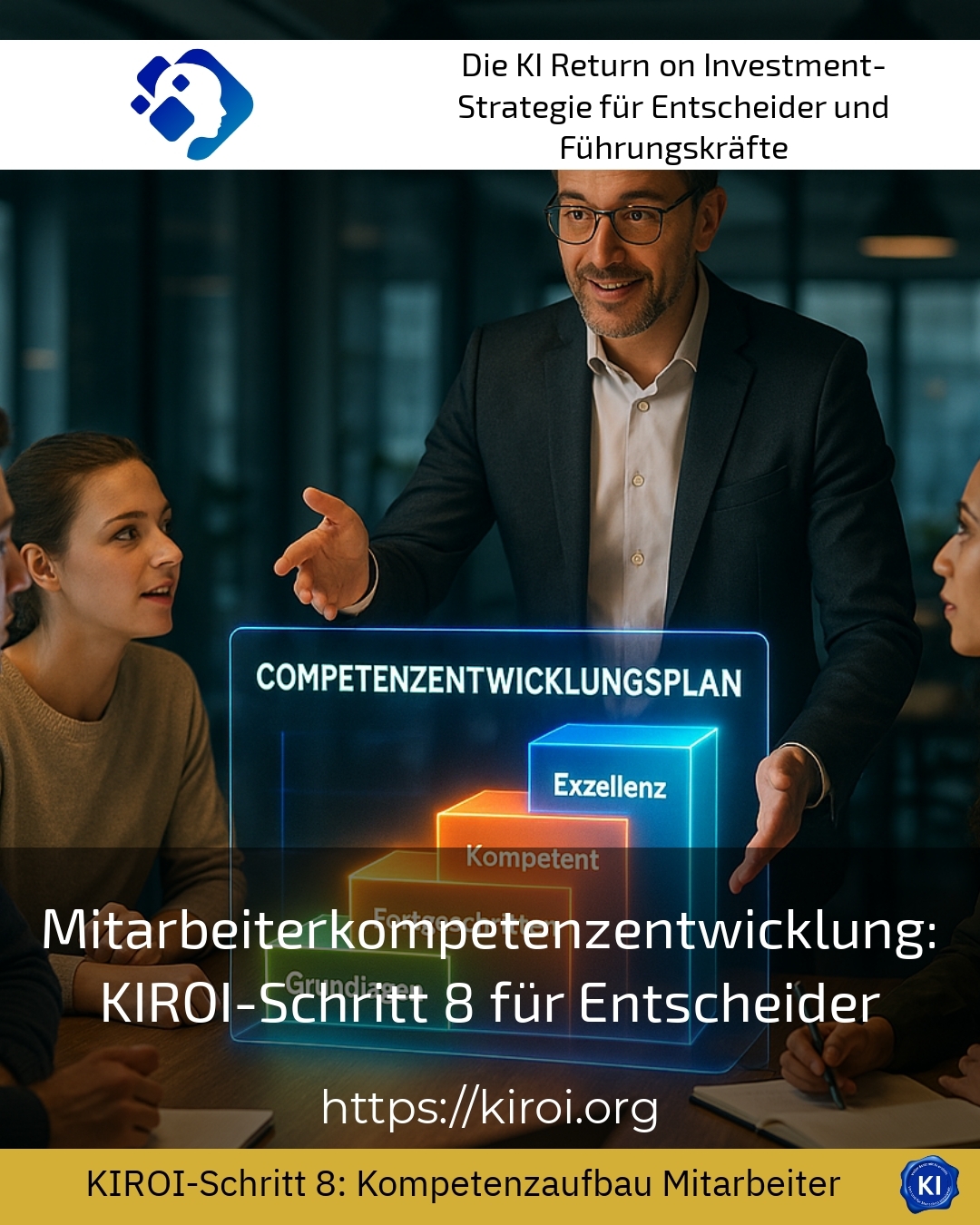
Employee competence development is a key issue for companies, which contributes to increasing efficiency and competitiveness. Within the AIROI model, particularly step 8, structured support for competence building takes place to effectively support employees and fully realise their potential. Through targeted methods such as coaching, mentoring and on-the-job training, companies can specifically develop and promote the competencies of their employees.
The importance of employee competence development
Employee competence development supports companies in achieving their goals by utilising the appropriate talents and skills of their staff. This is done by analysing current competencies and the future required target competencies to close the gaps [1][5]. The development of competencies leads to increased employee motivation and job satisfaction, which in turn has a positive effect on work performance and the working environment.
Methods of Competence Development
A variety of methods are available to promote competency development. These include **mentoring**, **coaching**, and **on-the-job training**. These methods enable employees to apply and improve their skills in their direct working environment. An example of this is the concept of **job rotation**, where employees can move through different departments to gain broad experience [3].
AIROI Step 8: Structured Support for Competence Building
AIROI Step 8 focuses on the structured support of competence development. This step is crucial for effectively shaping competence development and providing targeted support to employees [2][8]. Through this approach, companies can ensure that employees develop the necessary skills to overcome future challenges.
Practical implementation in employee skills development
In practical implementation, it is important to develop a comprehensive competency model and ultimately integrate it into business processes [10]. This includes the phases of needs analysis, identification of employees with potential, agreement on development measures, and the implementation of these measures in practice [1]. Another important aspect is regular feedback and review of the progress achieved, in order to continuously adapt development.
BEST PRACTICE with one customer (name hidden due to NDA contract)A large technology company has successfully introduced mentoring programmes to strengthen the leadership skills of its junior managers. Through regular coaching and feedback sessions, participants were able to significantly expand their capabilities and successfully advance into leadership positions.
Tip for decision-makers
For decision-makers, it is important to understand employee competence development as a strategic task and to shape it in a targeted manner. To this end, regular appraisal interviews and competence analyses should be carried out in order to identify the need for further training and development. By closely involving employees in the planning and implementation of development, motivation and commitment can be increased.
Conclusion – The Importance of Employee Competence Development
Overall, employee competency development is a crucial factor for a company's success. By strategically promoting competencies, companies can achieve their goals and remain competitive in the long term. The structured support for competency building within the AIROI model offers a proven approach for this.
My analysis
Staff competency development is a dynamic process that must be constantly adapted to the changing needs of the company. Targeted support for employee development can be provided by integrating methods such as mentoring and coaching. Companies that effectively manage these processes can benefit from a motivated and capable workforce in the long term.
Further links from the text above:
Career Bible: Competence Development
Sauldie: Staff Development – AIROI Model
Easy-LMS: Successful Competence Development
For more information and if you have any questions, please contact Contact us or read more blog posts on the topic Artificial intelligence here.











 Deutsch
  English (UK)