
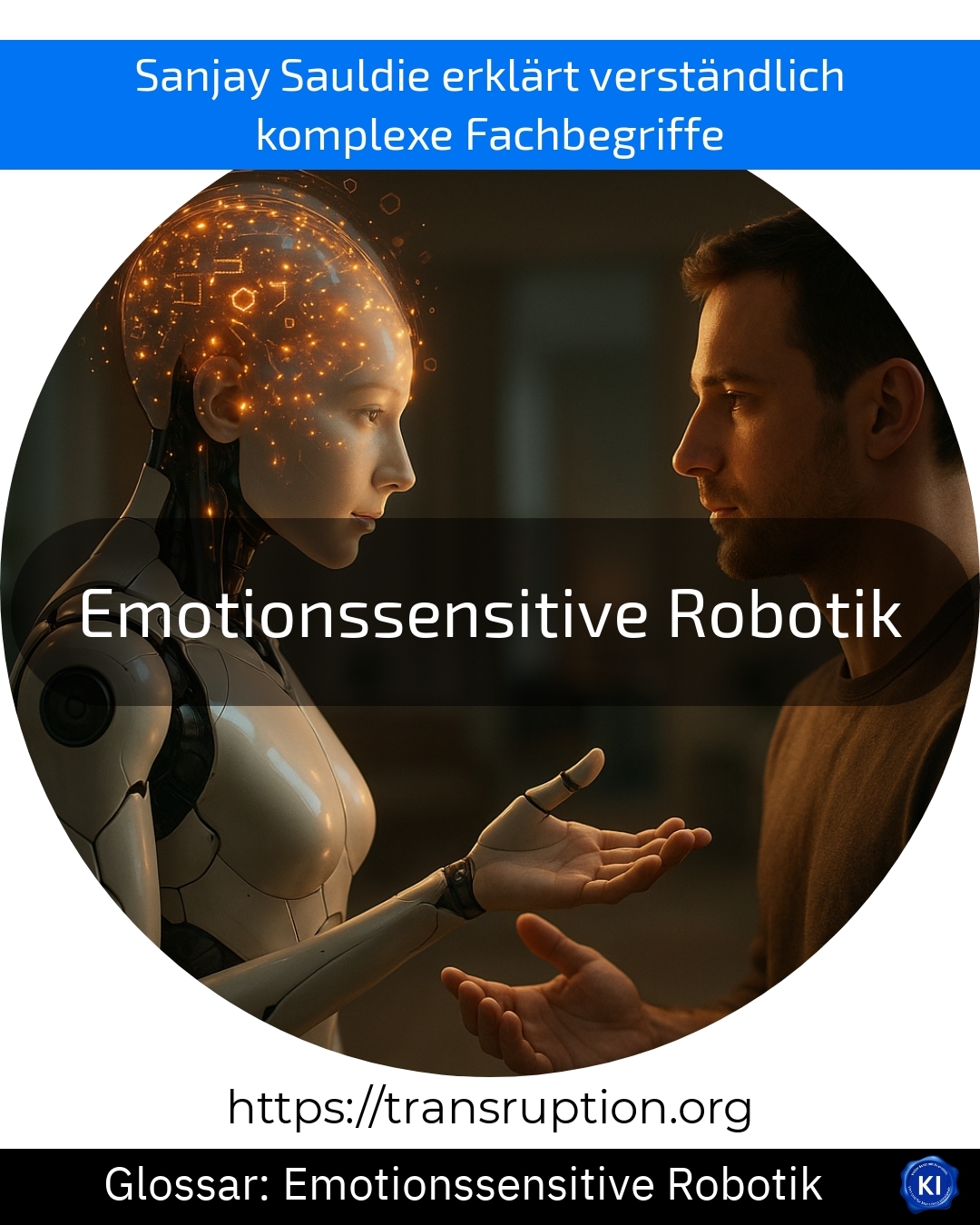
Emotionally sensitive robotics is a term from the fields of artificial intelligence, industry and Industry 4.0, and robotics. It refers to robots that can recognise human emotions, react to them, and adapt their behaviour accordingly. The goal: more natural and effective human-robot collaboration.
Emotion-sensitive robotics uses sensors, cameras, and special algorithms to capture and interpret things like facial expressions, tone of voice, or body language. This allows the robot, for example, to recognise whether a person is stressed, content, or annoyed. The machine then adapts its behaviour accordingly.
A vivid example: In a modern factory, a robot works directly alongside humans on the assembly line. If the robot notices that an employee appears stressed, it can briefly adapt its way of working or suggest a break. In the care sector, emotion-sensitive robots recognise when patients are sad or anxious and respond empathetically.
Emotionally sensitive robotics make interactions with machines significantly more pleasant and can individually cater to users' needs – a big step forward for the digitalisation of work and living environments.











 Deutsch
  English (UK)