
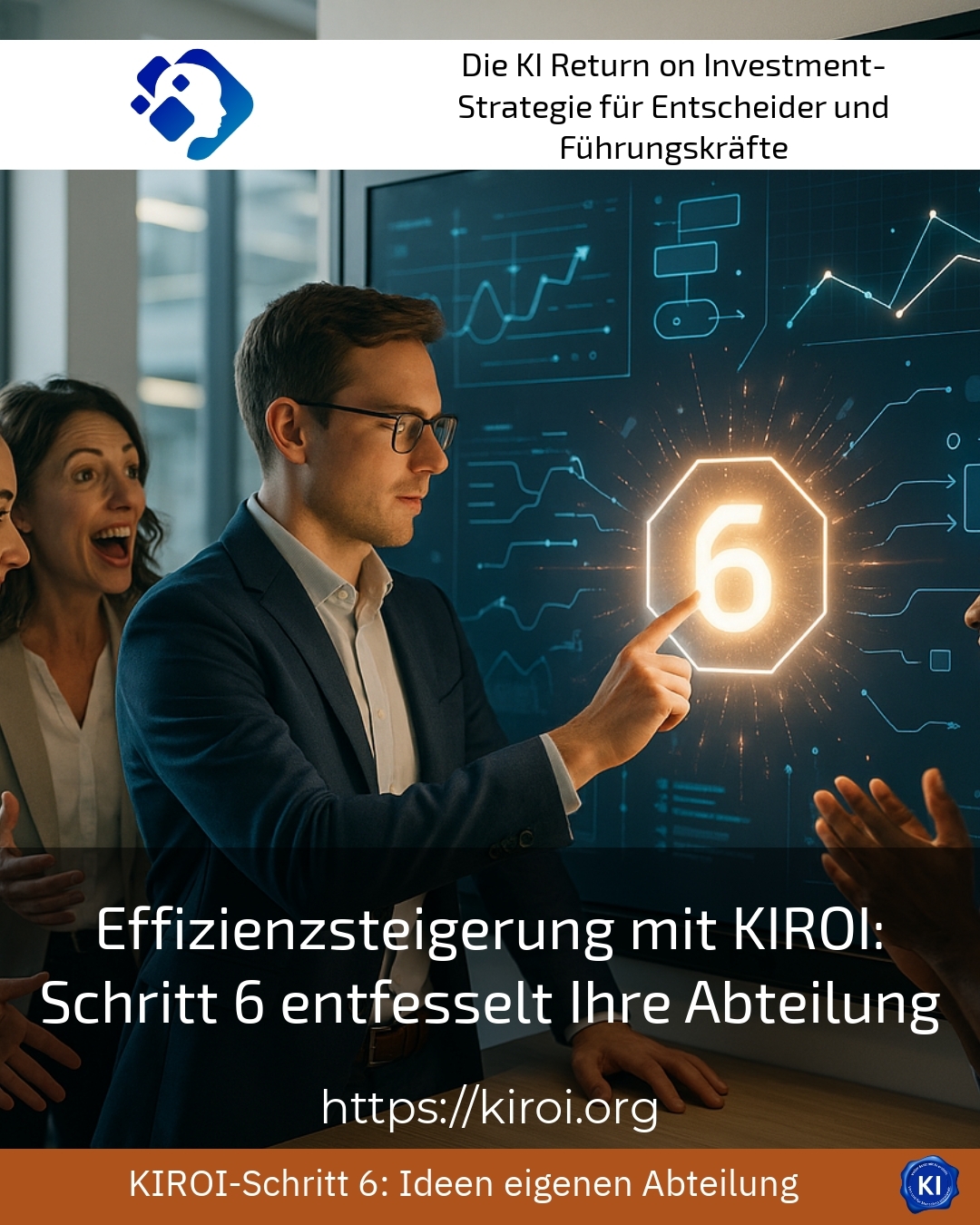
*Increasing efficiency* is a central concern for many companies aiming to optimise and sustainably improve their operations. Step 6 in transruptions coaching with KIROI plays a crucial role here because it possesses the liberating power to elevate their department to a new level of performance. This step supports managers and employees in breaking down rigid structures and designing flexible processes that make everyday work more productive. Below, we explain in a practical way how this important process impulse can be applied and utilised in various industries.
Increase efficiency by unleashing your department
The sixth step in increasing efficiency specifically addresses the individual needs of departmental structures. In medium-sized businesses, for example, manufacturing managers report that collaboration between production, quality control, and logistics has been noticeably improved through newly established communication channels. This allows bottlenecks to be identified and resolved more quickly. At the same time, sales managers in the service sector state that better-coordinated team processes enable them to handle customer inquiries not only faster but also more precisely.
Another impulse comes from the IT sector, where flexible working models have been introduced which give employees more autonomy and thus also more motivation. This leads to faster project implementation and reduces internal delays.
BEST PRACTICE with one customer (name hidden due to NDA contract) As part of the transruption coaching, a significant boost in productivity was achieved in a medium-sized manufacturing company through the introduction of transparent process models and the consistent empowerment of team leaders. The department was „unleashed“ in such a way that hidden resources were activated and time-consuming coordination processes were significantly reduced. The result was a measurable efficiency increase of around 15 percent within six months.
Practical examples from various industries
In mechanical engineering, the modified control of workflows through step-by-step adjustments allows for less downtime and reduced production errors – also through better communication between development and manufacturing.
2. In financial services, teams report faster decision-making processes because interfaces between business departments and compliance have been redefined thanks to structured workshops.
3. In retail, Step 6 supported the implementation of flexible shift schedules and ordering processes, leading to increased customer satisfaction and reduced overstock.
How step 6 supports sustainable efficiency improvement
Efficiency improvements are not solely achieved through technical measures, but through changes in the interaction between people within a department. Step 6 helps to unleash the freed-up potential through targeted communication, assumption of responsibility, and a joy for innovation. Practical examples show:
- A digital product manufacturer combined classic Lean methods with agile working processes, which allowed projects to be completed faster and budgets to be adhered to.
- In the healthcare sector, ward managers benefited from clearly defined process standards that structure daily nursing work and enable better resource utilisation.
- In logistics, greater employee involvement in decision-making processes led to increased initiative and fewer errors in picking.
These examples show that it's not about rigidly optimising processes, but about harmonising people and systems, so that productivity and job satisfaction grow together.
Practical recommendations for implementation
Alongside transruption coaching, the following tips can help actively shape the change in Step 6:
- Encourage regular feedback loops to jointly reflect on processes and openly identify areas for improvement.
- Encourage your leaders to delegate more responsibility to team members and reward initiative.
- Use digital tools to increase transparency regarding tasks, responsibilities, and progress.
Such impulses are valued by many companies because they support an increase in efficiency through a change in communication culture and collaboration.
My analysis
Efficiency gains are particularly successful when not only technical optimisations but also people and structures are involved. Step 6 at KIROI unleashes the department by providing impetus for more self-organisation, clarity, and improved collaboration. Companies from various industries report that this combination in particular moves them forward sustainably. It is evident that real progress usually emerges where change processes are not just planned, but also lived.
Further links from the text above:
[1] Methods and strategies for process optimisation
[5] Increasing company efficiency: Tips & Strategies
[6] Increasing efficiency in your company: 7 simple steps
[7] Process Optimisation » 8 Methods + Tools at a Glance
[8] 7 Methods to Improve Business Efficiency
[9] Boost Company Productivity: 10 Effective Methods
For more information and if you have any questions, please contact Contact us or read more blog posts on the topic Artificial intelligence here.







 Deutsch
  English (UK)