
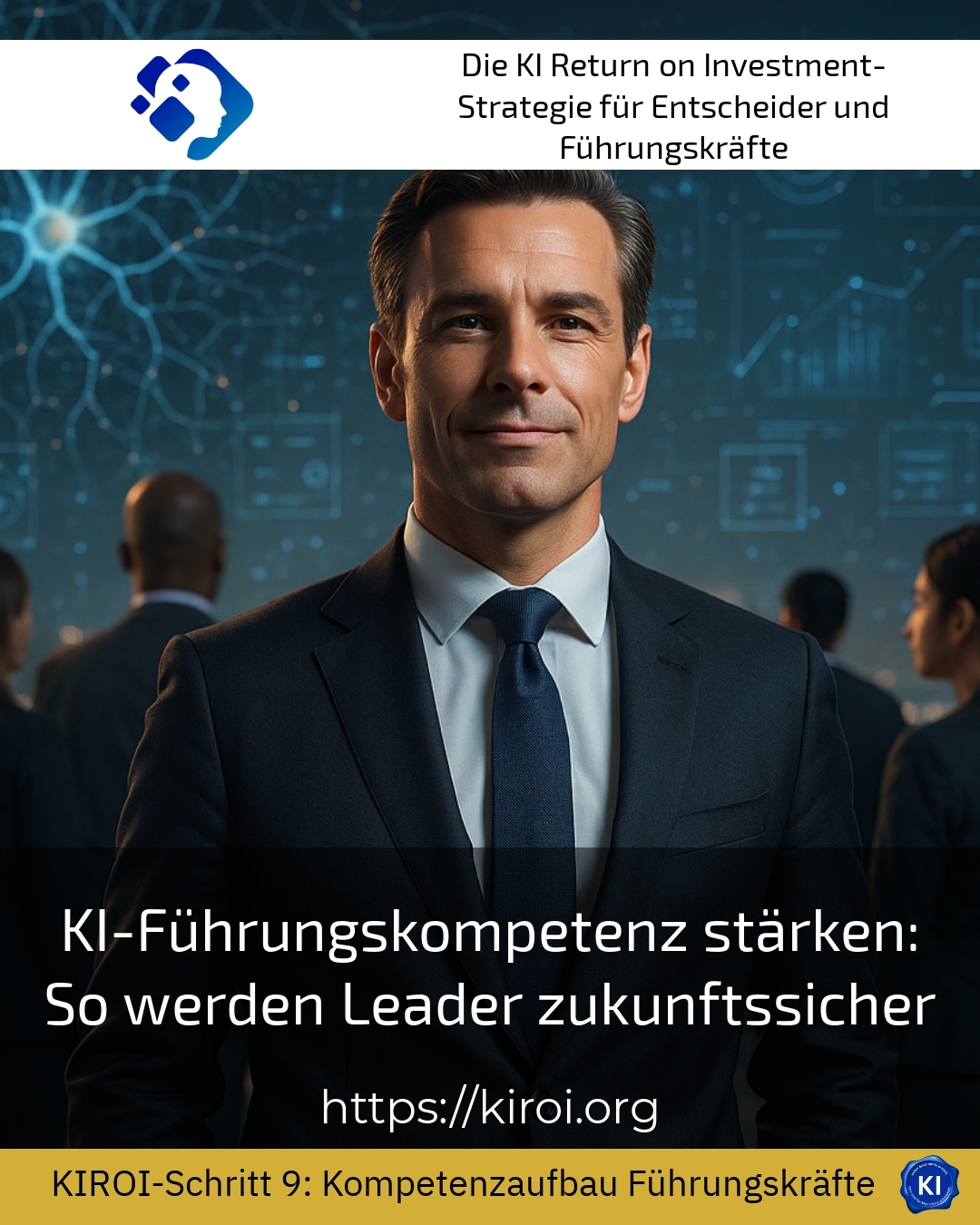
Can executives who do not deal with intelligent systems today still play a role in the business world tomorrow? This question currently concerns numerous decision-makers in boardrooms, and it shows how urgent the issue is. Strengthening AI Leadership Competence It has become a reality. The rapid development of algorithmic technologies not only changes business models and processes, but also places entirely new demands on those who must navigate these transformations. For those who want to be future-proof as leaders, it is necessary to understand how intelligent systems work, what opportunities they offer, and how to lead teams through times of change. It is not about becoming a programmer yourself, but about asking the right questions and making strategic decisions based on sound foundations.
The transformation of leadership in the digital age
The traditional view of leadership is currently undergoing a fundamental transformation. In the past, it was often sufficient to bring technical expertise and experience to the table. Today, employees, boards of directors, and investors expect leadership figures to understand and be able to assess technological developments. This expectation is particularly evident in the way they handle data-driven decision-making processes. Leaders must learn to critically question algorithmic recommendations. At the same time, they should recognize when machine analyses are superior to human intuition.
A medium-sized manufacturing company faced the challenge of optimizing its production lines. The management initially hesitated to introduce data-driven predictive models. However, after intensive guidance, the leadership team recognized the enormous potential. The production management began to adjust maintenance intervals based on sensor data. The result was a significant reduction in unplanned downtime.
A logistics company used intelligent route planning for its fleet. The dispatchers learned to work with the system suggestions while retaining their expertise for special cases. The combination of human knowledge and algorithmic optimization led to measurable savings.
In retail, a branch management team experimented with automated order suggestions. The system analyzed sales patterns and weather data. The manager learned to contextualize the recommendations. In local events, she deliberately intervened in a corrective manner.
Strengthen AI leadership skills through strategic understanding
Strengthening of AI leadership skills It does not start with technical detail knowledge, but with a strategic understanding of the possibilities and limitations of intelligent systems. Executives who develop this competence are better able to assess which processes are suitable for automation and where human judgment remains indispensable. They understand that algorithms recognize patterns in data, but cannot make ethical judgments. This distinction is fundamental for responsible leadership in the digital age.
Best practice with a AIROI customer
An internationally operating service company approached us because the senior management was unsure how to deal with the growing pressure to modernize technologically. The management had realized that various departments were already experimenting with intelligent tools independently, without a comprehensive strategy in place. As part of the transruptions coaching process, we jointly developed a competency model for the senior management. This model clearly defined what understanding senior management needed and where external expertise should be brought in. The structured dialogue between IT managers and department heads, which we moderated, was particularly valuable. Clients often report that only through these conversations did a shared understanding emerge. The managers learned to ask the right questions and to meaningfully prioritize pilot projects. After six months, the company had developed a coherent digital strategy that was supported by all levels of management.
A financial services provider trained its executives in handling automated risk assessments. The managers learned to interpret model results and to question them critically. They developed an understanding of situations where additional human review was required.
In the HR sector, a company used algorithmic preselection of applications. The human resources manager established clear guidelines for the use of these systems. She ensured that final decisions were always made by humans.
The importance of emotional intelligence in the technological transformation
Paradoxically, emotional intelligence is gaining importance precisely in times of increasing automation. Leaders must recognize and address fears and uncertainties in their teams. Many employees fear for their jobs or feel overwhelmed by technological changes. Empathic communication is needed here, providing guidance and showing perspectives. Leaders who cultivate this ability create trust and enable a constructive approach to change [1].
An insurance company implemented automated claims processing. The manager invested a lot of time in one-on-one meetings with the claims handlers. She pointed out how their role would evolve towards more complex cases. This transparent communication significantly reduced resistance.
In a call center, chat bots were implemented for standard inquiries. The team leader actively guided her employees through the transition. She emphasized the new value of personal customer service for complex requests.
Practical ways to develop competencies for executives
Building relevant competencies requires a structured approach that includes both theoretical knowledge and practical experience. Many executives report that they were initially overwhelmed by the abundance of information and opportunities. A proven starting point is to engage with concrete use cases from their own industry. This makes abstract technology tangible and relevant to their own area of responsibility [2].
A business company organized regular technology breakfasts for its senior management. External experts presented practical examples and answered questions. These low-threshold formats proved to be particularly effective for knowledge building.
A hotel chain sent its executives on work visits to technology-oriented partner companies. There, the managers experienced how intelligent systems work in everyday life. These experiences significantly accelerated their own digital transformation.
A media company established a reverse mentoring program. Younger, technically skilled employees accompanied experienced executives. Both parties benefited from this cross-generational exchange.
The role of transruption coaching in developing AI leadership competence
Accompanying by experienced coaches can significantly accelerate and deepen the development of skills. Transruptive coaching helps leaders identify their individual development areas and work on them in a targeted manner. This is not about standardized training programs, but about tailored impulses that take into account the specific context and personal challenges. Clients often report that it is precisely the reflection of their own mindsets and reservations that has brought about a significant breakthrough.
Best practice with a AIROI customer
A traditional family business in the manufacturing sector faced a generational change in leadership. The senior managing director had successfully led the company for several decades, but found himself overwhelmed by the increasing digitalization. His son, who was to take over the succession, brought technical understanding, but had little leadership experience. In transruptive coaching, we accompanied both generations together and individually. We worked on connecting the respective strengths and developing a common vision for the company’s digital future. The senior learned to constructively incorporate his skepticism towards new technologies, rather than allowing them to act as a barrier. The junior developed an understanding of the company’s growing culture and learned to introduce changes carefully. After eighteen months of guidance, the generational change was successfully completed, and the company had launched several pilot projects for process automation.
A construction company used coaching to prepare its project managers for digital planning tools. The individual support helped to reduce fear of failure. The project managers developed confidence in their ability to master new technologies.
Strengthening AI leadership competencies through ethical reflection
An often underestimated aspect of AI leadership skills is the ability to reflect ethically. Intelligent systems make or influence decisions that directly affect people. Leaders have the responsibility to ensure that these systems are used fairly, transparently, and in line with corporate values. This responsibility requires an understanding of potential biases in data and algorithms, as well as the willingness to ask critical questions [3].
A bank implemented a credit scoring system. The senior management established an ethics committee that regularly reviewed the decision logic. In doing so, problematic patterns were identified and corrected.
A healthcare provider used algorithms to prioritize patient contacts. The medical leadership reserved the right to always validate the results manually. This combination proved ethically acceptable and practically effective.
A staffing provider tested its automated matching algorithms for unconscious discrimination. The management invested in independent audits. This transparency strengthened trust among applicants and client companies alike.
The art of human-machine collaboration
Future-proof leaders understand that it’s not about human versus machine, but about productive collaboration. They design work processes so that human and algorithmic strengths are optimally combined. They recognize that machines are superior in processing large amounts of data and recognizing patterns. Humans, on the other hand, bring creativity, ethical judgment, and emotional intelligence.
An architectural firm used generative design tools as a source of inspiration. The architects used the algorithmic suggestions as a starting point for their creative work. The final design was always in human hands.
A law firm implemented intelligent research systems. The lawyers used the rapid document analysis to prepare their cases. The legal assessment and argumentation remained their exclusive domain.
A marketing agency combined data-driven audience analysis with creative storytelling. The strategists understood the algorithmic insights as a tool. They continued to craft the emotional appeal of the customers themselves.
My AIROI Analysis
The development of AI leadership skills It is no longer an option, but a necessity for anyone who wants to take responsibility in leadership positions. My analysis shows that successful leaders must combine three key skills. First, they need a strategic understanding of the possibilities and limitations of intelligent systems. This understanding need not be deeply technical, but it must be thorough enough to ask the right questions and make meaningful decisions. Second, emotional intelligence paradoxically gains importance in the age of automation. Leaders must accompany their teams through change, address fears, and establish a positive culture of change. Third, the use of intelligent systems requires a keen ability to reflect ethically. Executives must understand the impact that algorithmic decisions can have on people, and they must be willing to take responsibility for these impacts. The AIROI-approach supports executives in systematically developing and integrating these three dimensions into their leadership practices. The guidance provided by experienced coaches can significantly accelerate and deepen this process. However, the readiness of the executive themselves to engage in a continuous learning process is crucial. Because technological development does not stand still, and future-oriented leaders understand that they must constantly develop their competencies.
Further links from the text above:
[1] Harvard Business Review – Leadership Insights
[2] McKinsey – People and Organisational Performance
[3] World Economic Forum – Artificial Intelligence
For more information and if you have any questions, please contact Contact us or read more blog posts on the topic Artificial intelligence here.








 Deutsch
  English (UK)