
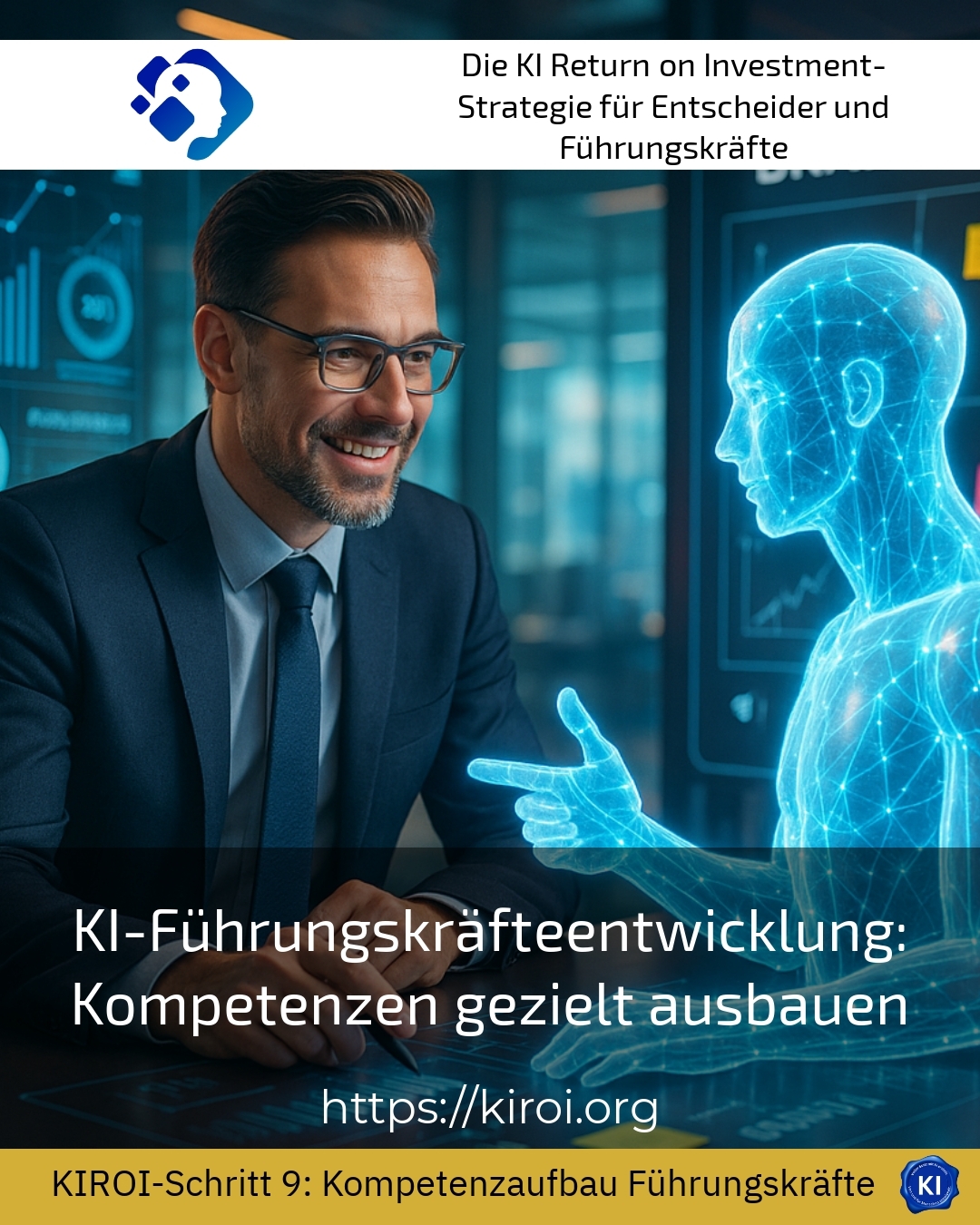
The world of work is changing rapidly, and those in positions of responsibility today face entirely new challenges. Leaders no longer just have to coordinate teams and manage budgets. They must understand how intelligent systems can support decision-making. They need to learn to work with algorithms and take their employees along on this journey. AI Leadership Development: Targeted Competency Enhancement becomes the decisive success factor for companies across all sectors. But how can this transformation be achieved in practice? What skills do modern leaders really need? And how can organisations systematically prepare their talent for the future? These questions occupy decision-makers worldwide, and the answers are more multifaceted than initially assumed.
Why classic leadership models are reaching their limits
Traditional leadership concepts are based on hierarchies and clear chains of command. The manager delegates tasks and controls the results. This model worked for decades in stable environments. Today, however, we are experiencing a fundamental shift in demands. Intelligent assistance systems are taking over routine tasks and delivering analyses in seconds. This fundamentally changes the role of the leader. They become a curator of information, a mentor for teams, and a designer of change processes.
In retail, for example, store managers today use automated inventory analyses for their planning. They need to be able to interpret this data and combine it with their own experience. In the logistics sector, dispatchers coordinate complex supply chains using intelligent optimisation systems. However, interpersonal leadership tasks remain, as employees need guidance and appreciation. The leadership level is also changing in the healthcare sector. Senior physicians work with diagnostic systems and must be able to critically assess their recommendations. The ability to cooperate constructively between humans and machines is becoming a core competence.
AI Leadership Development: Targeted Skill Enhancement Through Structured Programmes
Effective development programmes follow a well-thought-out structure and take individual starting situations into account. They combine theoretical knowledge with practical application scenarios from the respective work environment. The aim is not to train managers to become technology experts. Rather, they should develop an understanding of the potential and limitations of intelligent systems. They should learn to ask the right questions and make informed decisions.
In the banking sector, for example, this means that department heads need to understand how credit scoring algorithms work and be able to recognise when human expertise is required. In the insurance industry, team leaders analyse automatically generated damage reports, needing to identify outliers and assess ethical questions. The pharmaceutical industry uses intelligent systems for research processes and clinical trials, where research managers require a deep understanding of data-driven methods and their validity.
Best practice with a AIROI customer A medium-sized manufacturing company with around five hundred employees came to us with a clear challenge. Management had observed that leaders at all levels were unsure how to handle new technologies. At the same time, there was increasing pressure to make processes more efficient and to make better use of quality data. As part of a transruption coaching programme, we supported the company over a period of six months. We began by jointly analysing existing competencies and identifying specific development areas. We then developed tailor-made learning modules that were oriented towards the actual work situations of the leaders. The production managers learned how to interpret automated quality reports and derive recommendations for action. The department heads in purchasing gained a better understanding of how price forecasts are generated and where human judgement remains necessary. The exchange of experiences between leadership levels was particularly valuable, as it fostered a shared understanding. After the programme concluded, participants reported a significantly increased confidence in their day-to-day actions.
Emotional Intelligence as an indispensable supplement
Technological competence alone is not enough for successful leadership. The more routine tasks that are automated, the more important interpersonal skills become. Leaders must take the fears and resistance within their teams seriously. They must provide direction in times of rapid change. And they must create a culture that promotes a willingness to experiment and learn.
In the hotel industry, we observe this change particularly clearly. Hotel managers work with intelligent booking systems and personalised guest profiles. At the same time, the emotional connection to employees and guests remains crucial for success. In skilled trades, master craftspeople use planning software and automated calculation tools. However, they must continue to be able to motivate their journeymen and encourage their development. The leadership role is also changing in educational institutions. School principals evaluate learning outcomes using data-based analyses while simultaneously shaping school culture.
Practical ways for AI leadership development: Targeted skill building in everyday life
Effective skills development doesn't just happen in seminar rooms. It requires continuous reflection and application in daily actions. That's why we recommend a combination of formal learning opportunities and informal exchange formats. Mentoring programmes connect experienced leaders with junior talent for mutual learning. Peer learning groups enable regular exchange of experience at eye level. And micro-learning formats deliver compact knowledge boosts for everyday work.
The automotive industry is increasingly embracing such integrated approaches for its leaders. Plant managers regularly exchange experiences with predictive maintenance systems. In the energy sector, grid managers learn from each other how to best utilise intelligent control systems. The media sector trains editorial managers in the use of automated analysis tools for user data. All these examples show that industry-specific adaptations are crucial for learning success.
The role of transruption coaching in transformation projects
Many executives report feeling overwhelmed by the speed of change. They don't know where to start or what priorities to set. This is precisely where professional support comes in, providing valuable impulses for individual development paths. Transruption coaching supports executives in recognising their own strengths and areas for development. It helps them develop and implement personal learning strategies. And it accompanies them in the practical application of new skills in their daily work.
In the legal sector, for example, law firm partners are increasingly using intelligent research systems for their work. The transition requires new working methods and changed quality assurance processes. In the construction industry, project managers work with automated scheduling systems and resource optimisation. They must learn to critically question the results and reconcile them with their experience. The topic is also gaining importance in non-profit organisations. Managing directors use data-based analyses for fundraising strategies and impact measurement.
Best practice with a AIROI customer A municipal administration with several thousand employees sought support in developing their leaders. The challenge was that different departments had very diverse requirement profiles. In citizen services, the focus was on dealing with chatbots and automated application processing systems. In urban planning, the emphasis was on geodata analyses and simulation tools. The HR and Organisational Department wanted to advance data-based personnel development but initially needed a shared understanding. Together, we developed a modular programme that conveyed basic competencies for everyone while simultaneously allowing for specialised deepenings. The involvement of the staff council from the outset was particularly important because it fostered acceptance and trust. The leaders particularly valued the opportunity for cross-departmental exchange. They recognised that many challenges were similar and that they could learn from each other. After the completion of the first phase, the administration's leadership decided to permanently embed the programme.
Ethical Reflection as a Leadership Task
Modern leaders bear responsibility for the ethically sound deployment of intelligent systems. They must be able to assess issues of transparency, fairness, and data security. They need to recognise where boundaries lie and when human decisions are absolutely necessary. This capacity for reflection can be developed, but requires dedicated engagement with case studies and dilemmas.
In human resources, for example, applicant tracking systems are used with automated pre-selection. HR managers must understand what biases can arise. In customer service, contact centre managers use sentiment analysis and automated quality assessments. They must use these tools responsibly and treat employees fairly. Ethical questions also arise in journalism when automated systems support news selection. Editors-in-chief must be able to ensure editorial independence and quality.
My AIROI Analysis
The systematic development of leadership skills for a technology-driven world of work is no longer an option. It is a strategic necessity for any organisation that wants to remain fit for the future. It is repeatedly shown that technological knowledge alone is not enough. Successful leaders combine it with emotional intelligence and ethical reflection. They build trust within their teams and foster a culture of continuous learning. Examples from various industries illustrate how diverse the fields of application are. From craft businesses to municipal administrations, from hospitals to media companies, leaders face similar fundamental challenges. They must learn to work with intelligent systems and leverage their potential. At the same time, they must not neglect the human dimension of leadership. Professional support through structured development programmes and individual coaching can significantly facilitate this path. "Transruptions-Coaching" offers a proven framework for sustainable change processes. Investing in leadership development pays off in the long term because it strengthens the agency and innovative power of the entire organisation. Those who start systematically preparing their leaders for the future today create a valuable competitive advantage.
Further links from the text above:
[1] McKinsey: Future of Work Insights
[2] Harvard Business Review: Leadership Articles
[3] World Economic Forum: Future of Work
[4] Gartner: Human Resources Research
For more information and if you have any questions, please contact Contact us or read more blog posts on the topic Artificial intelligence here.








 Deutsch
  English (UK)