
Will you still be relevant as a leader in the coming years if you are unable to actively facilitate collaboration with intelligent systems?
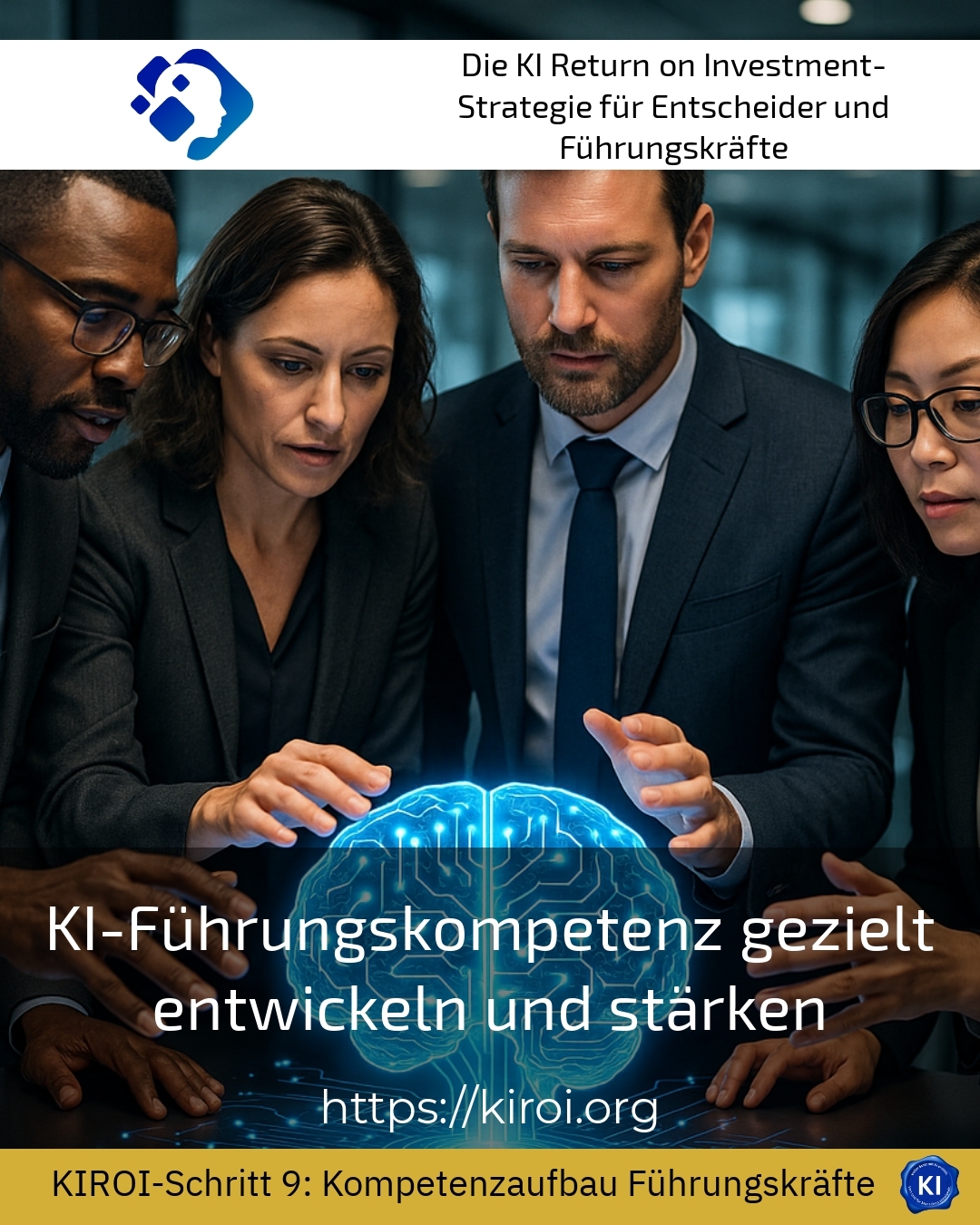
This question currently concerns decision-makers in almost all sectors of the economy, as the requirements for leadership are changing fundamentally and irreversibly. The ability to specifically develop and strengthen AI leadership skills is increasingly determining professional success and organizational competitiveness. This is no longer just about technical understanding, but about a new form of leadership in the context of algorithmic decision support. Leaders often report uncertainty when leading teams that must integrate both human and machine intelligence. This is precisely where targeted support can provide the impetus for sustainable change processes.
The new reality of leadership in technology-driven companies
The workplace is transforming at a speed that poses significant challenges for many leaders. Traditional leadership models based on hierarchical control and linear decision-making are reaching their limits. Companies are increasingly implementing intelligent systems for customer analysis, process optimization, and strategic planning. A production manager in the automotive industry must now understand how predictive maintenance systems influence decisions. At the same time, a sales manager must recognize which customer segments prioritize algorithm-based recommendation systems. And a human resources manager should be able to understand how applicant management systems make pre-selection decisions.
These examples illustrate that leadership skills go far beyond traditional management abilities today. A chief financial officer in the banking sector recently reported that his role had fundamentally changed. Previously, he primarily analyzed numbers and reports. Today, he must understand which algorithms make risk assessments. Additionally, he must explain to his team why certain credit decisions are made in a certain way.
Best practice with a AIROI customer
A medium-sized logistics company faced the challenge of preparing its senior management for the implementation of a comprehensive route optimization system. The management team recognized early on that technical training alone would not be sufficient to create the necessary acceptance among the dispatchers and team leaders. As part of the transruptive coaching process, we developed a program together that enabled management to understand the logic behind algorithmic decisions and communicate them clearly to their teams. Particularly important was the realization that the system should not replace human experience but rather complement it. The team leaders learned to ask critical questions of the system and to constructively challenge its recommendations. After six months, measurable improvements were observed in employee satisfaction and acceptance of technological innovations. The turnover rate dropped significantly because employees no longer felt threatened by the technology.
Targeted development of AI leadership competencies through practical application
Theoretical knowledge about intelligent systems is not enough to lead effectively. Leaders must gain practical experience and reflect on it. In the healthcare industry, clinical management increasingly uses diagnostic support systems that assist radiologists in image analysis. A chief physician does not need to be able to program herself. However, she should understand the data basis on which the systems were trained and what their limitations are.
The same is true in retail, where store managers are confronted with automated ordering systems and dynamic pricing [1]. The ability to critically evaluate algorithmic recommendations distinguishes successful leaders from those who blindly trust or flatly reject them. A regional manager of a supermarket chain described his learning curve as intense but liberating. He suddenly understood why certain products were advertised at certain times.
In the financial sector, portfolio managers work with systems that analyze market movements and generate trading recommendations [2]. The challenge here is to effectively combine human judgment with machine analysis. Targeted guidance from experienced experts significantly supports the development process.
Communication as a key element of AI leadership competence
The ability to communicate technological changes in an understandable way is one of the most important leadership tasks of our time. Employees often have fears when new systems are introduced. They fear for their jobs or feel controlled by technology. A leader in the insurance industry reported that the introduction of a claims assessment system initially faced significant resistance. Only when she communicated transparently about how the system worked did the mood change.
In the media industry, editors face the task of explaining to their teams why certain content is prioritized algorithmically. A chief editor of an online magazine developed guidelines for dealing with recommendation algorithms together with his team. These guidelines helped to align journalistic standards with technical realities. In the manufacturing industry, plant managers must communicate how quality control systems work and why they discard certain parts.
Ethical Dimensions of Technology-Enabled Leadership
Executives bear responsibility for ethically justifiable decisions, even when algorithms prepare or support them. In personnel selection, for example, biased training data can lead to discriminatory results [3]. One female executive in the technology industry recognized this risk and initiated regular reviews of the selection systems used. She found that certain wording in job advertisements systematically disadvantaged certain applicant groups.
In customer service, companies are increasingly using chatbots and automated response systems. A customer service manager in the telecommunications sector had to decide in which cases human intervention remains necessary. This decision required both technical understanding and ethical judgment. In the credit industry, on the other hand, executives must ensure that automated credit decisions do not systematically disadvantage certain population groups.
Best practice with a AIROI customer
An energy provider wanted to prepare its executives for the implementation of an intelligent grid control system that would address both technical and ethical issues. The transruptive accompaniment focused on strengthening decision-making skills in ambiguous situations. The executives learned how to handle situations where algorithmic recommendations and human judgment diverged. Particularly valuable was the development of an escalation framework that defined clear responsibilities. The participants developed a deeper understanding of when to override system decisions and how to document this. This clarity significantly reduced uncertainties and led to a more confident leadership culture. The employees reported a strengthened trust in their supervisors because they were now able to competently categorize technological developments.
Empowering teams instead of controlling them
Modern leadership means empowering employees to collaborate autonomously with intelligent systems. In the e-commerce sector, merchandising teams use recommendation algorithms for product placement. One team leader realized that micromanagement was counterproductive in this context. Instead, she established regular reflection rounds in which the team jointly evaluated algorithmic suggestions.
In pharmaceutical research, scientists work with systems that analyze molecular structures and identify promising active ingredients. The research leadership must foster a culture that understands machine learning as a starting point for human creativity [4]. One laboratory director described how his team initially adopted algorithmic suggestions without reflection. It was only through targeted development efforts that the scientists learned to critically question. In the construction industry, planning systems, in turn, support architects in optimizing material use and energy efficiency.
Establishing continuous learning as a leadership principle
Technological development is advancing so rapidly that one-time learning is not enough. Leaders must demonstrate a continuous willingness to learn and embed it in their organizations. In the education sector, school principals are experimenting with adaptive learning systems that customize teaching content individually. One school principal reported that she was initially skeptical herself. However, through her own engagement with the system, she developed a well-founded judgment.
In the hospitality industry, revenue managers use dynamic pricing systems that respond to fluctuations in demand. A hotel manager recognized that his executives needed regular updates to keep up with system developments. He established monthly learning formats in which teams explored new features together. In agriculture, farm managers work with precision agriculture systems that analyze soil data and generate fertilizer recommendations.
The ability to specifically develop and strengthen AI leadership competencies therefore requires a mindset of lifelong learning. Clients often report that exactly this attitude makes the crucial difference.
My AIROI Analysis
The discussion about technology-driven leadership clearly shows that traditional competency models need to be expanded. Leaders face the challenge of combining human strengths such as empathy, creativity, and ethical judgment with technological understanding. This integration does not happen automatically; it requires conscious development efforts. The numerous industry examples illustrate that each company requires individual approaches. A uniform program cannot meet the diversity of requirements. Therefore, professional guidance by experienced experts is particularly valuable. It provides inspiration without imposing prefabricated solutions.
It seems particularly important to me the realization that technical competence alone is not enough. The ability to communicate transparently and to reflect ethically distinguishes excellent leaders from average ones. Organizations that invest in developing these competencies will be more competitive in the long run. They will be able to retain employees who feel taken seriously and supported. The transruptive support provided during projects related to technological transformation has shown that change processes are successful when leaders are perceived as competent guides. This role requires continuous self-reflection and the willingness to acknowledge one’s own uncertainties. Authenticity creates trust, and trust is the foundation of successful leadership in uncertain times.
Further links from the text above:
[1] Harvard Business Review: Technology and Business Strategy
[2] McKinsey Digital Insights: AI in Business
[3] World Economic Forum: Artificial Intelligence and Ethics
[4] MIT Sloan: Artificial Intelligence Research
For more information and if you have any questions, please contact Contact us or read more blog posts on the topic Artificial intelligence here.











 Deutsch
  English (UK)