
Why do so many companies fail to utilize the brilliant ideas of their own employees, even though they are right in front of them every day and are just waiting to be discovered?
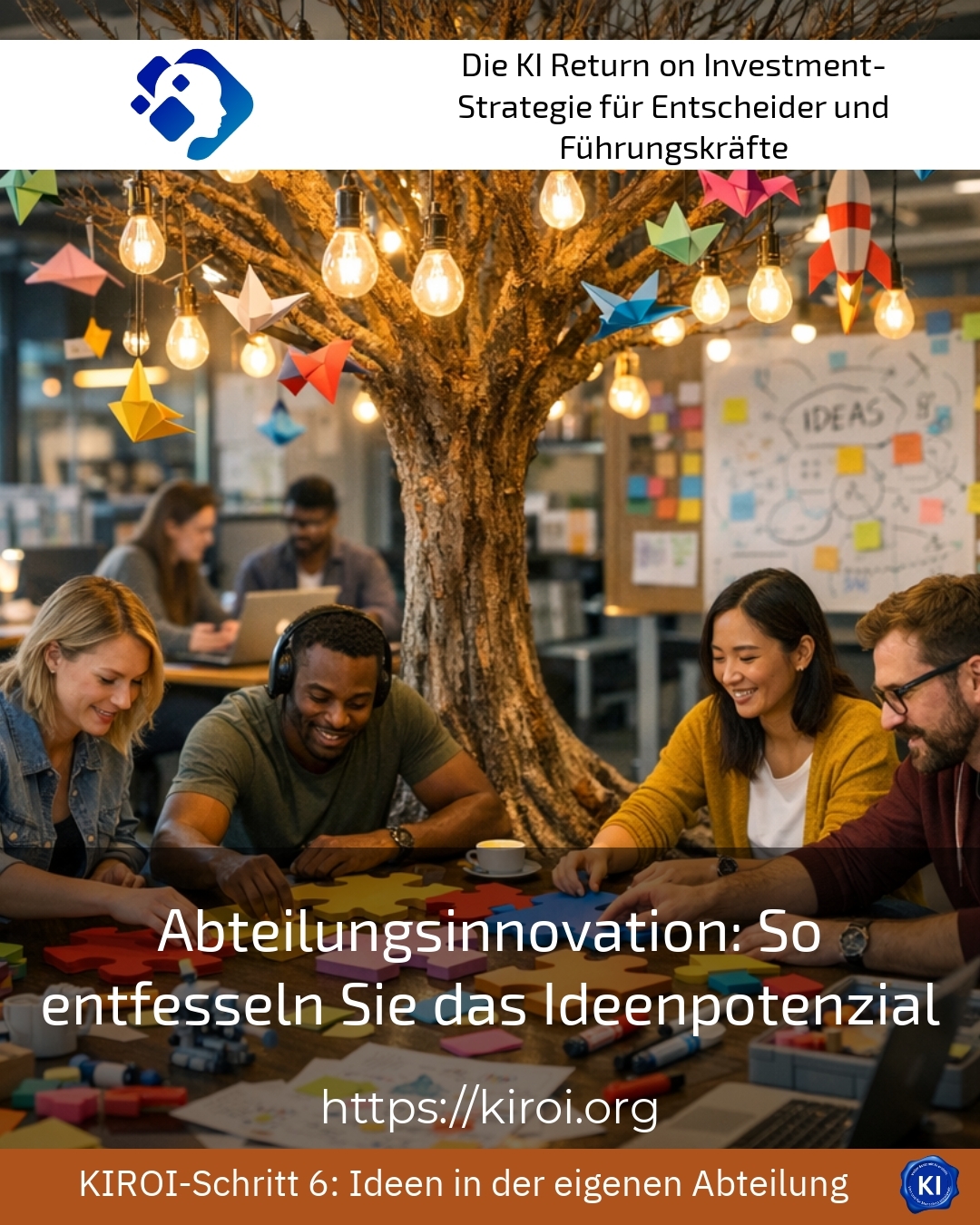
In almost every organization, a vast reservoir of untapped potential lies dormant, waiting to be unleashed through targeted action. Departmental Innovation It is often reported by executives that their teams are filled with smart minds whose ideas never see the light of day. This discrepancy between existing knowledge and actually implemented innovations represents one of the biggest obstacles to sustainable growth. Experience from a wide range of sectors shows that structured approaches to idea generation can achieve measurable success. However, guiding such transformation processes requires a deep understanding of organizational dynamics and human motivational factors.
Recognize and highlight the hidden assets in your teams
Each department possesses unique expertise that is hardly accessible from the outside. Employees in production monitor process flows daily and immediately recognize opportunities for optimization. In sales, colleagues collect valuable feedback directly from customers. Administrative teams identify bureaucratic hurdles faster than any external consulting. However, these insights often remain untapped and get lost in day-to-day operations.
For example, a manufacturing company in the mechanical engineering sector discovered through systematic employee surveys that the assembly department had been practicing an alternative workflow for years that functioned significantly more efficiently than the officially prescribed method. A logistics service provider recognized through similar measures that its warehouse workers had long since developed their own sorting strategies that significantly shortened the picking time. In a medium-sized craft business, the structured collection of improvement suggestions led to over two hundred concrete ideas being submitted within a year.
Best practice with a AIROI customer
A traditional family-run metalworking company turned to transruptive coaching because management felt that innovative ideas were increasingly being lost from within the organization. In the collaborative analysis, it emerged that a strictly hierarchical communication system was responsible for the fact that ideas were regularly sent up the chain or diluted along the way. Together we developed a digital proposal system that enabled direct communication channels between all levels while ensuring anonymity. Within the first three months, eighty improvement suggestions were submitted, twelve of which could be immediately implemented. One shift supervisor submitted a proposal for tooling organization that reduced setup times by fourteen percent. An intern developed an idea for waste prevention that enabled annual savings in the five-digit range. The support provided by transruptive coaching helped overcome cultural resistance and establish a sustainable innovation culture.
Fostering departmental innovation through psychological safety
Creativity flourishes only in an environment that views mistakes as learning opportunities. When employees fear being criticized for unconventional suggestions, they hold back their ideas. Psychological safety therefore forms the foundation for any successful innovation initiative. Leaders have a responsibility to actively create such spaces.
In a large bakery, the introduction of weekly brainstorming sessions led to a remarkable cultural change because the management consistently valued every suggestion and never tolerated derogatory comments. A software development company established so-called Failure Fridays, where teams openly discussed failed projects and drew insights from them. A retail company set up anonymous idea boxes to give a voice to even reserved personalities.
These examples illustrate that Departmental Innovation It is not a purely technical matter. Rather, it is a deeply human process that requires trust and appreciation. Clients often report that even small gestures of recognition can have enormous impact. A simple thank you for a submitted proposal often motivates more than financial rewards.
Creating structures that do not stifle creativity
Paradoxically, creativity requires certain structures to flourish. Complete freedom often leads to disorientation and overwork. Clear processes for submitting and evaluating ideas, on the other hand, provide certainty. Transparent criteria for selecting projects avoid frustration.
An automotive supplier implemented a three-stage evaluation system that spanned from the initial concept sketch to the implementation planning process, defining clear milestones along the way. A pharmaceutical company established cross-departmental innovation circles that met monthly to develop promising concepts. An energy provider established a digital dashboard where all submitted proposals, along with their status, were visible to the entire workforce.
The role of leaders in departmental innovation
Supervisors act as gatekeepers or blockers for innovative impulses. Their attitude significantly shapes whether employees dare to express unusual ideas. Authoritarian leadership styles stifle creativity at its source and prevent constructive exchange. Participatory approaches, on the other hand, encourage active co-creation.
In a construction company, a single new department head fundamentally changed the innovation culture by regularly visiting the construction sites and speaking with the tradespeople about improvement opportunities. A financial services provider trained all executives in active listening and appreciative communication techniques. A manufacturing industry introduced reverse mentoring programs in which younger employees provided new perspectives to senior executives.
Best practice with a AIROI customer
A service company with several hundred employees sought guidance because despite numerous initiatives, they did not want to create a real innovation dynamic. During the analysis as part of the transruptive coaching, it quickly became apparent that the middle management acted unconsciously as a brake on innovation because it feared additional work and saw its own status at risk. Together we developed a program tailored specifically to this leadership level that addressed both fears and provided concrete tools. The team leaders learned how to take up and develop suggestions from their employees without endangering their own position. Additionally, we established an incentive system that rewarded leadership for successful innovations within their teams, rather than punishing them for perceived losses of control. After six months, the number of implemented improvement suggestions had tripled, and employee satisfaction had measurably increased. The guidance provided by transruptive coaching enabled a gentle cultural change without confrontation.
Use technological tools wisely
Digital platforms can significantly accelerate and democratize innovation processes. They enable cross-location collaboration and systematically document ideas. However, technology must never become an end in itself and must always serve the human being. Selecting suitable tools requires careful consideration [1].
An international corporation implemented an ideas management software that enabled employees worldwide to submit and evaluate proposals, resulting in over three thousand ideas collected within a year. A medium-sized company used simple collaboration tools to conduct virtual brainstorming sessions and also included teams working remotely. A retail company implemented gamification elements to increase participation in the innovation process in a playful way [2].
Overcoming obstacles and constructively using resistance
Any change initiative faces resistance that may have various causes. Some people fear the loss of routines and security. Others doubt the seriousness of management or have experienced previous disappointments. These concerns deserve serious attention rather than superficial reassurances.
In a chemical company, the open discussion about past failed innovation projects led to a healthy build-up of trust because the management admitted its own mistakes and promised concrete improvements. An insurance company set up feedback loops that ensured that idea generators were always kept informed about the status of their proposals. A media company formed innovation ambassadors who acted as multipliers within their respective departments [3].
The Departmental Innovation It can only be successful in a sustainable way if it is not seen as a one-time project but as an ongoing process. External impulses can provide valuable support and uncover blind spots. At the same time, the organization itself must develop the ability to maintain innovative energy sustainably.
Measuring and visualising successes
What is not measured quickly fades into oblivion and loses its importance. Key performance indicators create transparency and enable targeted management. However, not only quantitative metrics such as the number of proposals should be considered; qualitative aspects such as employee engagement deserve equal attention.
A technology company introduced an innovation index that was compiled quarterly and captured various dimensions from idea generation to speed of implementation. A consumer goods manufacturer established storytelling formats in which successful innovations and the people behind them were portrayed. A healthcare provider linked innovation goals to regular employee discussions, making them an integral part of personnel development.
Best practice with a AIROI customer
A company in the food industry faced the challenge that, although its innovation efforts generated many activities, they showed hardly any measurable results. As part of the coaching process, we developed a balanced set of metrics together that captured both input metrics such as participation rates and output metrics such as realized savings. Particularly important was the visualization of the achievements in the form of dashboards that were displayed visibly in all departments. We also integrated soft factors such as the perceived innovation friendliness of the corporate culture, which was collected through regular pulse surveys. After one year, the company was able to demonstrate that the implemented improvement proposals had enabled cost savings amounting to six figures. What was even more important, however, was that employees felt more connected and the identification with the company had increased measurably. Continuous support helped maintain the momentum and constructively process setbacks.
My AIROI Analysis
Unleashing the potential of ideas in organizations represents one of the most challenging and rewarding tasks that leaders can undertake. My experience from numerous mentoring projects shows that Departmental Innovation It never succeeds through isolated measures but always requires a holistic approach that addresses structures, culture, and individual competencies alike. In this regard, I have repeatedly observed that the greatest obstacles often lie not in a lack of resources or missing ideas, but in deeply rooted behavioral patterns and unconscious assumptions that only become visible through patient reflection work.
What seems particularly significant to me is the realization that true innovation culture cannot be imposed but must grow organically, with external impulses and professional guidance being able to significantly accelerate and secure this process. The role of transruptive coaching is not to provide ready-made solutions, but rather to ask the right questions and open up spaces where new perspectives can emerge. Clients often report that simply engaging systematically with the topic already yields valuable insights, even before concrete measures are implemented.
For the future, I see the need to further link innovation processes with questions of sustainability and social responsibility, because the best ideas are those that not only create economic benefits but also make a positive contribution to the common good. Companies that succeed in combining these dimensions will, in the long run, attract more engaged employees and be more resilient to the challenges of a rapidly changing world [4].
Further links from the text above:
[1] Harvard Business Review: Innovation
[2] McKinsey: The Eight Essentials of Innovation
[3] Forbes Innovation
[4] World Economic Forum: Innovation Agenda
For more information and if you have any questions, please contact Contact us or read more blog posts on the topic Artificial intelligence here.










 Deutsch
 English (UK)