
Have you ever wondered why some companies extract golden nuggets from the flood of information while others drown in a sea of numbers?
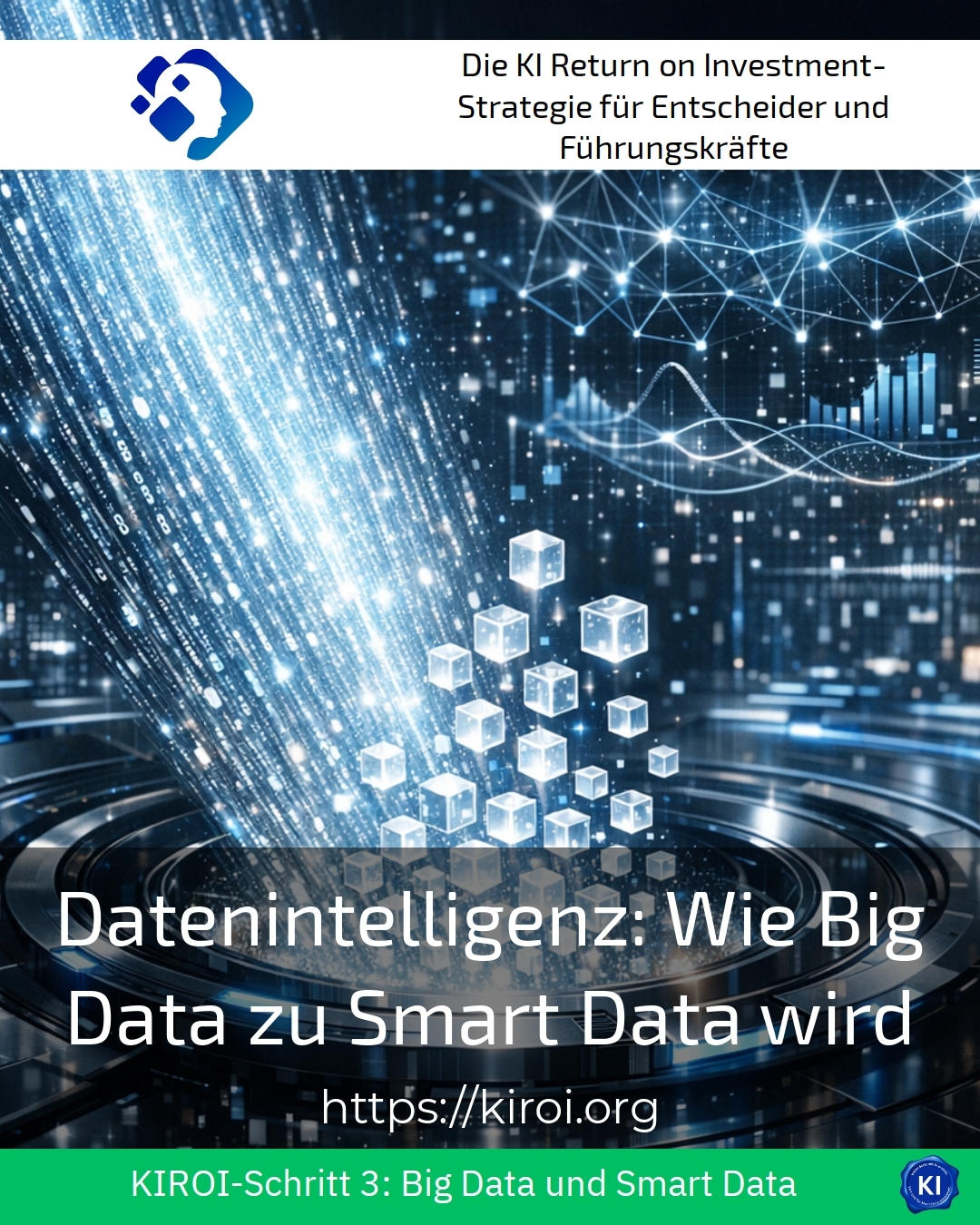
The answer lies in a fundamental change that currently affects all sectors of the economy and changes the way organizations make decisions. Data intelligence This article describes the transformation process in which raw information becomes actionable insights. Companies today collect more information than ever before in human history. But the real challenge lies not in collecting information, but in intelligently compressing and interpreting it. This is where a paradigm shift takes place that fundamentally changes traditional business models. Transforming unstructured mass data into precise, context-specific insights requires new skills and mindsets. This article explores how organizations can successfully navigate this change.
The fundamental difference between quantity and quality
Many organizations mistake the mere presence of large amounts of information for a strategic advantage. This assumption often leads to a dangerous dead end. After all, mass data alone does not generate added value. It first only causes storage costs and complexity. The real value only emerges through intelligent processing and contextualization. For example, a medium-sized machine manufacturer collected sensor data from its production facilities for years. The data volumes grew exponentially, but no one used them meaningfully. Only the introduction of analytical models enabled predictive maintenance. Suddenly, raw data transformed into concrete recommendations for action.
A logistics company experienced a similar transformation on its path to becoming a Data intelligence. Every day, millions of tracking data points were generated. However, this information remained largely unused in data silos. The implementation of an integrated analytics platform fundamentally changed everything. Delivery times became predictably precise, and routes were automatically optimized. A financial services provider, in turn, realized that customer data only became valuable through behavioral analyses. The mere storage of transaction histories yielded no actionable insights. Only pattern recognition enabled personalized offers at the right time.
Best practice with a AIROI customer
An international trading company approached our transruptions coaching team with a complex challenge. The company had vast amounts of sales data from various countries and channels. However, there was no unified strategy for utilizing this valuable resource. Together, we developed a structured approach to gradually consolidating the information. First, we identified the most relevant data sources for specific business decisions. Subsequently, we established processes for the automatic cleaning and enrichment of raw data. The introduction of dashboards enabled a real-time overview of all markets for the first time. Executives reported that decisions were now based on facts rather than gut instincts. Inventory levels were significantly reduced while simultaneously improving delivery capabilities. The project demonstrated impressively how guidance in the digital transformation delivers concrete results.
Data intelligence as a strategic competitive advantage
The ability to intelligently utilize data is becoming the crucial differentiating factor in competition. Companies that adopt this change early secure lasting advantages. They better understand their customers and react more quickly to market changes. Furthermore, they continuously optimize internal processes based on validated insights. An energy provider is now using consumption patterns to optimize the grid and set pricing. The analysis of weather data, historical consumption patterns, and events enables precise load forecasts. This significantly reduces the costs of balancing energy.
It enables in the healthcare sector Data intelligence Completely new approaches in patient care. Hospitals analyze treatment trajectories to identify optimal treatment paths. Insurance companies use aggregated health data for preventive programs. A pharmaceutical company significantly accelerated its research processes through intelligent evaluation of clinical trials. In the manufacturing industry, intelligent data utilization revolutionizes quality assurance. Optical inspection systems detect errors that would be missed by the human eye. Process parameters are automatically adjusted before defects occur.
The human component of data intelligence
Technology alone does not create intelligent data utilization. People need to ask the right questions and be able to interpret results. Therefore, change also requires cultural changes within organizations. Employees need new skills in handling data-based insights. A trading company invested heavily in the training of its buyers. They learned to critically question algorithmic recommendations and use them meaningfully. The interplay of human experience and machine analysis produced superior results.
In an insurance company, management established so-called data literacy programs for all levels of management. The initiative promoted a common understanding of data-based decision-making. Resistance to new working methods was thereby noticeably reduced. A automotive supplier appointed data stewards in each department as bridge builders between IT and specialist departments. These experts translate technical possibilities into business-relevant applications. Clients often report that this human factor is underestimated.
Best practice with a AIROI customer
A medium-sized manufacturing company sought support in establishing a data-driven corporate culture. The technical infrastructure already existed, but the acceptance within the workforce remained low. Our transruptive coaching accompanied the company through several months of this change process. We first identified the concerns and resistance of the various stakeholder groups. Subsequently, we developed tailored workshops for different target groups within the company. Production workers learned how to use digital dashboards at their workstations. Executives received guidance on integrating data analysis into their decision-making processes. The IT department learned to communicate its competencies in a way that was understandable to specialist departments. After the project concluded, significantly more employees regularly used the available analysis tools. The quality of decisions improved measurably through broader use of facts.
Technological foundations for the transformation process
Converting raw data into actionable insights requires a well-thought-out technological architecture. Cloud platforms today offer scalable capabilities for processing large amounts of information. Machine learning algorithms recognize patterns that traditional analytical methods miss [1]. However, the selection of suitable tools must be tailored to specific business requirements. A telecommunications provider implemented a modern data platform for analyzing network data. The solution now enables proactive identification of disruptions before customers notice them. Customer satisfaction increased measurably through shortened downtime.
In retail, intelligent analytics are revolutionizing inventory management fundamentally. Demand forecasts take into account weather forecasts, local events, and historical sales patterns [2]. One grocery retailer reduced its food waste significantly through such systems. The Data intelligence It also enables personalized customer interaction across all channels. A fashion retailer analyzes the browsing behavior of its online customers in real time. The insights gained are directly incorporated into personalized product recommendations.
Challenges on the Path to Data Intelligence
The transformation process brings with it numerous challenges that organizations must overcome. Data quality often represents the biggest obstacle to intelligent use. Incomplete, outdated, or inconsistent information leads to erroneous conclusions. A construction company discovered that its project data had been recorded differently over the years. Harmonization required significant resources but was indispensable for valid analyses. Data privacy requirements present additional complexity, especially with personal information [3].
A healthcare provider had to develop innovative anonymization methods to analyze patient data. The balance between knowledge gain and data privacy requires continuous attention. Organizational silos also significantly hinder the enterprise-wide use of data. A large industrial corporation found that different business units stored identical customer information differently. The integration of these data repositories enabled a holistic view of the customer for the first time. A financial institution struggled with legacy systems that did not support modern analytical methods. The gradual modernization of the IT landscape was declared a strategic priority.
Best practice with a AIROI customer
An insurance company approached our team with a specific problem. Data quality varied greatly across different systems and prevented meaningful analysis. Our transruptions coaching accompanied the project team in systematically improving the data base. First, we conducted a comprehensive inventory of all relevant data sources within the company. We identified critical quality issues and their root causes in the data collection processes. Together, we developed rules and processes for consistent data collection in the future. Automated validation routines now check incoming data for completeness and plausibility. A data governance committee monitors compliance with defined standards in day-to-day operations. These measures significantly improved the quality of the analytical results. Management can now make decisions based on more reliable information than before.
My AIROI Analysis
Transforming mass data into intelligent insights is not an optional modernization; it is becoming a survival factor for organizations in all industries. Our work with numerous companies consistently shows that technological solutions alone are not enough. The human factor ultimately determines the success or failure of such initiatives. Leaders must actively lead and promote a data-driven culture. Employees need training and support to effectively use new tools.
The Data intelligence it also requires a long-term strategic approach rather than short-term project initiatives. Organizations that achieve sustainable success continuously invest in their data expertise. They build expertise gradually and learn from experience. Rapid successes in manageable pilot projects create acceptance for larger transformation projects. The guidance provided by experienced partners can significantly accelerate this process. External input can help overcome operational inertia and embrace new perspectives. At the same time, the knowledge within the company must be embedded.
The coming years will reveal which organizations will successfully manage the change. Those who invest today will be ahead of the competition tomorrow. The journey from pure data collection to true data intelligence is challenging but rewarding. It requires perseverance, resources, and the willingness to question established paradigms. Those who accept this challenge can build sustainable competitive advantages.
Further links from the text above:
[1] IBM: What is machine learning?
[2] McKinsey: The data-driven company
[3] GDPR: General Data Protection Regulation
For more information and if you have any questions, please contact Contact us or read more blog posts on the topic Artificial intelligence here.










 Deutsch
 English (UK)