
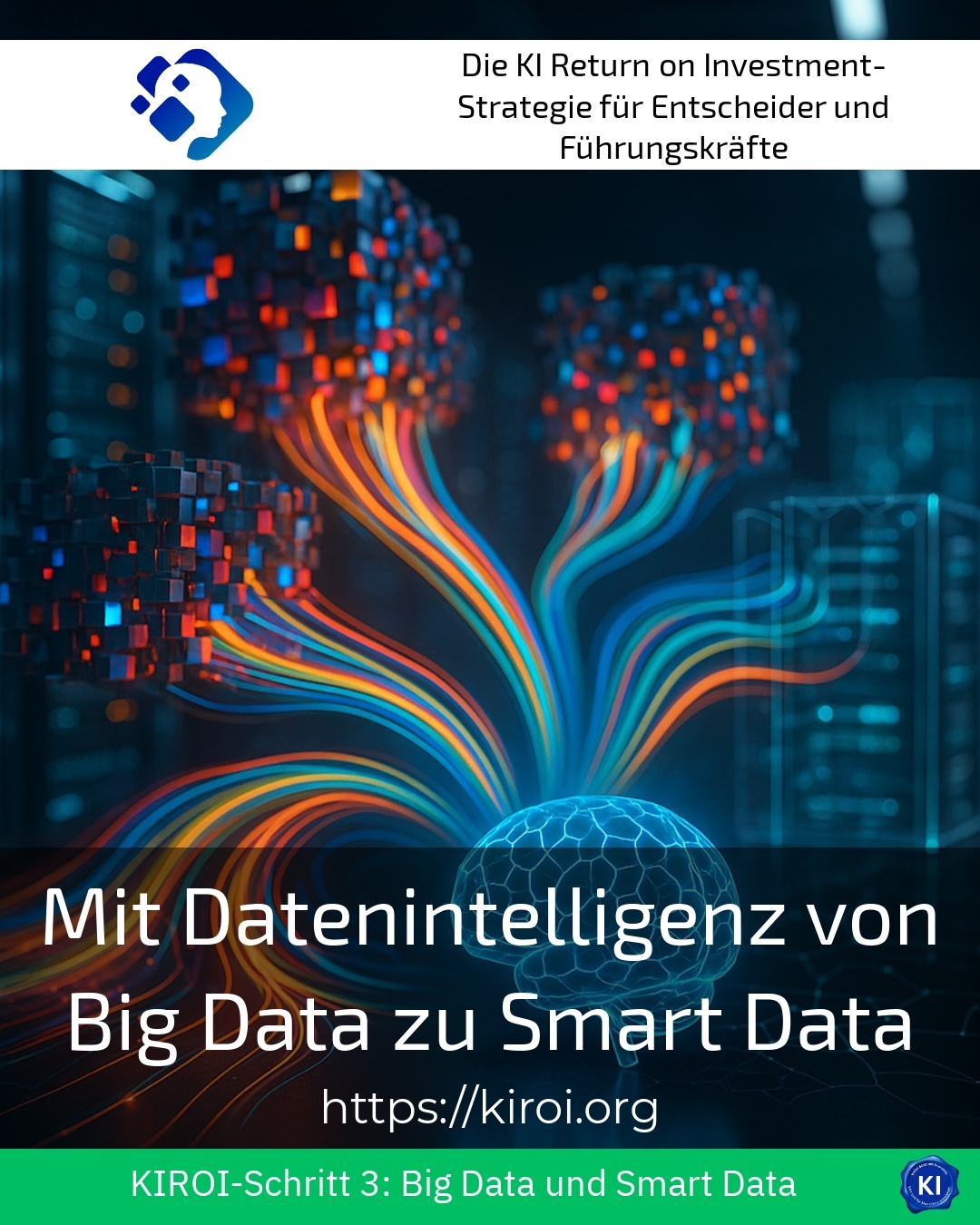
Imagine your company generates millions of data points every day, yet only a fraction of them leads to real insights. This challenge is at the forefront for numerous organisations today, aiming to move from Big Data to Smart Data with data intelligence. The good news is that proven methods exist to distil valuable actionable recommendations from this sheer volume of information. In this post, you will learn how companies of all sizes are successfully mastering this transformation.
Understanding the evolution of data usage
For years, many companies have been collecting enormous amounts of data in various systems. This information often lies dormant and unutilised in databases and archives. The first step is to review and categorise these holdings. This is followed by the crucial phase of quality assessment. Only clean and structured information provides reliable analysis results.
For example, a medium-sized machine builder collected sensor data from its production facilities over several years. Initially, this data was unstructured and stored in various systems. Through systematic processing, the company was able to optimise maintenance intervals. Downtimes were noticeably reduced, and productivity increased significantly.
Another example comes from the retail sector. There, a chain of stores re-analysed its till data. The insights led to optimised product placement and better ordering cycles. A logistics company also benefited significantly from a reorganisation of its transport data.
Best practice with a AIROI customer
An international automotive supplier approached transruptions-coaching with a complex challenge. The company possessed vast amounts of quality data from production but was unable to utilise it effectively. Together, we developed a structured approach to data consolidation and analysis. Initially, we identified the most relevant data sources and defined clear quality criteria for the information. Subsequently, we guided the implementation of an intelligent analysis system that detects patterns in production data. The results significantly exceeded management's expectations. Within six months, the scrap rate was reduced by more than twelve percent. At the same time, the prediction accuracy for potential quality issues improved considerably. The company today reports a completely changed decision-making culture in production.
Data intelligence from Big Data to Smart Data in everyday business
Practical implementation requires more than just technical solutions. People play a central role in this transformation process. Employees need new skills in using data-based tools. Managers must learn to base decisions on analysis results. The company culture changes gradually and sustainably in the process.
For example, a financial services provider implemented a new customer analytics system. This gave advisors better insights into individual customer needs. Cross-selling rates increased because recommendations became more relevant. An energy supplier used similar approaches for customer consumption forecasting. A further example is an insurance company that optimised its risk assessments through intelligent data utilisation.
Develop strategic approaches to data enrichment
The path from raw material to usable insight follows specific principles. First, it is important to formulate the right questions and define objectives. This is followed by the selection of suitable analysis methods and technologies. Integration into existing business processes forms the final step. This structured approach prevents costly errors.
A pharmaceutical company applied these principles when analysing clinical trial data. The insights gained significantly accelerated the development of new active ingredients. A telecommunications provider considerably optimised its network planning through predictive analytics. A retail group sustainably improved its supply chain management through real-time data evaluation.
Connecting technological foundations and human expertise
Modern analysis tools offer impressive capabilities for pattern recognition. Algorithms sift through datasets and automatically identify correlations. Nevertheless, human interpretation of these results remains indispensable. Subject matter experts place the findings within the operational context. This combination of technology and expertise creates real added value.
A chemical company successfully linked laboratory analyses to production data. Engineers interpreted the automatically generated hints and targeted process optimisation. A construction group used sensor data from building sites for project management. Site managers thereby received better decision-making foundations for their daily work.
Best practice with a AIROI customer
A leading manufacturer of household appliances sought support in realigning its service strategy. The company wanted to transition from reactive maintenance to proactive upkeep. As part of the transruption coaching, we intensively supported the project team over several months. We provided impetus for integrating IoT sensor data into the existing service infrastructure. Employees learned to correctly interpret and utilise the new analysis results. Technicians can now identify problems before customers even notice them. Customer satisfaction has measurably improved as a result, and service call-outs have become more predictable. The company reports a noticeable easing of the burden on its service hotline. At the same time, the costs for emergency call-outs and spare parts have significantly decreased. The transformation succeeded because people and technology worked together optimally.
Leveraging data intelligence from Big Data to Smart Data as a competitive advantage
Businesses that use their data intelligently gain significant advantages. They react more quickly to market changes and customer wishes. Their decisions are based on facts rather than on guesswork or intuition. Resource allocation is more efficient and targeted. Ultimately, this sustainably increases competitiveness.
A fashion company systematically analysed social media data for trend forecasting [1]. This made collection planning more accurate and market-oriented. A food manufacturer optimised its product development by evaluating consumer feedback. A sporting goods manufacturer also successfully used similar approaches for its product range design.
Recognising and overcoming challenges
The transformation process brings typical hurdles with it. Siloed data often makes holistic analysis difficult. Data protection requirements necessitate careful concepts and legal safeguards. Lacking expertise within the company sometimes delays progress. However, these challenges can be overcome with the right guidance.
A healthcare provider faced significant data protection hurdles [2]. However, they were able to gain valuable insights through a well-thought-out anonymisation strategy. An educational provider struggled with heterogeneous data formats from various locations. Standardisation ultimately enabled cross-location analysis.
Ensuring sustainable implementation
Successful transformations require stamina and continuous adjustments. Pilot projects help to gain experience and refine approaches. A gradual rollout to further business areas follows. Regular reviews ensure that the results meet expectations.
A media company began by analysing its streaming usage data. Following a successful pilot phase, the approach was transferred to other business areas. A tourism group started similarly by analysing its booking data. The insights significantly improved both pricing and capacity planning.
My AIROI Analysis
The transformation to a data-driven organisation is not a one-off task. Rather, it is an ongoing process of continuous development. Companies embarking on this path often report surprising side effects. Collaboration between departments improves because common data foundations are created. Employees develop a new understanding of how things are connected within the company.
The data intelligence of big data to smart data requires clear strategic decisions. Not every piece of information deserves equal attention and analytical effort. The art lies in differentiating relevant from irrelevant data. This is precisely where transruption coaching can provide valuable impetus and support project teams.
From my experience with numerous projects across various industries, a clear pattern emerges. Successful companies invest in people first, and then in technology. They gradually create a culture of data-driven decision-making. They accept that perfection isn't possible from the outset. A pragmatic approach often leads to the goal faster than overambitious mega-projects. The future belongs to organisations that treat their data as a strategic asset and continuously develop it.
Further links from the text above:
[1] Bitkom – Big Data and Data Analysis
[2] Federal Commissioner for Data Protection and Freedom of Information
For more information and if you have any questions, please contact Contact us or read more blog posts on the topic Artificial intelligence here.








 Deutsch
  English (UK)