
In an era of rapid digitalisation, companies across all sectors are increasingly relying on data intelligence to extract valuable smart data from the flood of big data. This transformation represents not only a technical challenge but, above all, opens up opportunities to optimise business processes and unlock new potential. Data intelligence therefore forms an essential foundation for sustainable business success.
Data intelligence as the key to transforming big data into smart data
Big data encompasses large, complex, and varied datasets that are generated rapidly. Many companies struggle to filter out meaningful insights and manage unstructured raw data. Data intelligence offers the solution: it ensures that these large volumes of data are analysed, filtered, and processed using algorithms such as artificial intelligence and machine learning.
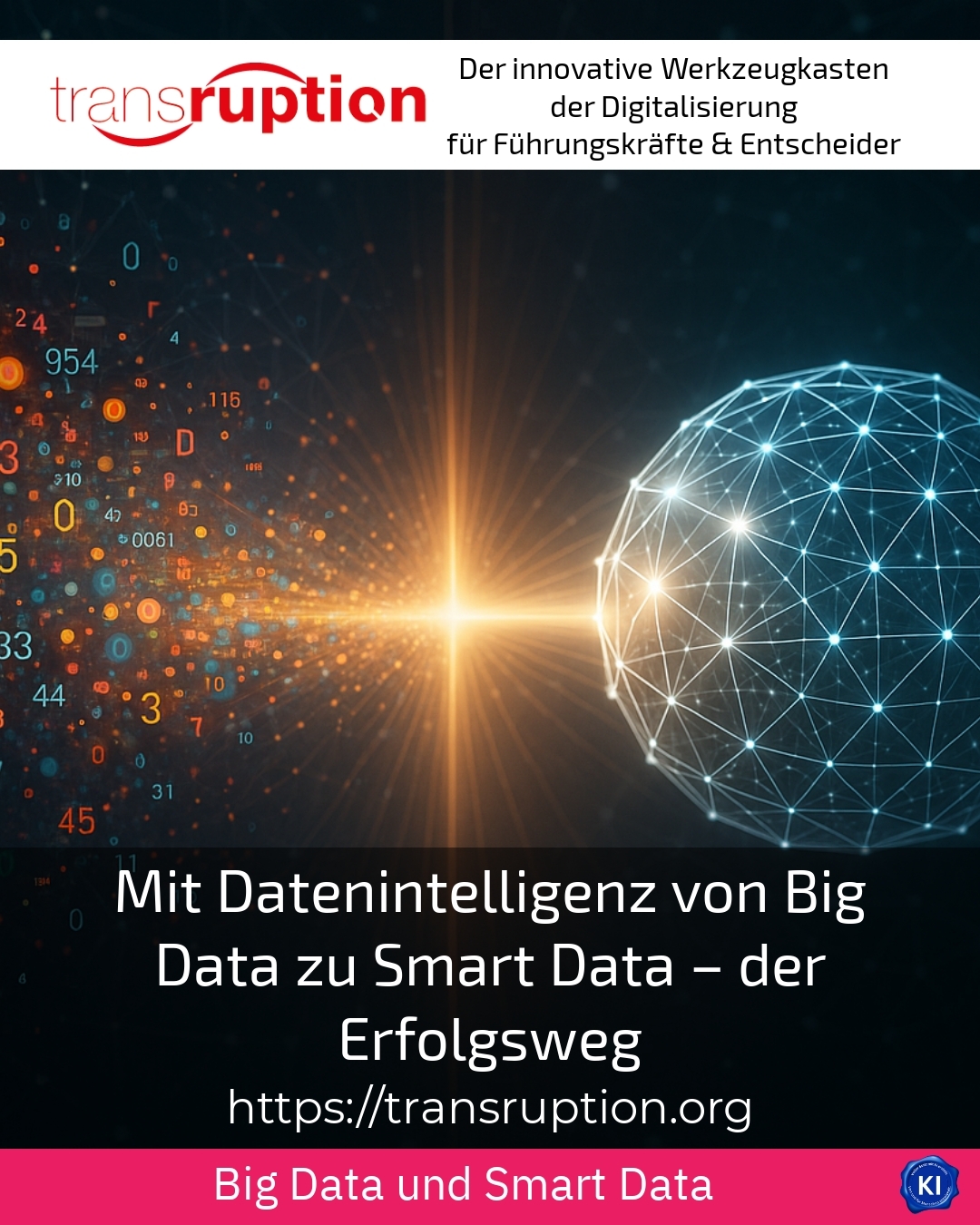
Data intelligence thus transforms the unwieldy raw material of Big Data into Smart Data – structured, reliable, and contextualised information that purposefully supports decision-making processes.
An example from industry shows how an automotive manufacturer optimises its production with data intelligence. Using IoT sensors, they capture machine data in real time, detect potential failures early on, and thereby reduce costly downtimes. This smart data enables flexible adjustments to demand and improves manufacturing quality.
In retail, companies use data intelligence to analyse customer purchasing behaviour and external factors such as weather or local events. This leads to precisely segmented marketing campaigns that consider individual needs and increase sales.
In the energy sector, a utility company is using smart data to predict consumption patterns and manage the power grid more efficiently. The result is cost savings, better integration of renewable sources, and satisfied customers.
How Data Intelligence Supports Companies in Different Sectors
The applications of data intelligence extend far beyond individual industries. In healthcare, for example, patient data is intelligently analysed to improve diagnoses and tailor therapies more individually.
An insurance company uses data intelligence to assess risks more accurately and detect fraud attempts early. This allows premiums to be calculated more effectively and claims processes to be handled more efficiently.
In finance, data intelligence allows for real-time analysis of transaction data. Banks can identify unusual patterns, protect customers, and develop tailored offers.
BEST PRACTICE at the customer (name hidden due to NDA contract) A medium-sized manufacturing company faced the challenge of better utilising the enormous volume of sensor data from its production processes. Through transruption coaching, a data strategy was developed that focused on data-intelligent methods such as machine learning. The consequences were improved quality assurance, predictive maintenance, and a noticeable reduction in rejected products.
BEST PRACTICE at the customer (name hidden due to NDA contract) A retailer used data intelligence to analyse complex customer interactions across online and offline channels. This enabled needs to be identified earlier and personalised offers to be delivered more precisely. Customer satisfaction increased measurably, as did the conversion rate.
BEST PRACTICE at the customer (name hidden due to NDA contract) In the energy sector, a forecast model for energy consumption has been developed using data intelligence, which also incorporates external influences such as weather and events. This has enabled dynamic pricing and more resource-efficient grid utilisation.
Tips for the successful use of data intelligence
For companies to successfully make the journey from Big Data to Smart Data with data intelligence, the following impulses are helpful:
- Develop a clear data strategy aligned with business objectives.
- Regularly check data quality and consolidate data sources.
- Strategic use of artificial intelligence and automated analyses.
- Establish interdisciplinary teams that combine technical and subject-matter expertise.
- Incorporate data ethics and data protection as an integral part of data intelligence.
This is how change can be achieved that not only addresses technical aspects but also further develops the corporate culture. Companies that operate intelligently with data can react more quickly to market changes and create innovative offerings.
My analysis
Data intelligence is the decisive success factor for companies looking to master the transition from Big Data to Smart Data. Through intelligent analysis and preparation, data is not just managed but made usable as valuable resources for strategic decisions. Across industries, data intelligence helps secure competitive advantages, make processes more efficient, and better understand customer needs. Investing in data-intelligent solutions and being accompanied by specialised expertise confidently guides organisations on this path to success.
Further links from the text above:
With data intelligence from Big Data to Smart Data: How to lead…
Unleashing data intelligence: Big Data & Smart Data for…
For more information and if you have any questions, please contact Contact us or read more blog posts on the topic TRANSRUPTION here.











 Deutsch
  English (UK)