
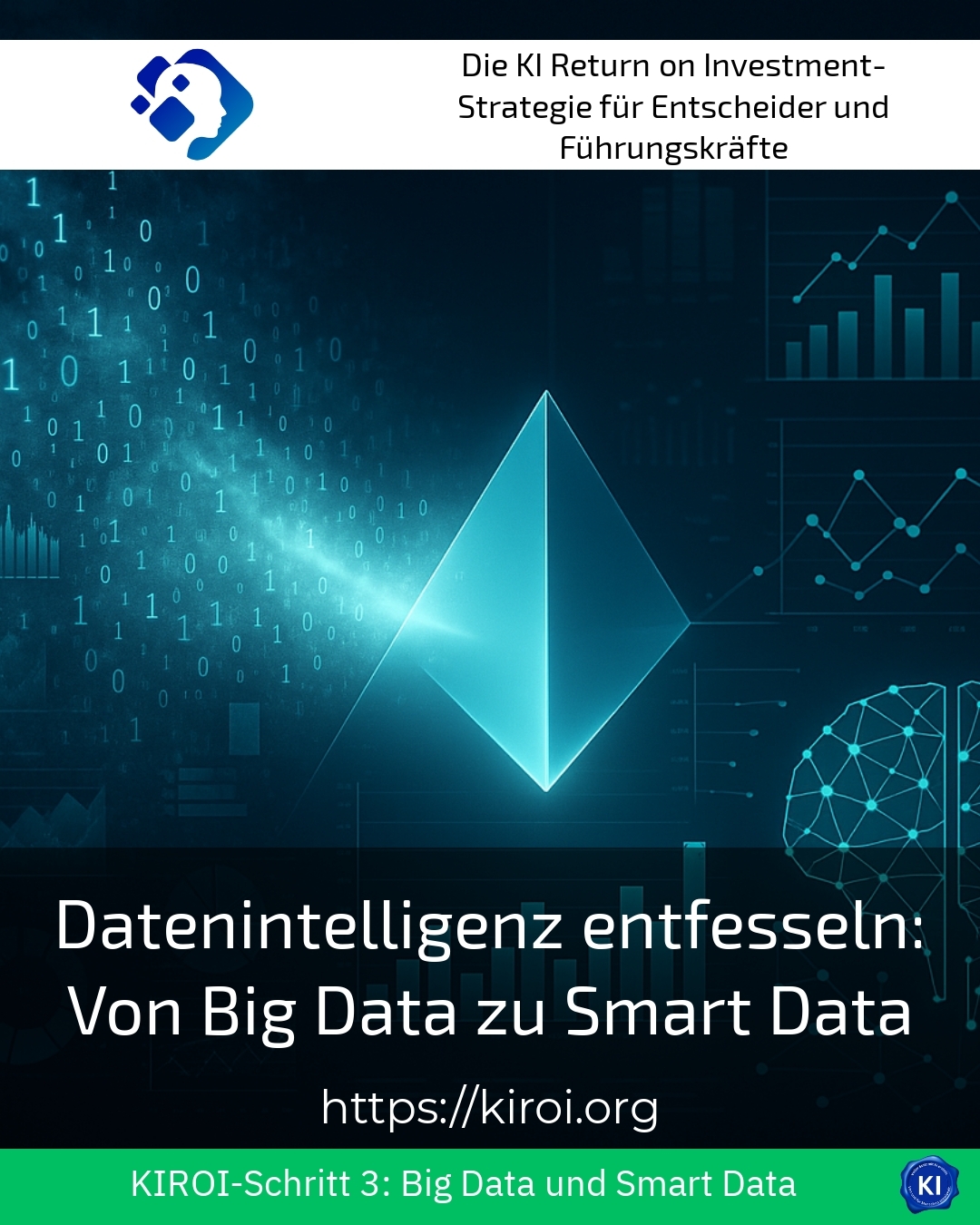
Imagine your company is sitting on a data treasure trove of immeasurable value. Yet this treasure lies hidden beneath mountains of unstructured information. The transformation From Big Data to Smart Data decides today between economic success or stagnation. Many organisations collect huge amounts of data without recognising its true potential. Yet the real challenge lies not in the collection, but in the intelligent use of these resources. This article shows you concrete ways to unleash your data intelligence.
Why the leap from big data to smart data is crucial
The sheer volume of available information is growing exponentially. Companies generate terabytes of transactional data, customer interactions and process information daily. However, quantity alone creates no added value. Smart data, on the other hand, refers to high-quality, contextualised and actionable data sets. These enable well-founded decisions in real time. The crucial difference lies in the refinement of raw information into genuine insights.
For years, a medium-sized trading company stored all its sales transactions. The database grew continuously, yet strategic insights failed to materialize. It was only through the targeted analysis of purchasing patterns and customer behaviour that this raw data was transformed into actionable intelligence. A logistics service provider experienced a similar situation with its fleet management data. Through intelligent algorithms, optimization potentials for route planning and maintenance cycles suddenly emerged. A healthcare provider also realized that patient data only unfolds its full significance through contextualization.
The technological foundation for intelligent data processing
Modern data architectures form the foundation for successful transformation projects. Data lakes initially collect all available information sources in a central location. Building upon this, analytical tools filter and structure the relevant data points. Machine learning algorithms recognise patterns that would remain hidden from human analysts. Cloud-based platforms scale these processes as required. This creates an end-to-end value chain from data collection to decision support.
For example, an energy supplier implemented a real-time analytics platform for consumption data. The combination of IoT sensors and predictive models enabled proactive grid management. A retailer used comparable technologies for inventory optimisation across all branches. The integration of weather data and local events played an important role here. An insurance company also benefited from automated risk assessment through intelligent data models [1].
Best practice with a AIROI customer
An internationally active mechanical engineering company was faced with the challenge of fundamentally modernising its service processes. The company had extensive machine data spanning more than fifteen years of operational history. However, this information was scattered across various systems and barely linked together. As part of a transruption coaching project, we supported the management team in developing a holistic data strategy. First, we jointly identified the most relevant data sources and their potential integration points. The internal team then developed a concept for gradual data integration. The combination of sensor data with historical maintenance logs proved particularly valuable. This resulted in predictive models for forecasting signs of wear and tear. Service technicians henceforth received automated recommendations for preventive maintenance measures. Within eighteen months, unplanned machine downtime was reduced by more than thirty per cent. Customer satisfaction increased measurably, and service costs fell significantly. This project illustrates how support with complex transformation initiatives enables sustainable success.
Strategic data culture as a success factor for smart data
Technology alone is not enough for a successful data transformation. Organisations require a data-driven corporate culture at all levels. Employees must understand the value of data and actively contribute to data quality. Leaders should model and demand data-driven decision-making. Silo thinking between departments frequently prevents the free flow of information. Therefore, clear governance structures and defined responsibilities are needed.
For example, a financial services provider established a central data governance unit with company-wide authority. This coordinated data standards across all business areas. A manufacturing company introduced regular data quality audits in production. In the process, the teams discovered significant potential for improvement in the collection processes. A telecommunications provider also benefited from the introduction of company-wide data literacy programmes [2].
From Big Data to Smart Data: The Path of Data Refinement
The transformation of raw data into actionable insights follows a structured process. First, the various data sources are cleaned and harmonised. Contextual information then enriches the basic data with additional knowledge. Analytical models subsequently extract relevant patterns and relationships. Visualisation tools present the results in a way that is ready for decision-making. Finally, the insights flow back into operational business processes.
A pharmaceutical company applied this process to clinical trial data. Linking this with external research databases significantly accelerated drug analysis. An automotive supplier enhanced production quality data to create predictive fault forecasts. These enabled proactive interventions even before scrap occurred. A retail group transformed customer feedback data into personalised product recommendations [3].
Best practice with a AIROI customer
A large hospital group was looking for ways to make better use of its clinical data. The organisation had millions of patient records spanning several decades. However, this information was fragmented across various IT systems and was difficult to access. Working together with the leadership team, we developed a vision for an integrated data ecosystem. transruptions coaching supported both the technical and cultural transformation processes throughout this journey. Particular attention was paid to the stringent data protection requirements in the healthcare sector. Through anonymised analyses, valuable insights were generated for treatment optimisation. Doctors received data-driven support for diagnosis and treatment decisions. The length of patient stays was reduced by an average of several days. At the same time, treatment outcomes showed measurable improvements across various indication areas. Members of staff frequently reported a noticeable easing of their workload thanks to automated data evaluations. This project demonstrates how intelligent data usage can directly benefit patient care.
Ethical aspects of intelligent data usage
With growing analytical capabilities comes an increasing responsibility for their ethical deployment. Transparency towards customers and employees forms the basis for trust. Data protection compliance must be integrated into all projects from the outset. Algorithmic decisions should be designed to be traceable and verifiable. Discriminatory patterns in training data require special attention and correction. Companies benefit in the long term from a responsible approach to data intelligence.
For example, an employment agency reviewed its recruiting algorithms for unconscious bias. The correction led to more diverse applicant pools and better hiring decisions. An insurer developed transparent explanation models for its automated tariff calculations. As a result, customers understood the basis of their individual quotes better. A financial institution also implemented fairness metrics in its scoring systems [4].
Practical steps for implementing smart data in the enterprise
The best way to get started with intelligent data usage is step by step. Begin with a clearly defined pilot project in a manageable area. Define measurable success criteria before the project even starts. Actively involve both IT experts and business department representatives in the development process. Document insights and learnings for subsequent projects. Systematically scale successful approaches to other areas of the business.
For example, a municipal utility started by analysing smart meter data from a single district. The insights gained regarding load optimisation were subsequently transferred to the entire supply area. A logistics company piloted predictive maintenance in a single branch first. Following successful validation, the company-wide rollout took place. A retail company also tested personalised offers in selected branches only [5].
My AIROI Analysis
The Transformation From Big Data to Smart Data presents organisations with multifaceted challenges. Technological solutions form only part of the equation. Cultural changes and strategic clarity are at least as important. Clients frequently report initial resistance within their organisations. This can be overcome through a step-by-step approach and visible quick wins.
The AIROI methodology provides a structured framework for such transformation projects. It combines technological expertise with change management skills, whilst focusing on the specific starting point of each organisation. Standard solutions rarely work in complex business environments. Instead, we work with our clients to develop bespoke approaches.
Particularly valuable is the guidance provided in bridging departmental boundaries. Data silos often arise from historically grown organisational structures. Dissolving them requires diplomatic skill and neutral moderation. Transruption coaching positions itself in this regard as an impartial companion to all involved. External impulses can unblock entrenched discussions and open up new perspectives. The practical examples in this article demonstrate the potential of intelligent data strategies. At the same time, they make it clear that successful implementations require time and commitment. However, the investment in data intelligence pays off in the long run. Companies gain competitive advantages through better decisions and more efficient processes. The path From Big Data to Smart Data is worthwhile for organisations of all sizes.
Further links from the text above:
[1] Gartner: Smart Data Definition and Use Cases
[2] McKinsey: The Data-Driven Enterprise
[3] Harvard Business Review: Data Strategy Insights
[4] Bitkom: data economy and digital transformation
[5] Fraunhofer: Artificial Intelligence and Data Analysis
For more information and if you have any questions, please contact Contact us or read more blog posts on the topic Artificial intelligence here.









 Deutsch
  English (UK)