
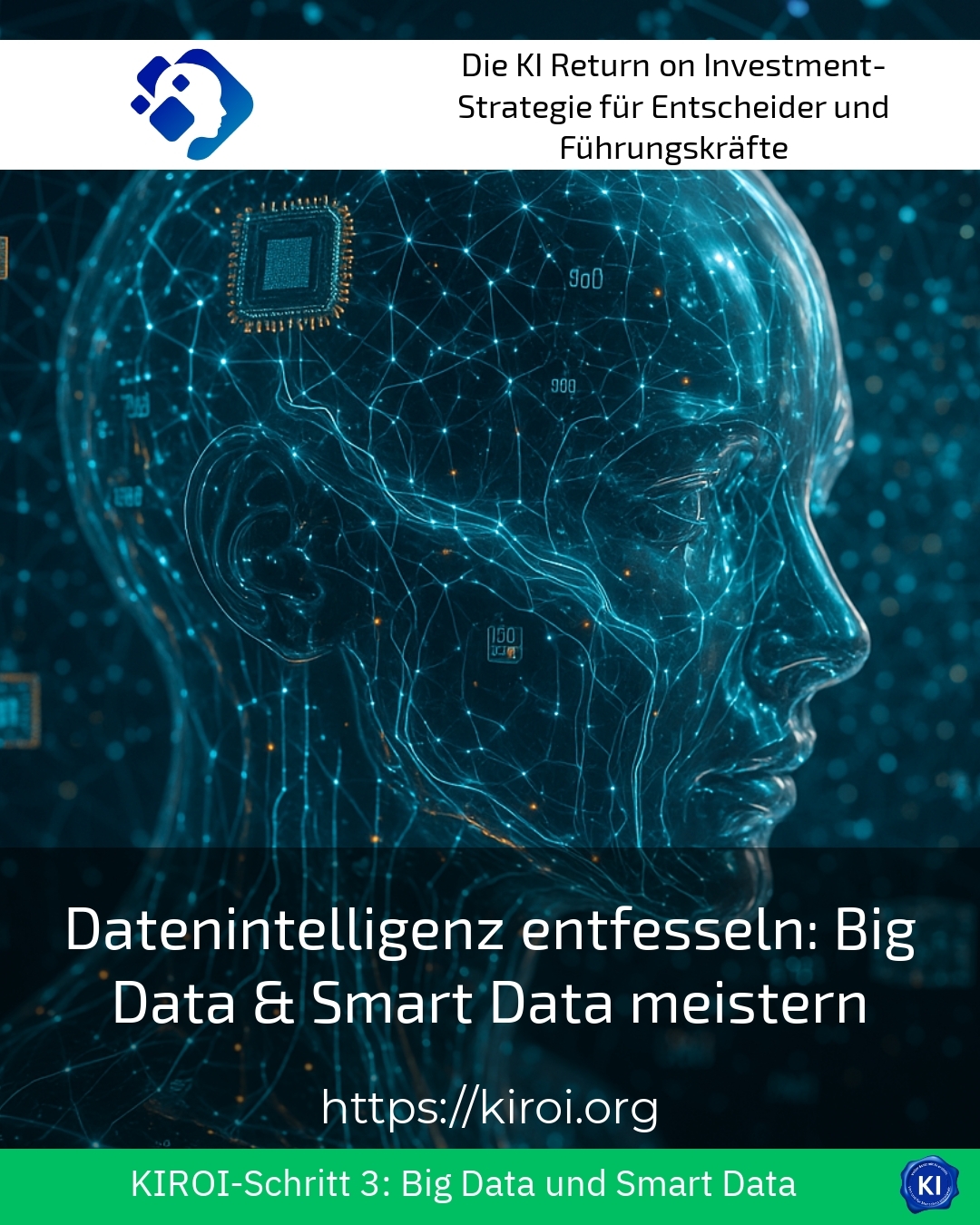
In the digital age, the term data intelligence is gaining increasing importance. Companies are faced with a veritable sea of data, often referred to as Big Data. The challenge lies not only in storing vast amounts of data from this abundance of information, but in deriving meaningful and usable insights from it. This is precisely where the concept of data intelligence comes in: it combines Big Data and Smart Data to provide decision-makers with a supportive foundation for well-founded choices.
Big Data and Smart Data: The Combination for Valuable Insights
Big Data refers to extensive, diverse, and rapid data volumes. Smart Data, on the other hand, describes high-quality and purposefully selected information derived from this data. The true power of data intelligence lies in transforming Big Data into Smart Data using modern technologies such as artificial intelligence, machine learning, and data analytics.
While many companies collect vast amounts of data, they struggle to derive concrete recommendations for action from it. Smart Data closes this gap by excluding unnecessary information and providing precisely the data that is relevant for strategic decisions. This saves time and resources, and improves decision quality.
Practical examples from various industries
In the financial sector, data-intelligent analyses help to base portfolio decisions on reliable data, rather than relying on unstructured masses of information. In logistics, targeted filtering of Big Data makes supply chains more transparent and identifies bottlenecks early on.
In the manufacturing industry, companies benefit by monitoring production figures and making timely adjustments. In marketing, smart data allows for more precise target group approaches and higher campaign efficiency. In the healthcare sector, personalised therapies are also prepared with the help of intelligent data analysis.
Data intelligence as the key to successful project decisions
Decision-makers frequently report how data-intelligent approaches provide valuable impetus for the planning and execution of complex projects. By selecting relevant data, risks can be minimised and opportunities identified more quickly. Data intelligence thus supports leaders in reacting in a well-informed and agile manner.
For instance, a trading company helps filter data from millions of customer interactions that provide insights into the purchasing behaviour of specific demographic groups. This leads to targeted marketing campaigns with a higher chance of success. In the automotive industry, data intelligence is used to continuously evaluate vehicle conditions. This supports predictive maintenance, for example: smart data is used to analyse only truly relevant sensor values in order to detect failures early and plan workshop appointments optimally.
Working intelligently with data also offers advantages in the healthcare sector. Large amounts of data from patient records, laboratory results and wearables are processed in such a way that doctors can create more individual therapeutic approaches. This improves the course of treatment and can reduce costs.
Best practices from practice
BEST PRACTICE with one customer (name hidden due to NDA contract) A logistics company used data intelligence to extract relevant KPIs from big data. This enabled more accurate prediction of delivery times and better inventory control. This helped to reduce costs and increase customer satisfaction.
BEST PRACTICE with one customer (name hidden due to NDA contract) A marketing agency implemented data-intelligent systems to analyse customer behaviour in real-time. This enabled flexible campaign adjustments and significantly reduced wasted expenditure. This led to a noticeable increase in revenue and improved customer loyalty.
BEST PRACTICE with one customer (name hidden due to NDA contract) The introduction of data intelligence in production led to a significant reduction in unproductive downtime. Real-time monitoring and algorithm-supported optimisation enabled targeted planning of maintenance measures and prevented costly failures. This not only increased efficiency but also significantly improved product quality.
My analysis
Data intelligence is more than just a trend. It is a decisive factor for success in a data-driven world. Companies that strategically combine Big Data and Smart Data gain a clear competitive advantage. They can make decisions faster and better, use resources more efficiently, and address their customers more precisely. Data intelligence creates the foundation for sustainable innovation and growth.
Further links from the text above:
Big data vs. smart data: is more always better?
Data intelligence: big data and smart data for decision-makers
Smart data, or the intelligent use of data
Smart data: definition, application and difference to big data
Unleashing Data Intelligence: Big Data & Smart Data for Business
Smart Data – definition in the AI glossary
Make decisions with smart data
Data Intelligence: Cleverly Utilising Big Data and Smart Data
Big and smart data - from statistics to data analysis
How to secure your lead with Big & Smart Data
Smart + Big Data | Artificial Intelligence
How to turn big data into smart data
What is Smart Data? Definition and explanation of the term
For more information and if you have any questions, please contact Contact us or read more blog posts on the topic Artificial intelligence here.











 Deutsch
  English (UK)