
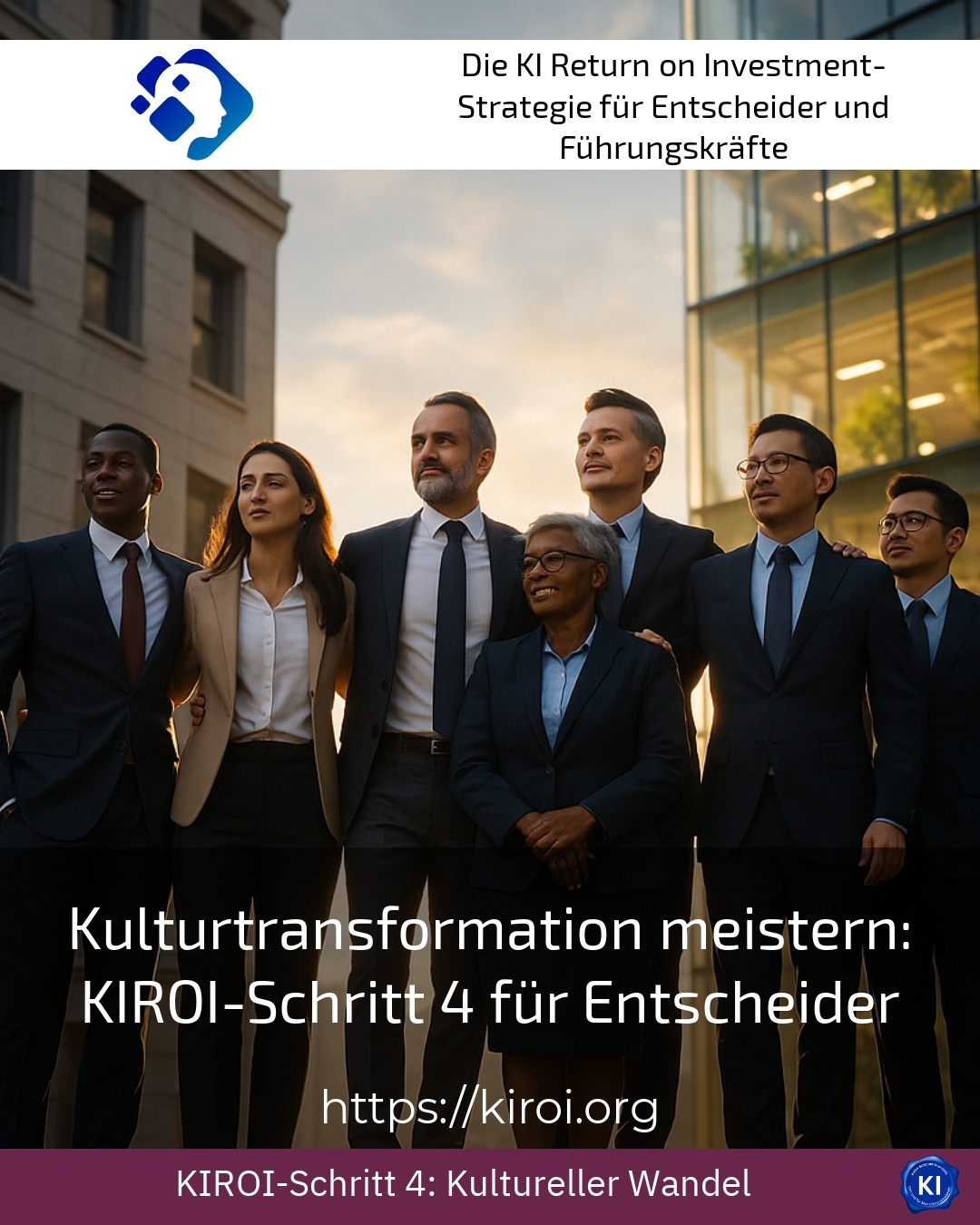
Cultural transformation presents a significant challenge for many companies, as it encompasses far more than superficial changes. It involves fundamentally evolving values, mindsets, and behavioural patterns to remain competitive and agile in the long term. The AIROI method offers a practice-oriented approach, particularly in the fourth step, to embed and effectively shape cultural transformation in everyday life. This step is especially important for decision-makers who want to actively steer and support the change.
Culture Transformation: From Analysis to Lived Reality
Cultural transformation begins with an honest assessment of the current company culture. Here, values, behaviours, and the existing mindset of the workforce are analysed – often through employee surveys, workshops, and open discussions. In the next step, a target image is formulated, describing what the desired culture should look like. Ideally, managers and employees are involved from the outset to increase acceptance and engagement. However, the fourth step, the change itself, is the practice-relevant part where it is decided whether cultural transformation succeeds or fails.
In practice, this means that new values and behaviours must become visible and experienceable in everyday working life. This ranges from an open feedback culture and a new level of communication to changed leadership styles. Decision-makers bear a significant responsibility here, as they are role models and catalysts. They must create spaces where experimentation is permitted and mistakes are used as opportunities for growth.
Best practices from various industries
Many companies report on how they successfully support cultural transformation through targeted measures:
- A medium-sized engineering company integrated new feedback formats and provided more intensive training for management. The result was more open collaboration and a positive change in how people worked together.
- In the service sector, agile methods have been introduced that promote shared decision-making and autonomous working – this significantly increased flexibility and customer satisfaction.
- A technology group reduced hierarchies, allowing employees to take on more responsibility. This noticeably strengthened innovation and commitment.
BEST PRACTICE with one customer (name hidden due to NDA contract) And then the example with at least 50 words. A medium-sized mechanical engineering company with approximately 270 employees embarked on a value-based cultural transformation to overcome existing silos and internal conflicts. Through targeted workshops and open communication formats, a new sense of togetherness emerged, which significantly improved collaboration and fostered innovation. Today, the company is experiencing a noticeable upturn and a strengthened team.
AIROI Step 4: Designing Sustainable Cultural Transformation
In the fourth step of the AIROI method, it's about translating the analyses and concepts developed into real change. Some factors are particularly relevant here:
- Leadership by example: If you're serious about cultural transformation, you need role models. Leaders must authentically embody and communicate the new values.
- Creating space for experiments: Innovation requires free rein. Companies should create situations where employees can try new things and learn without fear of failure.
- Accompanying communication: Continuous exchange about progress, challenges, and successes involves all stakeholders and shows the way forward.
- Measurable intermediate steps: Regular feedback, employee surveys and performance indicators show whether cultural goals are being achieved and where adjustments can be made.
Decision-makers should strike a balance between stability and change. This means acknowledging the familiar while remaining open to new ideas. Only then can cultural transformation be understood as a dynamic process that carries the entire organisation along.
Typical challenges and approaches to solutions
In implementation, companies often encounter resistance:
- Skepticism towards change Employees feel unsettled when familiar routines are broken.
- Unequal commitment: Not all leaders or teams show the same willingness to change from the outset.
- Lack of anchoring: New values often remain mere declarations of intent without implementation.
Successful cultural transformation therefore specifically supports these themes by:
- Communication at all levels is being intensified to reduce fears.
- makes best practices and role models visible, which serve as guidance.
- Offers coaching and support, particularly for managers.
My analysis
Cultural transformation is a complex but rewarding process that prepares organisations for future challenges. AIROI Step 4 offers helpfully structured impulses to anchor change in everyday life and make it sustainably effective. Decision-makers play a central role as change agents and role models. Practice shows that cultural transformation and business success can be effectively combined with targeted support, transparent communication formats, and the willingness to question old habits.
Further links from the text above:
Successful cultural transformation for companies – andconsorten.de
Mastering Cultural Transformation: Step 4 to Success with AIROI – risawave.org/
AIROI Step 4: Culture Transformation as a Growth Driver – risawave.org/
Company Culture: Top 3 Examples of Strong Organisations – berg-macher.com
For more information and if you have any questions, please contact Contact us or read more blog posts on the topic Artificial intelligence here.








 Deutsch
  English (UK)