
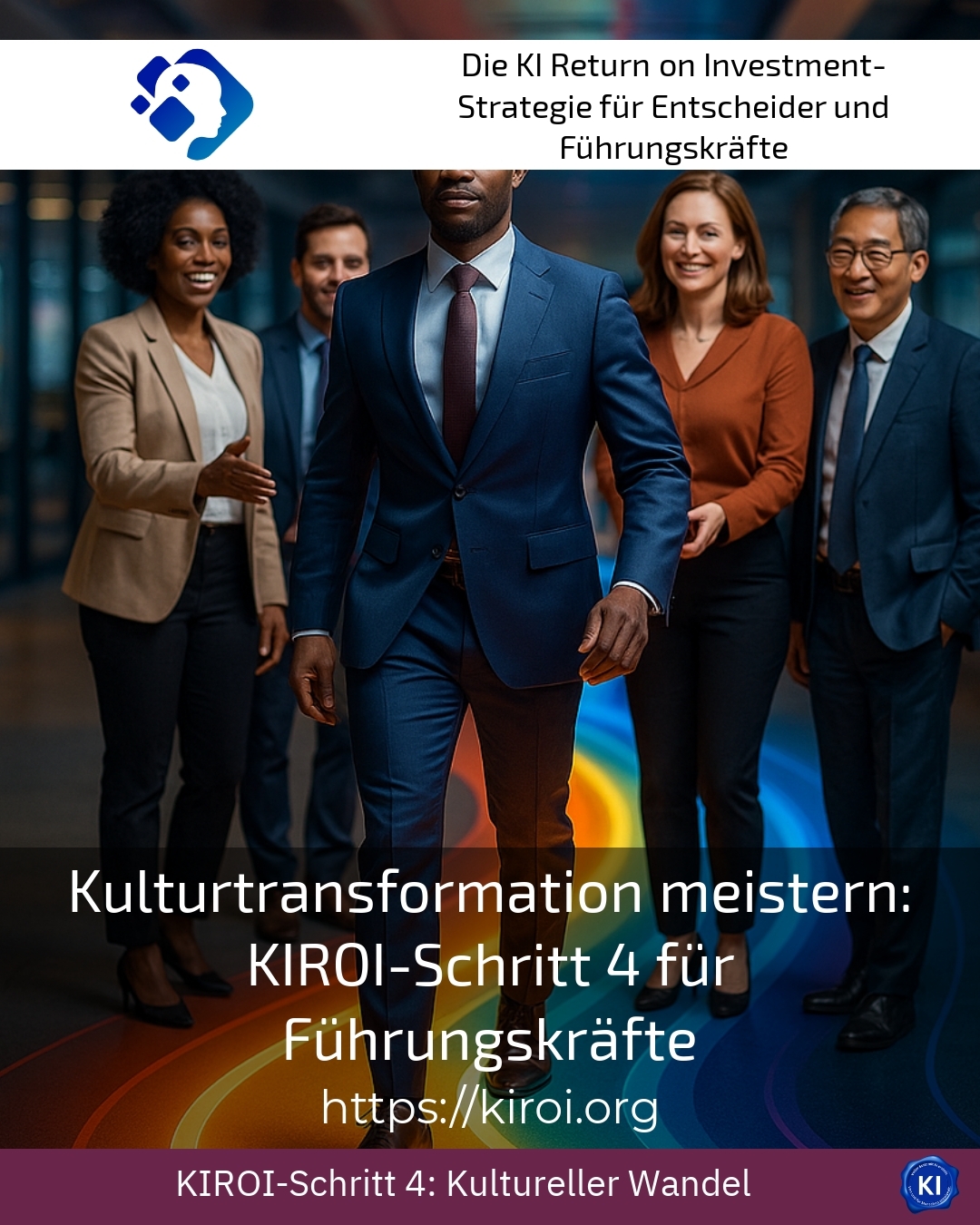
Cultural transformation represents a challenging but essential task for many companies. Leaders, in particular, are in the spotlight when it comes to sustainably guiding change processes within an organisation. Cultural transformation means not just adaptation, but the conscious shaping of a corporate culture that changes values, beliefs, and behaviours in a way that supports innovation, agility, and long-term success. Within the AIROI model, step 4 plays a central role, as it is here that leaders actively shape and embody the change. Moreover, cultural transformation is more than a one-off action – it is a continuous process that affects the entire organisation.
Cultural transformation as a leadership task: Significance and scope for action
Leaders are considered key figures in cultural transformation, as their behaviour and decisions make new values tangible. Their role is to communicate the vision for cultural change, integrate dissenting voices, and provide impetus for embedding the new culture. For instance, many companies in the technology sector report that leaders who model agile methods significantly contribute to teams becoming more open to change. In the healthcare sector, it is often observed that leaders who foster a culture of learning from mistakes encourage employees to try new approaches and learn from their experiences.
Furthermore, manufacturing managers can strengthen collaboration and advance cultural transformation at the team level by establishing interdisciplinary workshops. It is important that they actively act as role models themselves and use feedback processes to reflect on and adapt the effectiveness of the new values.
BEST PRACTICE with one customer (name hidden due to NDA contract)
BEST PRACTICE with one customer (name hidden due to NDA contract) A leading company in the automotive sector used the fourth step of the AIROI model to guide executives through multi-stage coaching. They actively supported the introduction of a collaborative error culture, created regular feedback cycles and strengthened open communication between production and development. The result was significantly higher employee motivation and increased innovative strength.
Key competencies for leaders in the process of cultural transformation
To successfully navigate a cultural transformation, certain competencies are particularly in demand from leaders. These include emotional intelligence, communication skills, and a willingness for self-development. Leaders must create learning spaces where employees can experiment without fear of repercussions. Transparent communication and the deliberate building of trust are fundamental here.
In service companies, it is apparent that managers are supported through coaching methods to improve how they handle uncertainty within their teams. Another practical example comes from the financial sector, where managers guided their teams towards developing an agile mindset through targeted workshops. Similarly, educational institutions report that an open culture of embracing mistakes and participatory decision-making sustainably promote readiness for cultural change.
BEST PRACTICE with one customer (name hidden due to NDA contract)
BEST PRACTICE with one customer (name hidden due to NDA contract) In the service sector, transruption coaching supported leaders in breaking down existing hierarchical cultures and establishing a culture of openness and collaboration. Specific training promoted active listening and constructive feedback, making the transformation of values such as trust and respect tangible.
AIROI Step 4 in Focus: Culture Transformation through Lived Example and Systematic Support
The fourth step in the AIROI process is characterised by the active involvement of leaders as change ambassadors. This is where concrete courses of action emerge to shape cultural transformation beyond mere lip service. Leaders receive impetus to drive behavioural changes and influence structures so that the new culture is embedded in work processes and systems.
Examples from the IT industry show that regular retrospectives and open dialogue formats are initiated by leaders, fostering trust and a willingness to learn. In the manufacturing sector, process adjustments supported by leadership bring about the sustainable embedding of cultural transformation. Similarly, measures such as introducing mentoring programmes in consultancies support the development of a learning-oriented culture.
BEST PRACTICE with one customer (name hidden due to NDA contract)
BEST PRACTICE with one customer (name hidden due to NDA contract) In IT consulting, Step 4 was implemented with the help of transruption coaching by qualifying managers as culture agents. These agents organised regular feedback rounds and introduced a digital platform to transparently communicate the progress and challenges of the cultural transformation. The measure increased participation and understanding throughout the organisation.
Recommendations for action for leaders to guide cultural transformation
For leaders, it makes sense to create a clear agenda for their role in cultural change. This includes:
- Continuous self-reflection and development of one's own attitude towards change.
- Promoting dialogue formats that create space for honest feedback and participation.
- Embodying the desired values such as openness, trust, and willingness to learn.
- Integrating cultural objectives into daily workflows and decision-making processes.
- Supporting teams through targeted further training and coaching.
In practice, clients frequently report that managing resistance is a critical success factor. Leaders should therefore learn to understand resistance as valuable input and use it constructively. For example, introducing „Open Space“ meetings can help to consolidate different perspectives and foster shared understanding. Furthermore, systematic process adjustments, aligned with the new culture, support sustainable change.
My analysis
Cultural transformation is a profound process of change that crucially depends on the commitment and exemplary actions of leaders. AIROI Step 4 offers a structured approach for this, promoting both individual and organisational development. Successful leaders support cultural transformation by actively shaping and systematically embedding the new spirit, making it tangible. Companies that accompany this process create a corporate culture that fosters innovation, collaboration, and adaptability – factors that are becoming increasingly important for sustainable success.
Further links from the text above:
Successful culture transformation for businesses [1]
Culture transformation – 4 steps and 4 interconnections [2]
Corporate Transformation: Culture, Processes & AI [4]
Conscious culture transformation [5]
Agile Cultural Transformation – Blended Learning [7]
Mastering cultural transformation: AIROI step 4 for leaders [9]
For more information and if you have any questions, please contact Contact us or read more blog posts on the topic Artificial intelligence here.







 Deutsch
  English (UK)