
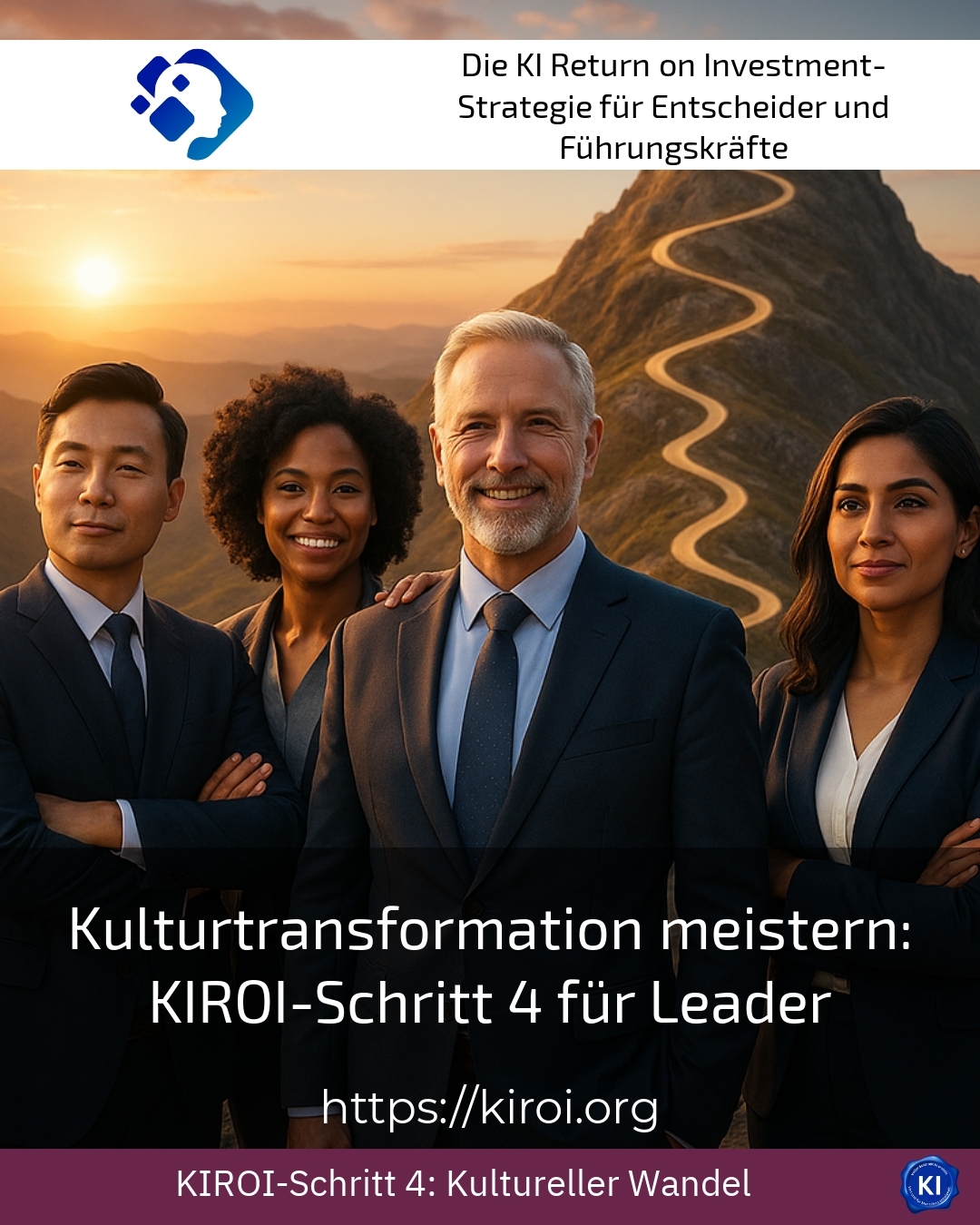
Cultural transformation presents a significant challenge for many organisations today. The focus is not just on continuous adaptation, but on the conscious and active shaping of corporate culture. Step 4 of the AIROI model in particular provides managers with clear guidance on how to sustainably support and drive cultural transformation.
Mastering cultural transformation: Why leaders are indispensable
Leaders play a central role as change agents in cultural transformation. They shape essential values and behaviours through their own actions, thus acting as the link between strategic intent and lived reality. In the IT industry, for example, companies report positive outcomes when leaders initiate regular retrospectives that foster trust and strengthen a willingness to learn. Similarly, the automotive industry shows how process adjustments, supported by leadership behaviour, can lead to the sustainable embedding of a new culture.
A third example from the consulting sector highlights how mentoring programmes for managers help to establish a learning-oriented and open culture. These practical examples emphasize that culture transformation can only succeed through active role-modelling and conscious guidance.
AIROI Step 4: Shape it actively instead of reacting
In the fourth step of the AIROI process, leaders are called upon to systematically support cultural change. This includes concrete measures that go beyond mere lip service. Not only is behaviour changed, but adjustments are made to structures and processes that strengthen the new culture.
In manufacturing companies, targeted adjustments to workflows, for example, ensure that desired values become more visible in daily work. At the same time, coaching leaders support teams in reflecting on and further developing behavioural patterns. Another approach involves open dialogue formats, which are described as valuable tools in both start-ups and traditional corporations.
BEST PRACTICE with one customer (name hidden due to NDA contract) Then, the example with at least 50 words. In a medium-sized software company, managers were systematically trained in regular workshops to embody the change in values as role models. In parallel, a supporting mentoring programme was introduced, which promoted the exchange of experiences between very different departments. This led to a noticeable increase in trust and significantly more agile collaboration.
Practical tips for supporting cultural transformation
For cultural transformation to succeed, some tried-and-tested approaches are recommended, which have proven effective across various industries:
- Clear communication of the goals and purpose of change, as service sector companies often use to generate broad acceptance.
- Systematic involvement of all employees: In the financial sector, workshops and regular feedback sessions promote collective responsibility for the process.
- Establishing role models: Managers demonstrate through their behaviour that new values are not just lip service.
- Continuous Learning and Adaptation: Companies in the healthcare sector report that targeted training programmes for managers and employees strengthen change.
These points are closely interwoven with the concept of cultural transformation and drive change holistically.
The role of trust and openness
Trust forms the foundation for successful cultural transformation. Leaders can actively promote this through transparent decisions and honest feedback. Particularly in the telecommunications sector, it is often heard how open communication cultures lead to greater innovative strength. In the media sector too, it is evident that employees perform better when they feel secure and involved.
Culture transformation acts as a continuous process that must be accompanied not only structurally, but also emotionally.
My analysis
Cultural transformation is a complex task that significantly depends on leadership commitment. Step 4 in the AIROI model highlights the role of leaders who actively embody and guide change. Only in this way do cultural values become alive and are sustainably anchored in the organisation.
Numerous examples from various industries confirm that cultural transformation is primarily supported by consistent action and participatory processes. The result is a future-proof, innovative, and agile corporate culture that secures crucial long-term competitive advantages for companies.
Further links from the text above:
[1] undconsorten – Successful cultural transformation for companies
[2] Composites United – Business Transformation: Culture, Processes & AI
[3] IOS Schley – Cultural Change in Companies: Your Path to the Future
[6] Agitation – Cultural Transformation – 4 Steps and 4 Interconnections
[7] Sauldie – Mastering Cultural Transformation: AIROI Step 4 for Leaders
For more information and if you have any questions, please contact Contact us or read more blog posts on the topic Artificial intelligence here.








 Deutsch
  English (UK)