
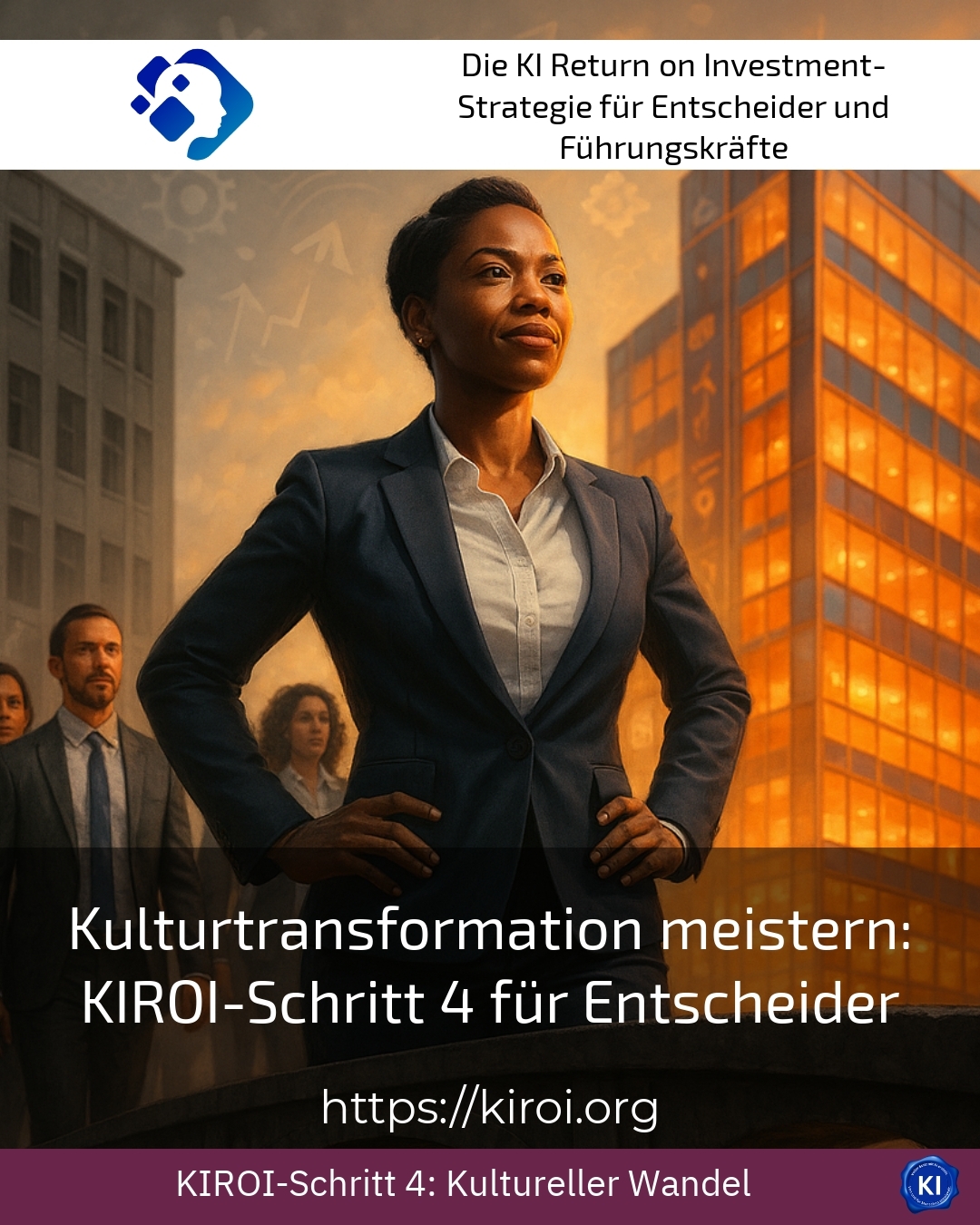
Cultural transformation: shaping change and anchoring it sustainably
Culture transformation is not a project, but a conscious development that lays the foundation for sustainable corporate success[1]. Many decision-makers find themselves at a turning point because the market, employees, and customers are making new demands. Those who want to successfully master culture transformation must question old values, thought patterns, and behaviours and specifically introduce new impulses. Companies often come to transruptions coaching with concrete challenges: communication is faltering, departments work in isolation, innovations emerge too slowly, or value statements lack practical application. This is exactly where the work on genuine culture transformation begins – supported by professional guidance and clear methods.
Understanding and initiating cultural transformation
Cultural transformation means consciously realigning structures, processes, and daily interactions. It is not a one-off action but a continuous development process. Taking stock, open discussions, and the courage to address weaknesses are central steps. In practice, many organisations start with an assessment to determine where they stand today and where they want to develop. External coaching can help to recognise blind spots and incorporate different perspectives.
Example 1: People at the heart
In the case of a traditional mechanical engineering company that we had the opportunity to support as part of transruption coaching, the initial situation was challenging: growth had stagnated, and internal conflicts were blocking new developments. Employees felt unheard, mistrust characterised interactions, and cross-departmental collaboration was insufficient. The coaching initiated a participatory process that involved all levels. The cultural transformation began when management openly addressed the situation and defined goals together with the team. Through consistent communication and transparent decisions, a more open, innovative company culture gradually emerged.
BEST PRACTICE with one customer (name hidden due to NDA contract) In a medium-sized international company with several locations in Germany and the Czech Republic, we experienced how long-standing silos made cooperation difficult. The management had the courage to initiate a values workshop and involve all managers in advance. From the analysis of the current situation, a shared vision emerged – as did key performance indicators to make progress visible. Over a period of eighteen months, regular feedback loops were established, and employees were given a say in process design and new product ideas. The result: the corporate culture developed measurably, and innovative strength increased tangibly.
For other companies, the starting point is different: some discover that digitalisation and agile working necessitate a cultural change because old structures are too slow to react to changes. Often, it is leaders who act as catalysts and actively drive the topic of cultural transformation.
Using employees as drivers of change
Successful cultural transformation is only possible if the workforce is taken along. Employees are experts in their working world and know which obstacles occur in everyday life. That is why many companies use participatory approaches: open forums, innovation workshops, and cross-functional teams bring fresh air because ideas are carried from the bottom up. Companies that actively involve their employees frequently report higher identification and more commitment.
Example 2: Decisions at eye level
BEST PRACTICE with one customer (name hidden due to NDA contract) A well-known food manufacturer wanted to increase the innovative power of its product development. Instead of cementing traditional hierarchies, management invited employees from all levels to an innovation lab. There, teams could develop, test, and present their own ideas – without fear of failure. Collaboration was designed so that responsibility and expertise counted, not the title. After a short time, new products emerged that successfully established themselves on the market, and internal communication improved significantly.
Such open structures not only foster innovation but also a culture of self-responsibility. Companies like Netflix or Zappos show how cultural change succeeds when trust, freedom, and responsibility are at the core [8]. Zappos relies on flat hierarchies, while Netflix has no rigid working hours – trust and results count. These companies prove that cultural transformation has a sustainable impact when values are truly lived.
Example 3: Living Values Consistently
BEST PRACTICE with one customer (name hidden due to NDA contract) A values initiative was launched at a German family-owned consumer goods company. The strategy: not just to define values, but to consistently test them in everyday life. Managers were trained in open formats, a feedback culture was systematically expanded, and successes were celebrated within the team. All employees were repeatedly asked to reflect on whether decisions aligned with the defined values – and where there was still a need for action. This made the cultural transformation dynamic and suitable for everyday use.
Example 4: Transformation through agile methods
Agile working is more than a trend – it is fundamentally changing corporate culture. Bosch, for example, has questioned its planning culture in recent years: where detailed processes once dominated, there are now targeted freedoms for innovative projects. For instance, a safety-critical component for an electric car manufacturer was developed in just ten months – a process that previously took two years. Management deliberately focused on new forms of collaboration, thereby creating a more open, goal-oriented culture.
We also support companies that use agile methods to accelerate their change process. Our transruptions coaching shows that those who expand their scope for action beyond classical hierarchies significantly strengthen employee loyalty and improve innovation capacity.
Challenges and success factors of cultural transformation
Cultural transformation is not a foregone conclusion – it requires time, perseverance, and genuine participation. Resistance is normal and shows that the change is relevant. Those who want to successfully shape cultural change must therefore actively address, withstand, and understand resistance as a learning opportunity. Our experience in coaching: Transformation works best when leaders lead by example and credibly demonstrate changes. The role of transparency should also not be underestimated: employees want to understand why something is being changed and what benefit they will derive from it.
My analysis
Culture transformation is one of the central challenges of the 21st century for modern organisations. It can only succeed if it is understood as a holistic change process – with a strong focus on values, collaboration, and leadership. Companies that consciously develop their culture report measurably higher innovative strength, better employee retention, and increased competitiveness[1]. Anyone who wants to shape culture transformation sustainably needs courage, a structured approach, and external support. transruptions-coaching supports you in finding your own way – and experiencing real change.
For more information and if you have any questions, please contact Contact us or read more blog posts on the topic Artificial intelligence here.
Further links from the text above:
Cultural transformation as the basis for lasting success (Open now)
Company Culture: Example of Values-Based Change (Open now)
Cultural change in companies (Open now)









 Deutsch
  English (UK)