
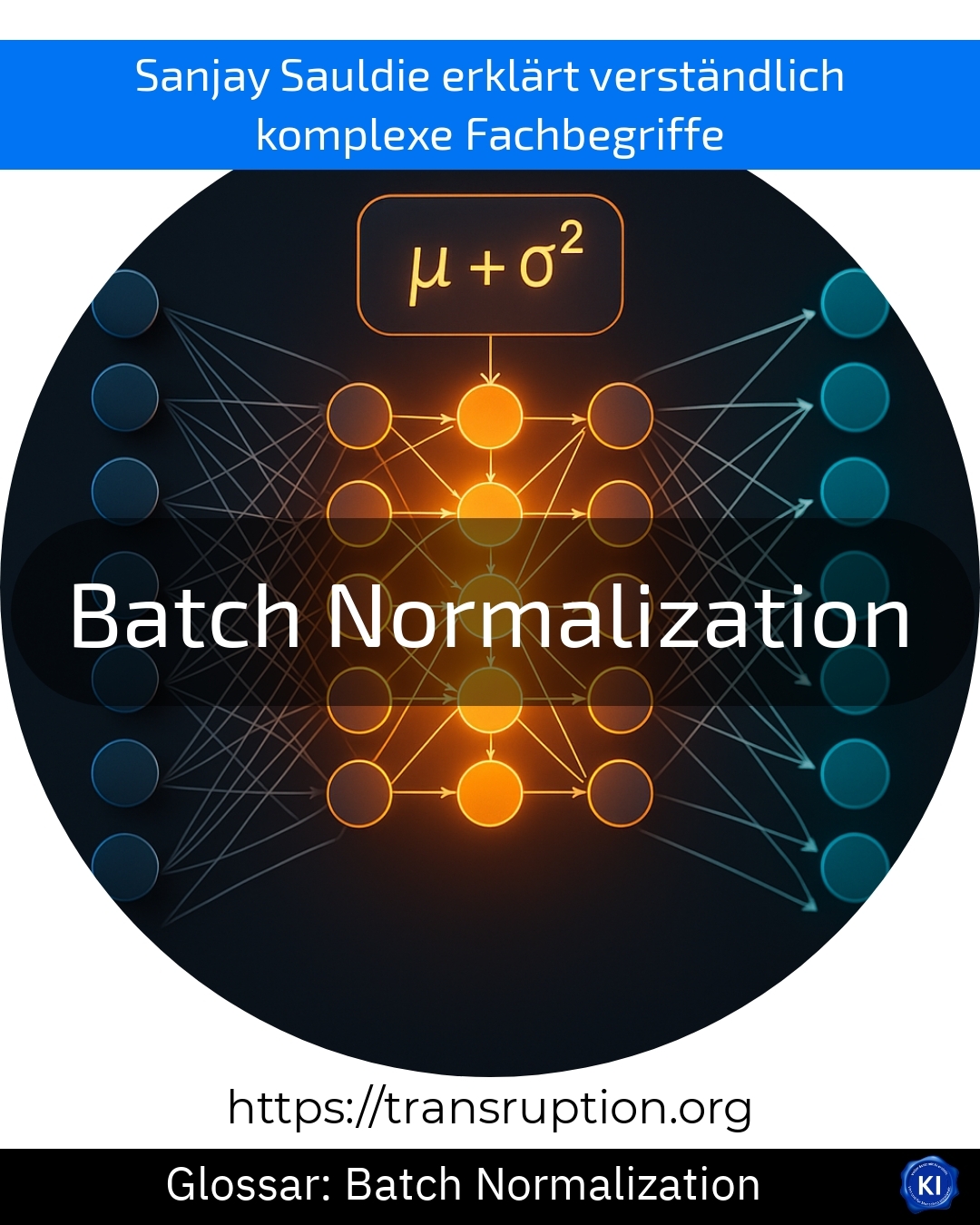
Batch Normalisation is a term from Artificial Intelligence and is primarily used when training so-called neural networks. Such networks are used, for example, to automatically recognise images or to understand speech.
Think of batch normalisation as a kind of „refresher course“ for the data in a machine. During training, neural networks receive a lot of different data at the same time, so-called „batches“. Without batch normalisation, it can happen that some areas of the network react too strongly and others too weakly. This makes learning more difficult and slower for the machine.
Batch Normalisation brings the data within each batch to a similar level. This creates a healthy balance and ensures that the network learns faster and more stably.
A simple example: You want to teach an artificial intelligence to recognise dogs and cats in photos. Batch Normalisation helps to „serve“ consistent and easily understandable images, so that the machine can more quickly and with fewer errors distinguish whether it is seeing a dog or a cat. This saves a lot of training time and significantly improves the final result.











 Deutsch
  English (UK)